Skip to content

KandZ - Tuts

  • Operating Systems ▾
    • Linux ▾
      • Distros ▾
        • Fedora
        • Other Distros
        • Ubuntu
      • Gnome 48
      • KDE
      • LFCA - Linux Foundation Certified IT Associate
      • LFCS - Linux Foundation Certified Sysadmin
      • LFCE - Linux Foundation Certified Engineer (Sysadmin + Network Admin)
      • Linux CLI
      • Various
      • Bash Scripting
  • Paths ▾
    • Core Web Stack
    • React & Modern UI Stack
    • Linux Core
  • Programming ▾
    • Frontend (FED) ▾
      • React Ecosystem ▾
        • React
        • React Router
        • TanStack Router
        • TanStack Query (React Query)
        • Zustand
        • Redux Toolkit
      • Angular Ecosystem ▾
        • Angular
      • Vue Ecosystem ▾
        • Vue.js
      • Styling & UI Components ▾
        • Tailwind CSS
    • Languages & Runtimes ▾
      • CSS
      • Dart
      • HTML
      • JavaScript
      • Node.js
      • Rust
      • SQL
      • TypeScript
    • Tools & Build Systems ▾
      • Version Control ▾
        • GitHub
        • Git
        • GitLab
      • Package Managers ▾
        • npm
        • Bun
        • yarn
        • pnpm
      • DevOps & Containers ▾
        • Docker
  • Servers & Self-Hosting ▾
    • Internet ▾
      • Internet Backend - Coming Soon
      • Internet Beginner
      • Internet Frontend - Coming Soon
    • Networking & DNS ▾
      • REST API
  • Tools
  • Windows ▾
    • Windows 11
KandZ - Tuts
AngularBunCSSDartDockerGitGitHubGitLabHTMLJavaScriptNode.jsnpmpnpmReactReact RouterRedux ToolkitRustSQLTailwind CSSTanStack Query (React Query)TanStack RouterTypeScriptVue.jsyarnZustandBash ScriptingFedoraGnome 48KDELFCA - Linux Foundation Certified IT AssociateLFCE - Linux Foundation Certified Engineer (Sysadmin + Network Admin)LFCS - Linux Foundation Certified SysadminLinux CLIOther DistrosUbuntuVariousCore Web StackInternet Backend - Coming SoonInternet BeginnerInternet Frontend - Coming SoonLinux CoreReact & Modern UI StackREST APIToolsWindows 11
  • Rust 108 🦀 Mid-Level Intermediate Representation (MIR) Analysis and Borrow Checker Mechanics
    Programming | Languages & Runtimes | Rust

    Rust 108 🦀 Mid-Level Intermediate Representation (MIR) Analysis and Borrow Checker Mechanics

    ByKandZ October 25, 2026October 25, 2026

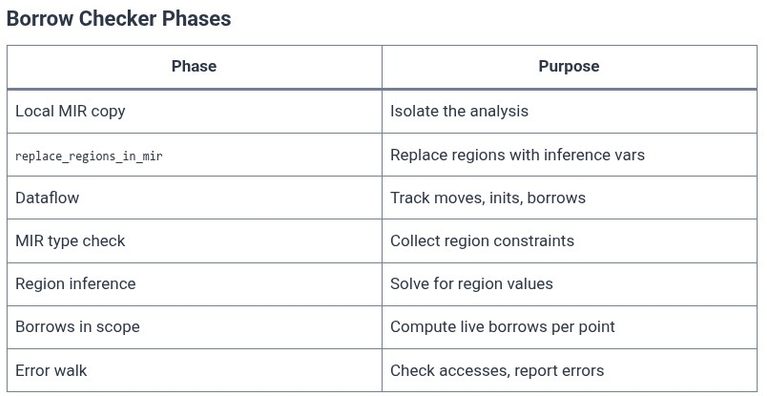
    The borrow checker does not run on the HIR. It runs on the MIR, a representation that is small enough, explicit enough, and control-flow-based enough to make the borrow checker’s analysis tractable. The MIR is the compiler’s last representation before code generation, and the borrow checker’s phases—dataflow, region inference, and the final error walk—operate on…
    Read More Rust 108 🦀 Mid-Level Intermediate Representation (MIR) Analysis and Borrow Checker MechanicsContinue

  • Rust 107 🦀 Compiler Internals: Abstract Syntax Tree (AST) to High-Level Intermediate Representation (HIR)
    Programming | Languages & Runtimes | Rust

    Rust 107 🦀 Compiler Internals: Abstract Syntax Tree (AST) to High-Level Intermediate Representation (HIR)

    ByKandZ October 25, 2026October 25, 2026

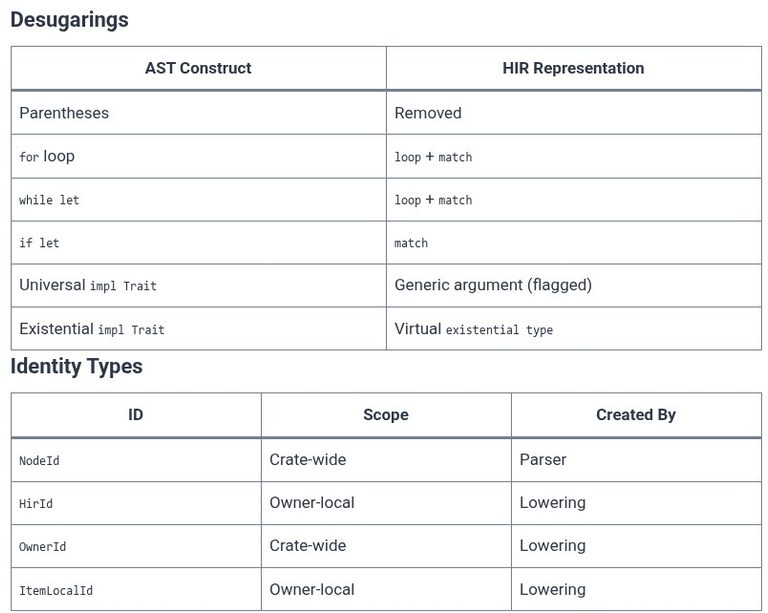
    The Rust compiler does not type-check the syntax tree you write. Between the parser and the type checker sits a lowering step that converts the Abstract Syntax Tree (AST) into the High-Level Intermediate Representation (HIR). This step is not a refactoring for cleanliness. It is where syntactic sugar is dissolved, where for loops become loop…

    Read More Rust 107 🦀 Compiler Internals: Abstract Syntax Tree (AST) to High-Level Intermediate Representation (HIR)Continue

  • Rust 106 🦀 Performance Profiling, Benchmarking (criterion), and SIMD Optimizations
    Programming | Languages & Runtimes | Rust

    Rust 106 🦀 Performance Profiling, Benchmarking (criterion), and SIMD Optimizations

    ByKandZ October 25, 2026October 25, 2026

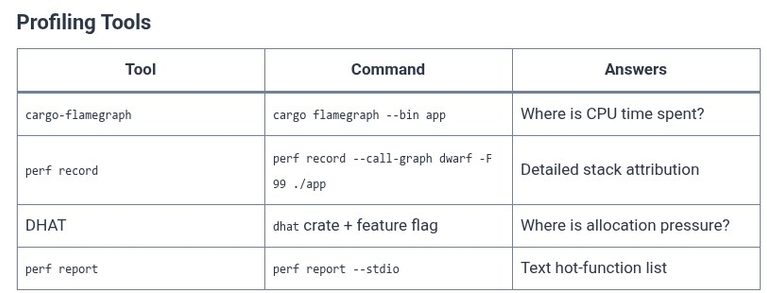
    Performance work in Rust follows a discipline that is easy to state and hard to practice: measure first, optimize the bottleneck, measure again. The tools that make this possible are the profilers that show where time is actually spent, the benchmarking frameworks that turn a measurement into a repeatable experiment, and the SIMD APIs that…

    Read More Rust 106 🦀 Performance Profiling, Benchmarking (criterion), and SIMD OptimizationsContinue

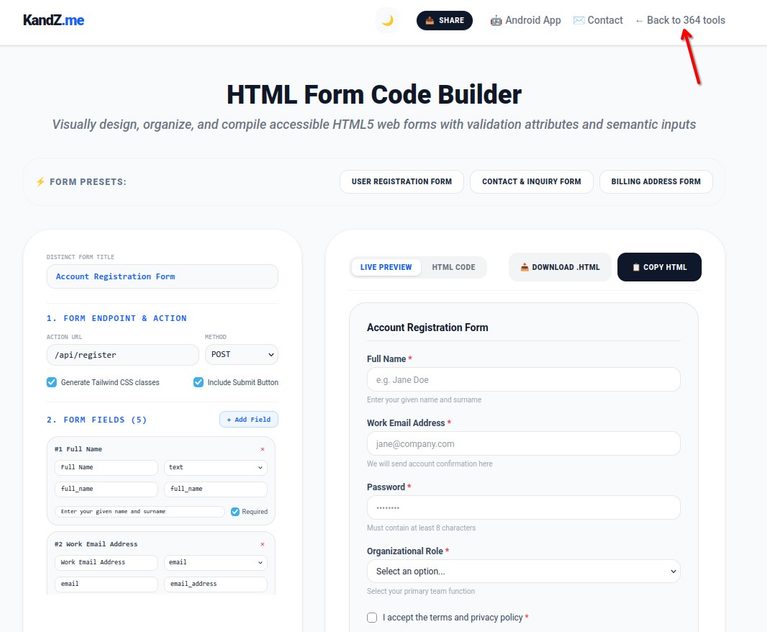
  • Free HTML Form Code Builder
    Tools

    Free HTML Form Code Builder

    ByKandZ October 25, 2026October 25, 2026

    Building HTML forms by hand is tedious. You forget a name attribute. You miss a for on a label. Accessibility breaks. Validation fails silently. I built a free tool that solves this. What it does: Use cases: Privacy:100% client-side. Nothing uploaded. Try it: tools.kandz.me/html-form-builder

    Read More Free HTML Form Code BuilderContinue

  • React 131 ⚛️ The Complete Cheatsheet
    Programming | Frontend (FED) | React

    React 131 ⚛️ The Complete Cheatsheet

    ByKandZ October 25, 2026October 25, 2026

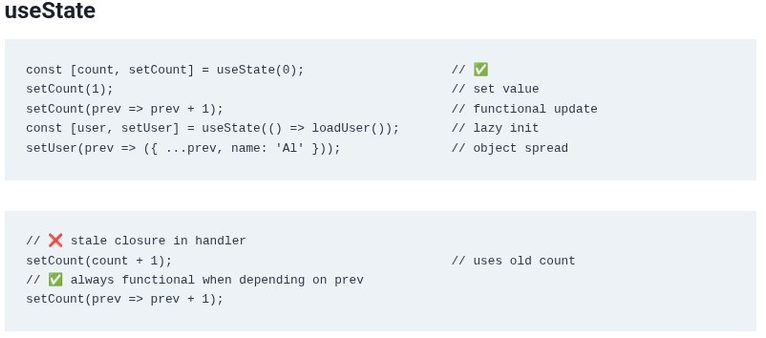
    1. Components & JSX JSX is syntax sugar for React.createElement. Components are functions that return JSX. 2. useState Manages state within a functional component. 3. useReducer Manages complex state through a reducer function. 4. useEffect Handles side effects after render. 5. useLayoutEffect Runs synchronously before the browser paints. 6. useRef Holds a mutable value or…

    Read More React 131 ⚛️ The Complete CheatsheetContinue

  • React 130 ⚛️ Custom React Renderers (react-reconciler)
    Programming | Frontend (FED) | React

    React 130 ⚛️ Custom React Renderers (react-reconciler)

    ByKandZ October 25, 2026October 25, 2026

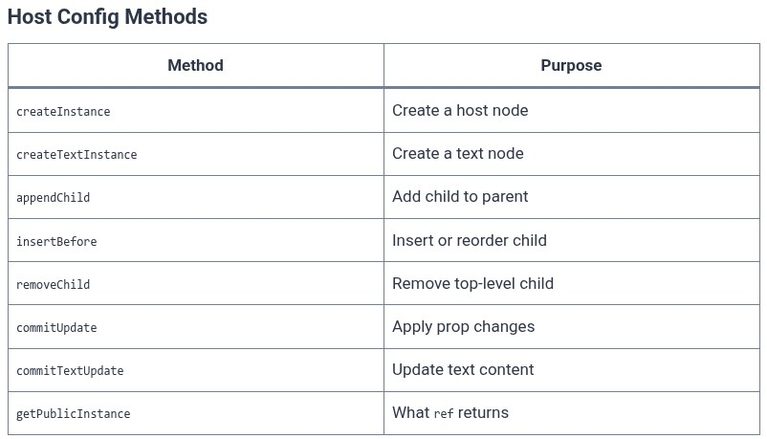
    React is not a web framework. It is a reconciler: an algorithm that diffs a component tree and produces a stream of mutations. The react-dom package is one host of that algorithm, rendering to the browser’s DOM. React Native is another, rendering to native mobile views. A custom renderer is a third, and the react-reconciler…

    Read More React 130 ⚛️ Custom React Renderers (react-reconciler)Continue

  • React 129 ⚛️ AST Transformations and Custom Babel/SWC Plugins for React
    Programming | Frontend (FED) | React

    React 129 ⚛️ AST Transformations and Custom Babel/SWC Plugins for React

    ByKandZ October 25, 2026October 25, 2026

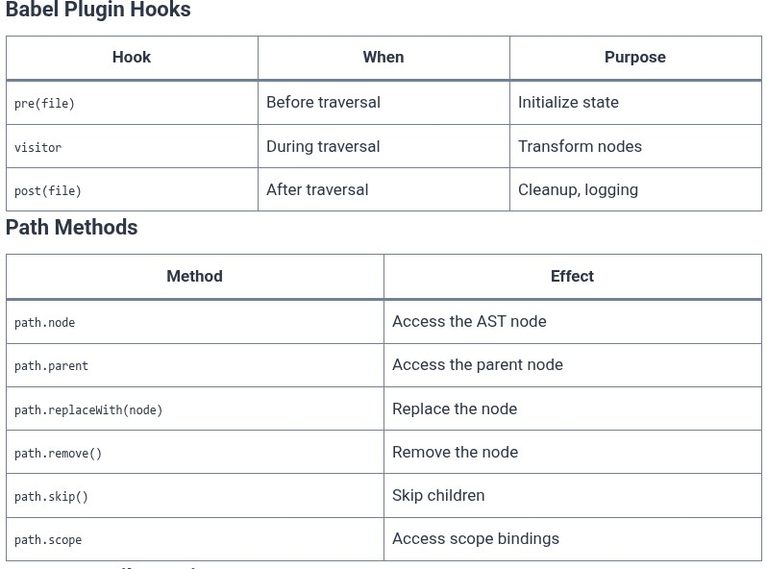
    Every React build is a sequence of AST transformations. JSX becomes React.createElement or jsx() calls, TypeScript types are stripped, and the React Compiler inserts memoization. The tools that perform these transformations—Babel and SWC—expose plugin APIs that let developers add their own passes to the pipeline. A custom plugin can inject instrumentation, rewrite imports, enforce architectural…

    Read More React 129 ⚛️ AST Transformations and Custom Babel/SWC Plugins for ReactContinue

  • React 128 ⚛️ Micro-Frontend Integration with Web Components
    Programming | Frontend (FED) | React

    React 128 ⚛️ Micro-Frontend Integration with Web Components

    ByKandZ October 25, 2026October 25, 2026

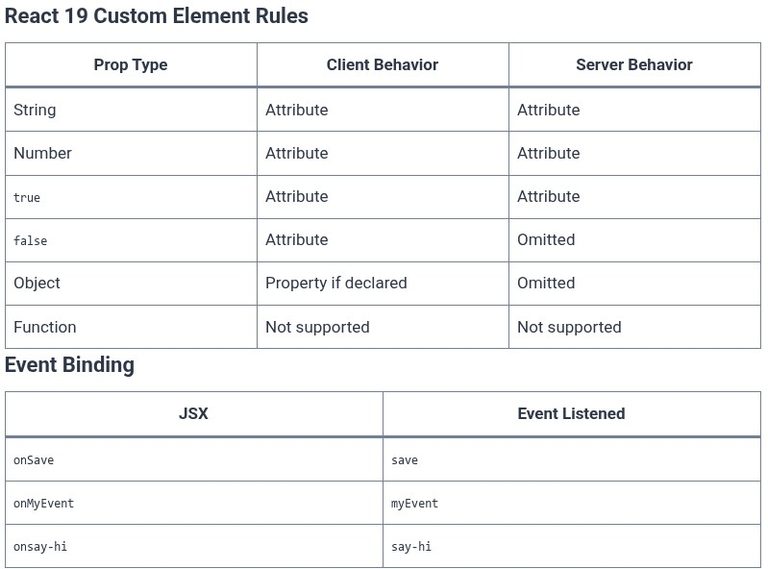
    A micro-frontend is an architectural pattern where a large application is composed from independently developed, independently deployed frontend fragments. Web Components are a browser-native mechanism for encapsulating markup, styles, and behavior into a custom element. The combination is appealing because it promises framework-agnostic composition: a React shell can host a Vue micro-frontend, or a legacy…

    Read More React 128 ⚛️ Micro-Frontend Integration with Web ComponentsContinue

  • React 127 ⚛️ Web Audio API Integration in React
    Programming | Frontend (FED) | React

    React 127 ⚛️ Web Audio API Integration in React

    ByKandZ October 25, 2026October 25, 2026

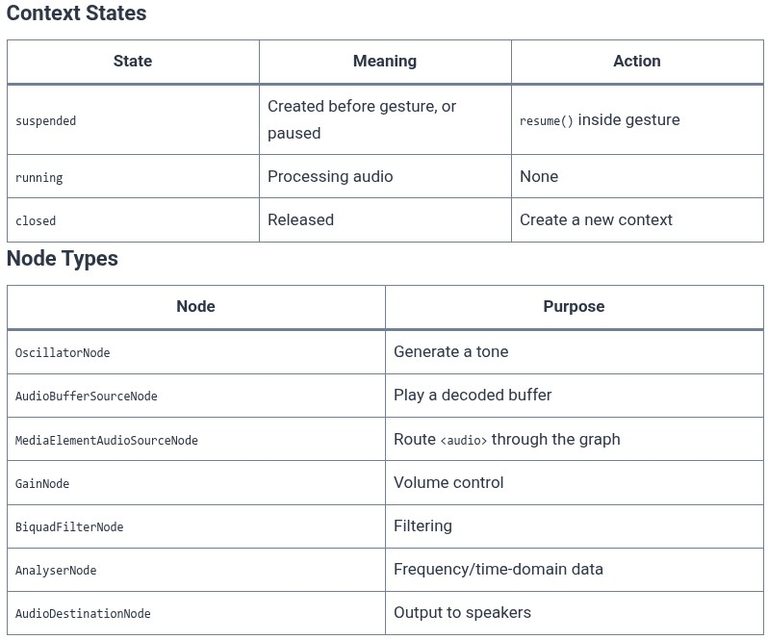
    The Web Audio API is a graph-based audio processing system built into the browser. It is not a replacement for the <audio> element; it is a complement to it, the way <canvas> complements <img>. When the requirement is playing a track, the media element is simpler. When the requirement is processing, synthesizing, analyzing, or routing…

    Read More React 127 ⚛️ Web Audio API Integration in ReactContinue

  • React 126 ⚛️ Canvas Rendering with React Konva
    Programming | Frontend (FED) | React

    React 126 ⚛️ Canvas Rendering with React Konva

    ByKandZ October 25, 2026October 25, 2026

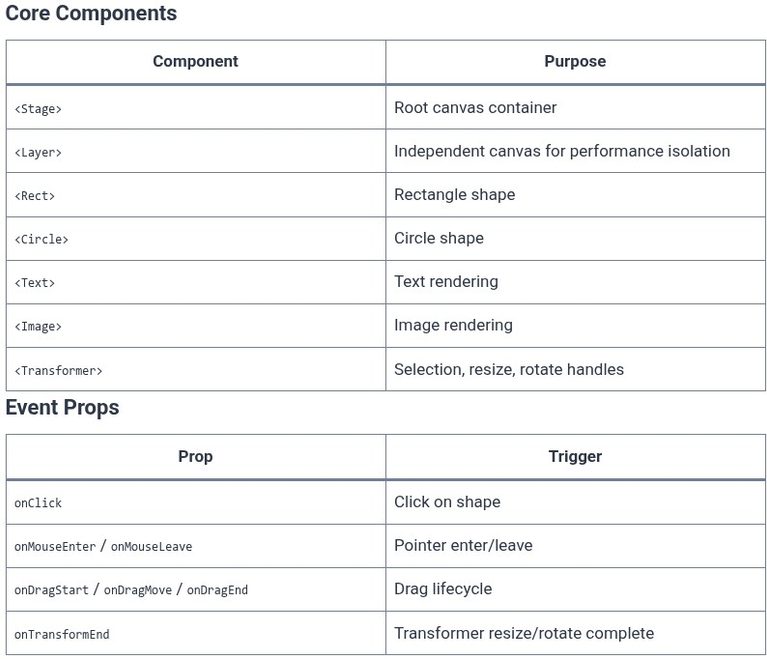
    react-konva is a React renderer for Konva, the 2D canvas scene graph library. The relationship is the same as React DOM and the browser DOM: you write components like <Rect> and <Circle>, the reconciler creates the corresponding Konva nodes, and Konva draws them onto a single <canvas> element . The library’s value is not that…

    Read More React 126 ⚛️ Canvas Rendering with React KonvaContinue

Page navigation

Previous PagePrevious 1 … 32 33 34 35 36 … 257 Next PageNext
    Search