Skip to content

KandZ - Tuts

  • Operating Systems ▾
    • Linux ▾
      • Distros ▾
        • Fedora
        • Other Distros
        • Ubuntu
      • Gnome 48
      • KDE
      • LFCA - Linux Foundation Certified IT Associate
      • LFCS - Linux Foundation Certified Sysadmin
      • LFCE - Linux Foundation Certified Engineer (Sysadmin + Network Admin)
      • Linux CLI
      • Various
      • Bash Scripting
  • Paths ▾
    • Core Web Stack
    • React & Modern UI Stack
    • Linux Core
  • Programming ▾
    • Frontend (FED) ▾
      • React Ecosystem ▾
        • React
        • React Router
        • TanStack Router
        • TanStack Query (React Query)
        • Zustand
        • Redux Toolkit
      • Angular Ecosystem ▾
        • Angular
      • Vue Ecosystem ▾
        • Vue.js
      • Styling & UI Components ▾
        • Tailwind CSS
    • Languages & Runtimes ▾
      • CSS
      • Dart
      • HTML
      • JavaScript
      • Node.js
      • Rust
      • SQL
      • TypeScript
    • Tools & Build Systems ▾
      • Version Control ▾
        • GitHub
        • Git
        • GitLab
      • Package Managers ▾
        • npm
        • Bun
        • yarn
        • pnpm
      • DevOps & Containers ▾
        • Docker
  • Servers & Self-Hosting ▾
    • Internet ▾
      • Internet Backend - Coming Soon
      • Internet Beginner
      • Internet Frontend - Coming Soon
    • Networking & DNS ▾
      • REST API
  • Tools
  • Windows ▾
    • Windows 11
KandZ - Tuts
AngularBunCSSDartDockerGitGitHubGitLabHTMLJavaScriptNode.jsnpmpnpmReactReact RouterRedux ToolkitRustSQLTailwind CSSTanStack Query (React Query)TanStack RouterTypeScriptVue.jsyarnZustandBash ScriptingFedoraGnome 48KDELFCA - Linux Foundation Certified IT AssociateLFCE - Linux Foundation Certified Engineer (Sysadmin + Network Admin)LFCS - Linux Foundation Certified SysadminLinux CLIOther DistrosUbuntuVariousCore Web StackInternet Backend - Coming SoonInternet BeginnerInternet Frontend - Coming SoonLinux CoreReact & Modern UI StackREST APIToolsWindows 11
  • React 125 ⚛️ WebGL and Canvas Interactivity in React
    Programming | Frontend (FED) | React

    React 125 ⚛️ WebGL and Canvas Interactivity in React

    ByKandZ October 25, 2026October 25, 2026

    React does not have a native canvas element. The <canvas> tag is a DOM element, and the drawing context is an imperative API that sits outside React’s declarative model. Interactivity—detecting a click on a shape, hovering over a pixel, dragging a node—requires translating DOM events into coordinates that the canvas understands, and then deciding whether…
    Read More React 125 ⚛️ WebGL and Canvas Interactivity in ReactContinue

  • React 124 ⚛️ 3D Web Graphics with React Three Fiber
    Programming | Frontend (FED) | React

    React 124 ⚛️ 3D Web Graphics with React Three Fiber

    ByKandZ October 25, 2026October 25, 2026

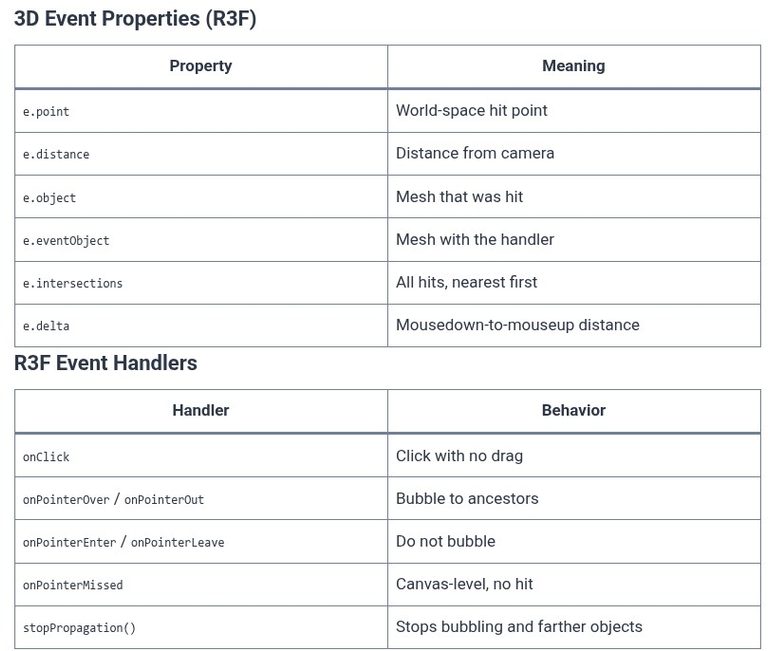
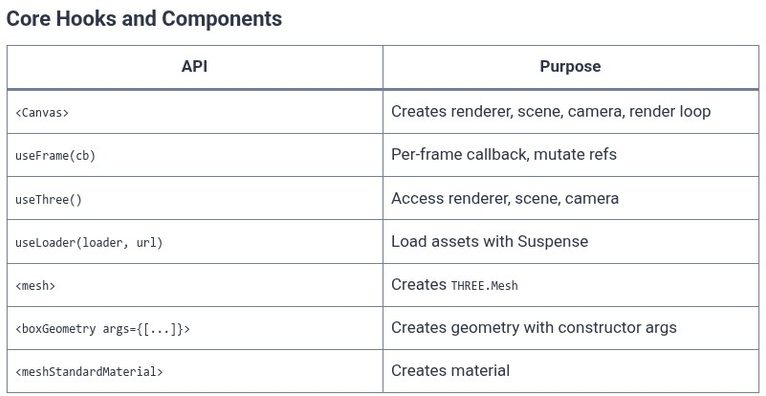
    React Three Fiber is a React renderer for three.js, not a wrapper library. It does not add an abstraction layer between React and the 3D scene; it replaces the DOM as the rendering target. The component tree you write is the scene graph, and mounting a <mesh> creates a THREE.Mesh that is added to the…

    Read More React 124 ⚛️ 3D Web Graphics with React Three FiberContinue

  • React 123 ⚛️ Desktop Apps with React and Electron / Tauri
    Programming | Frontend (FED) | React

    React 123 ⚛️ Desktop Apps with React and Electron / Tauri

    ByKandZ October 25, 2026October 25, 2026

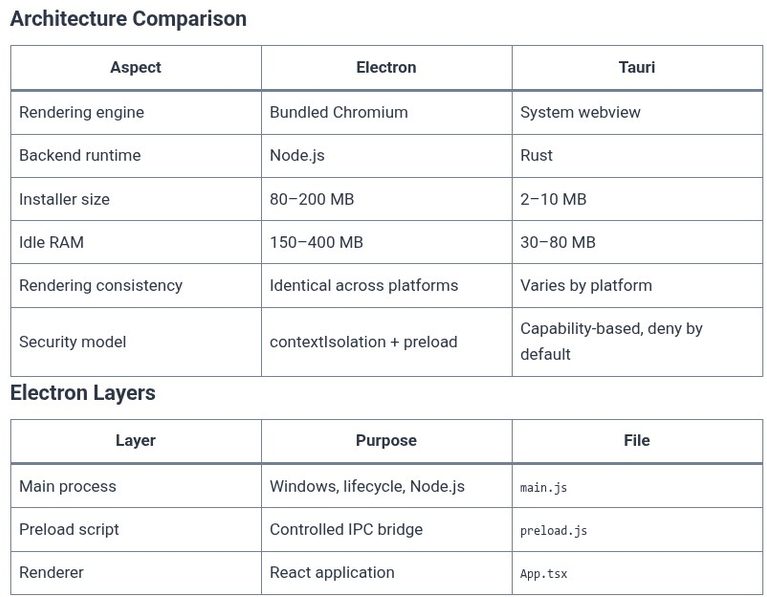
    React’s component model is not bound to the browser. The same reconciliation engine that renders to the DOM in a web application can render to a Chromium window embedded in a desktop process, or to the operating system’s native webview. The two dominant frameworks that make this possible are Electron and Tauri, and they represent…

    Read More React 123 ⚛️ Desktop Apps with React and Electron / TauriContinue

  • React 122 ⚛️ React Native Navigation and Native Modules
    Programming | Frontend (FED) | React

    React 122 ⚛️ React Native Navigation and Native Modules

    ByKandZ October 25, 2026October 25, 2026

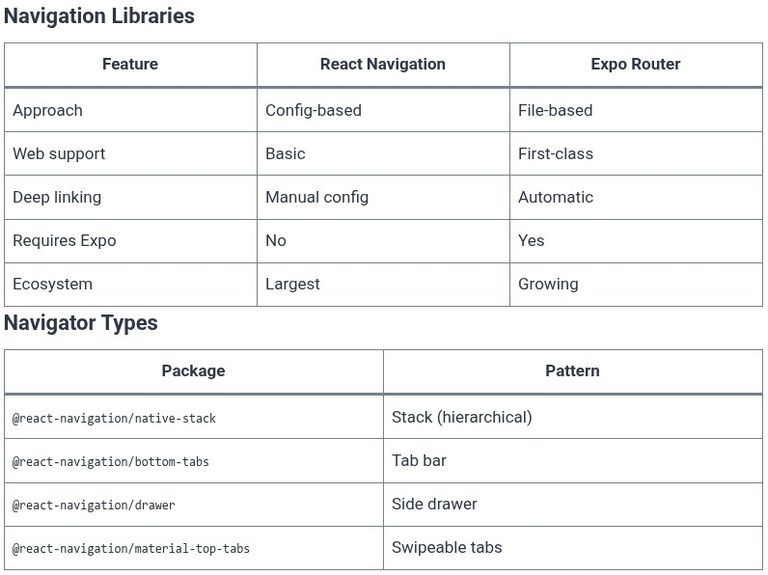
    React Native applications are rarely a single screen, and they frequently need capabilities that JavaScript cannot provide. Navigation is the framework’s answer to the first problem: a navigator manages the presentation and transition between screens. Native modules are the answer to the second: a bridge that exposes platform APIs—camera, Bluetooth, secure storage—to JavaScript. Both are…

    Read More React 122 ⚛️ React Native Navigation and Native ModulesContinue

  • React 121 ⚛️ Cross-Platform Mobile Apps with React Native Core
    Programming | Frontend (FED) | React

    React 121 ⚛️ Cross-Platform Mobile Apps with React Native Core

    ByKandZ October 25, 2026October 25, 2026

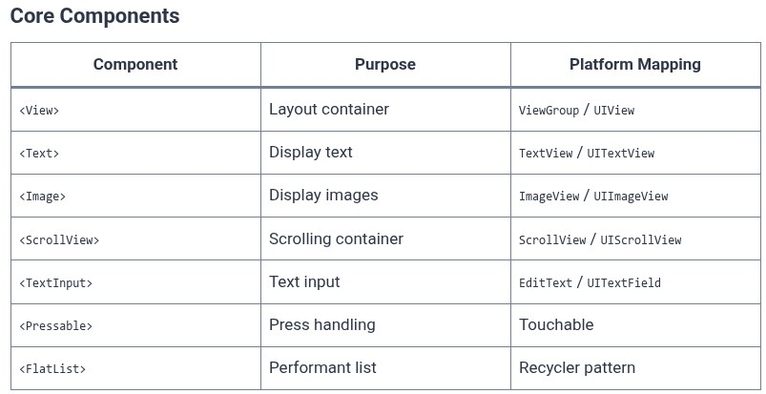
    React Native is not React running in a browser. It is a framework that uses the React programming model to describe a native view tree, and at runtime it creates the actual platform views—UIView on iOS, android.view.View on Android—that the operating system renders. The JavaScript you write looks like React, but the primitives are different,…

    Read More React 121 ⚛️ Cross-Platform Mobile Apps with React Native CoreContinue

  • React 120 ⚛️ Building Reusable UI Component Libraries (npm Publishing and Storybook)
    Programming | Frontend (FED) | React

    React 120 ⚛️ Building Reusable UI Component Libraries (npm Publishing and Storybook)

    ByKandZ October 24, 2026October 24, 2026

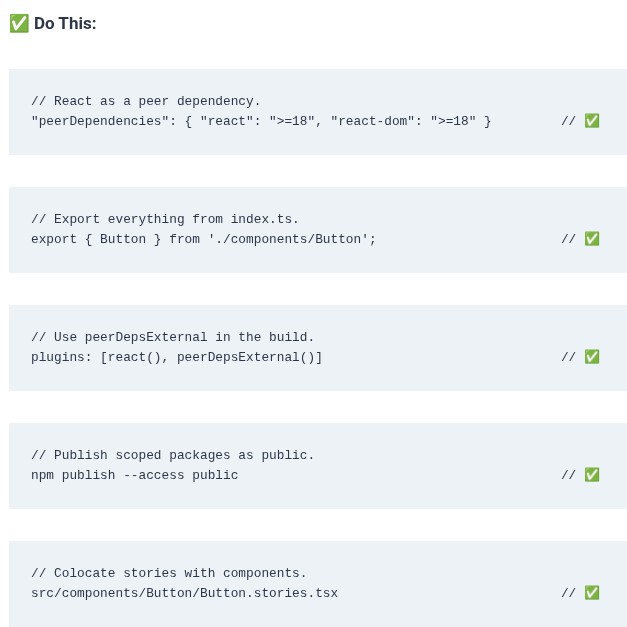
    A reusable component library is not a folder of .tsx files copied between projects. It is a package with a stable public API, a build that produces both ESM and CommonJS output, a set of peer dependencies that prevents duplicate React instances, and a development environment where every component can be rendered in isolation. The…

    Read More React 120 ⚛️ Building Reusable UI Component Libraries (npm Publishing and Storybook)Continue

  • React 119 ⚛️ Monorepo Management for React Projects (Turborepo / Nx)
    Programming | Frontend (FED) | React

    React 119 ⚛️ Monorepo Management for React Projects (Turborepo / Nx)

    ByKandZ October 24, 2026October 24, 2026

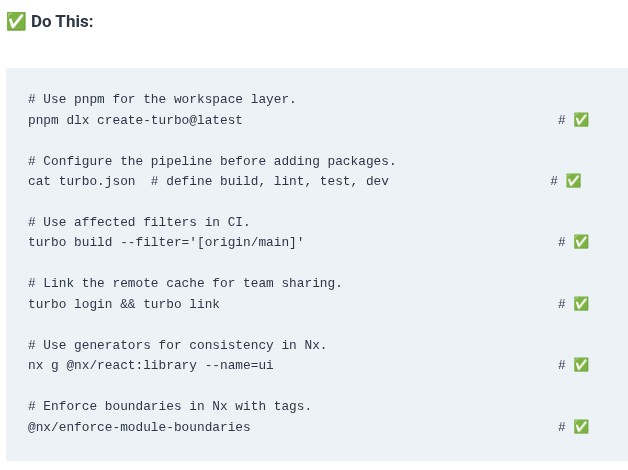
    A React monorepo is not a repository with multiple package.json files. It is a repository where the dependency graph between packages is known, where a change to a shared UI component triggers only the builds and tests that depend on it, and where the CI pipeline finishes in seconds rather than minutes because the cache…

    Read More React 119 ⚛️ Monorepo Management for React Projects (Turborepo / Nx)Continue

  • React 118 ⚛️ Offline-First Applications and Service Workers
    Programming | Frontend (FED) | React

    React 118 ⚛️ Offline-First Applications and Service Workers

    ByKandZ October 24, 2026October 24, 2026

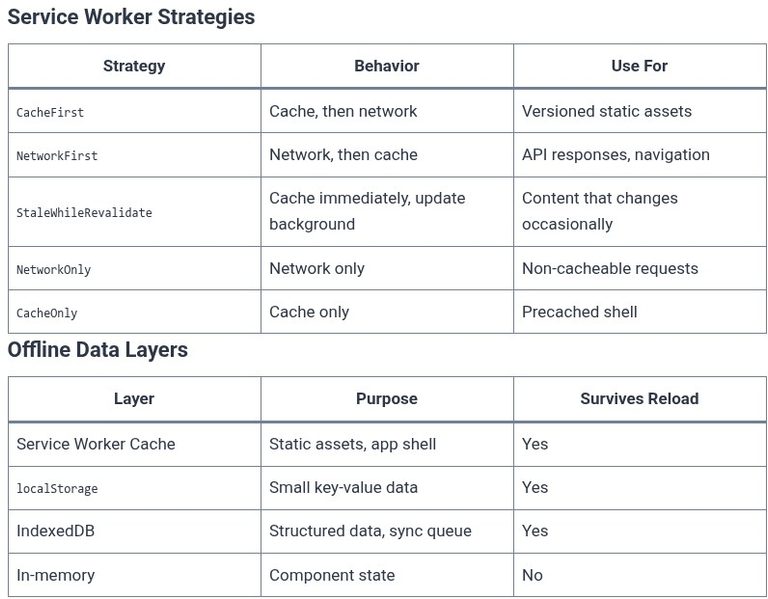
    An offline-first application assumes the network is unreliable and designs for that assumption from the start. It loads from a local cache, writes to local storage immediately, and synchronizes with the server when connectivity returns. React does not provide this behavior natively; the browser does, through two APIs that work outside the component tree: the…

    Read More React 118 ⚛️ Offline-First Applications and Service WorkersContinue

  • React 117 ⚛️ Real-Time Applications with WebSockets and React
    Programming | Frontend (FED) | React

    React 117 ⚛️ Real-Time Applications with WebSockets and React

    ByKandZ October 24, 2026October 24, 2026

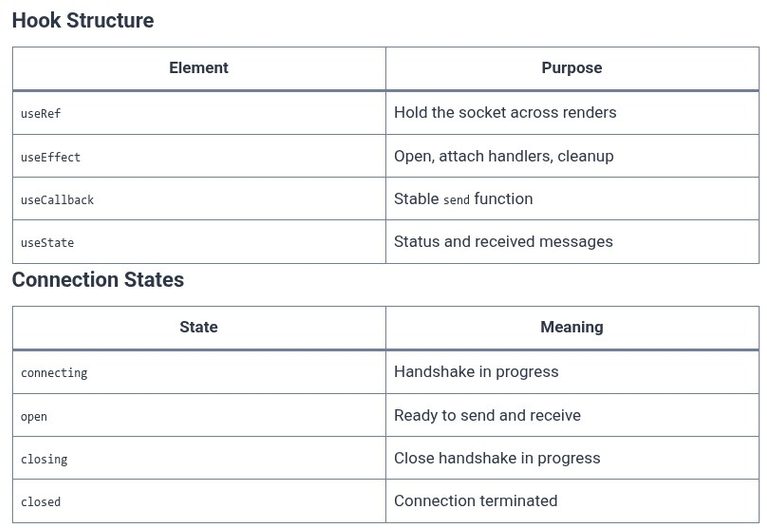
    A WebSocket is a persistent, bidirectional connection between the browser and a server. Unlike HTTP, where every request opens a new connection and waits for a response, a WebSocket stays open and allows either side to send data at any time. React does not have a built-in WebSocket abstraction, and the browser’s WebSocket API is…

    Read More React 117 ⚛️ Real-Time Applications with WebSockets and ReactContinue

  • React 116 ⚛️ State Machines with XState in React
    Programming | Frontend (FED) | React

    React 116 ⚛️ State Machines with XState in React

    ByKandZ October 24, 2026October 24, 2026

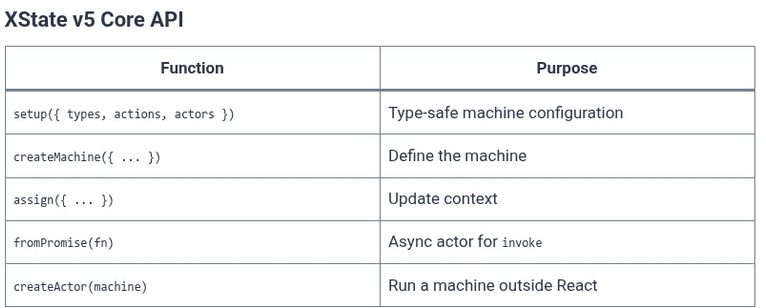
    A React component that manages complex interaction logic with useState and useEffect is, in the formal sense, an infinite state machine. Any combination of boolean flags and nullable values can occur, including combinations that should be impossible. XState replaces that open-ended model with a finite state machine: a declared set of states, a declared set…

    Read More React 116 ⚛️ State Machines with XState in ReactContinue

Page navigation

Previous PagePrevious 1 … 33 34 35 36 37 … 257 Next PageNext
    Search