Skip to content

KandZ - Tuts

  • Operating Systems ▾
    • Linux ▾
      • Distros ▾
        • Fedora
        • Other Distros
        • Ubuntu
      • Gnome 48
      • KDE
      • LFCA - Linux Foundation Certified IT Associate
      • LFCS - Linux Foundation Certified Sysadmin
      • LFCE - Linux Foundation Certified Engineer (Sysadmin + Network Admin)
      • Linux CLI
      • Various
      • Bash Scripting
  • Paths ▾
    • Core Web Stack
    • React & Modern UI Stack
    • Linux Core
  • Programming ▾
    • Frontend (FED) ▾
      • React Ecosystem ▾
        • React
        • React Router
        • TanStack Router
        • TanStack Query (React Query)
        • Zustand
        • Redux Toolkit
      • Angular Ecosystem ▾
        • Angular
      • Vue Ecosystem ▾
        • Vue.js
      • Styling & UI Components ▾
        • Tailwind CSS
    • Languages & Runtimes ▾
      • CSS
      • Dart
      • HTML
      • JavaScript
      • Node.js
      • Rust
      • SQL
      • TypeScript
    • Tools & Build Systems ▾
      • Version Control ▾
        • GitHub
        • Git
        • GitLab
      • Package Managers ▾
        • npm
        • Bun
        • yarn
        • pnpm
      • DevOps & Containers ▾
        • Docker
  • Servers & Self-Hosting ▾
    • Internet ▾
      • Internet Backend - Coming Soon
      • Internet Beginner
      • Internet Frontend - Coming Soon
    • Networking & DNS ▾
      • REST API
  • Tools
  • Windows ▾
    • Windows 11
KandZ - Tuts
AngularBunCSSDartDockerGitGitHubGitLabHTMLJavaScriptNode.jsnpmpnpmReactReact RouterRedux ToolkitRustSQLTailwind CSSTanStack Query (React Query)TanStack RouterTypeScriptVue.jsyarnZustandBash ScriptingFedoraGnome 48KDELFCA - Linux Foundation Certified IT AssociateLFCE - Linux Foundation Certified Engineer (Sysadmin + Network Admin)LFCS - Linux Foundation Certified SysadminLinux CLIOther DistrosUbuntuVariousCore Web StackInternet Backend - Coming SoonInternet BeginnerInternet Frontend - Coming SoonLinux CoreReact & Modern UI StackREST APIToolsWindows 11
  • Vue.js 89 🟢 Raw Object Escaping with markRaw() and toRaw()
    Programming | Frontend (FED) | Vue.js

    Vue.js 89 🟢 Raw Object Escaping with markRaw() and toRaw()

    ByKandZ October 22, 2026October 22, 2026

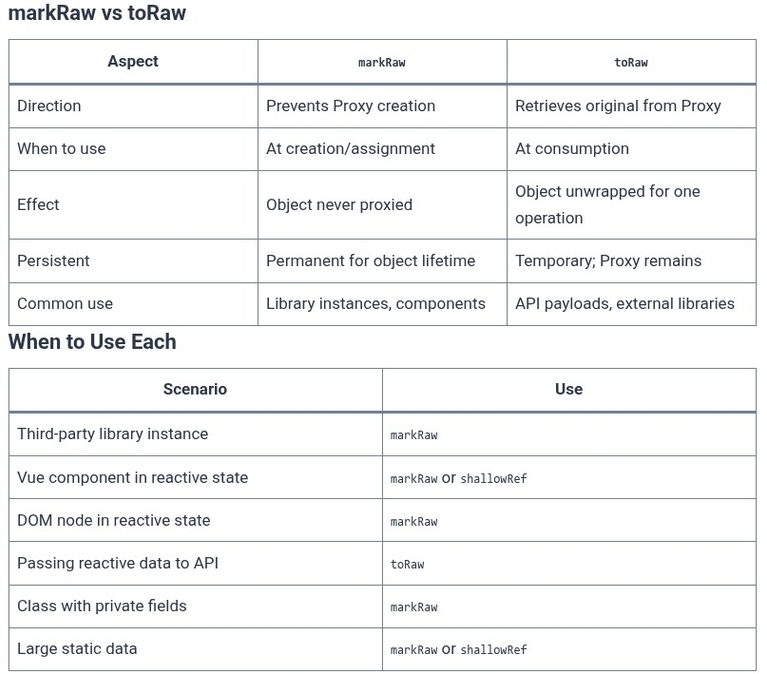
    Vue’s reactivity system wraps objects in Proxies to track property access and mutation. This is the mechanism that makes the UI reactive, but it is also a mechanism that some objects cannot tolerate. A third-party library instance that performs identity checks, a DOM node that the browser expects to be the exact object it created,…
    Read More Vue.js 89 🟢 Raw Object Escaping with markRaw() and toRaw()Continue

  • Vue.js 88 🟢 Non-Tracking Reactivity with shallowRef() and shallowReactive()
    Programming | Frontend (FED) | Vue.js

    Vue.js 88 🟢 Non-Tracking Reactivity with shallowRef() and shallowReactive()

    ByKandZ October 22, 2026October 22, 2026

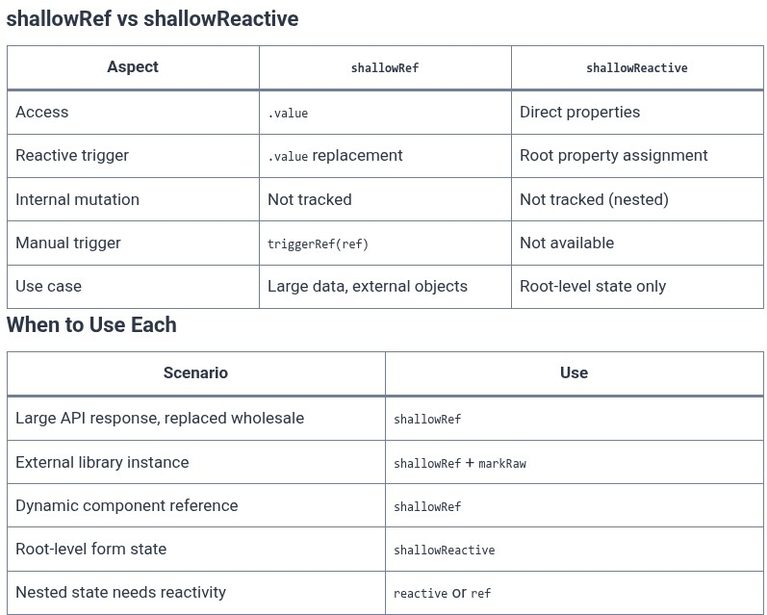
    Vue’s default reactivity is deep. A ref({ nested: { count: 1 } }) wraps every nested object in a Proxy, so mutating nested.count triggers a re-render. This is convenient, but it is also expensive for large data structures, external library instances, and immutable API responses that will never be mutated internally. shallowRef() and shallowReactive() provide…

    Read More Vue.js 88 🟢 Non-Tracking Reactivity with shallowRef() and shallowReactive()Continue

  • Vue.js 87 🟢 Custom Ref Implementations (customRef) and Debounced Inputs
    Programming | Frontend (FED) | Vue.js

    Vue.js 87 🟢 Custom Ref Implementations (customRef) and Debounced Inputs

    ByKandZ October 22, 2026October 22, 2026

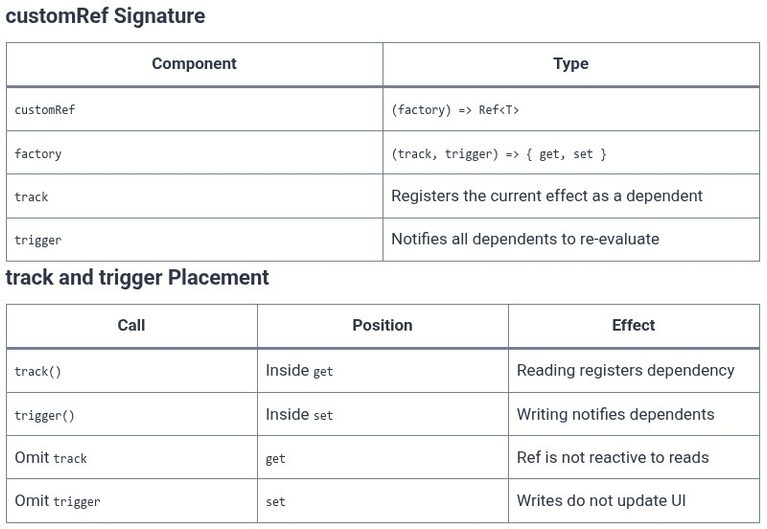
    Vue’s customRef is the escape hatch for creating a ref whose dependency tracking and update triggering are under explicit programmer control. A standard ref calls track() when read and trigger() when written, with no opportunity to intervene. customRef receives those two functions as arguments and returns a get/set pair, allowing the implementation to decide when…

    Read More Vue.js 87 🟢 Custom Ref Implementations (customRef) and Debounced InputsContinue

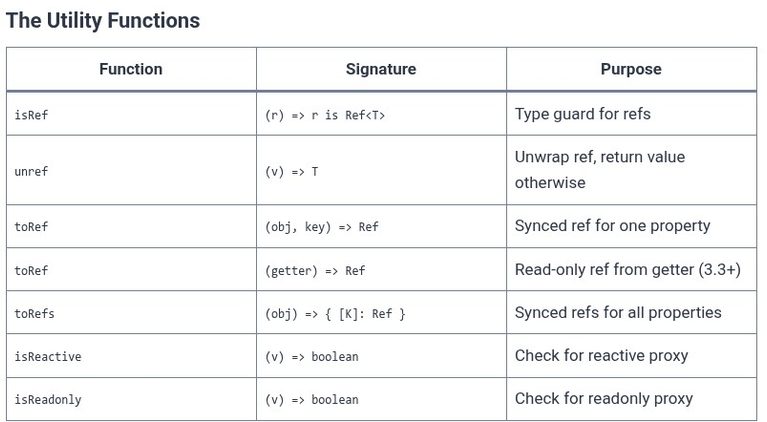
  • Vue.js 86 🟢 Low-Level Reactive Utilities (unref, toRef, toRefs, isRef, isReactive, isReadonly)
    Programming | Frontend (FED) | Vue.js

    Vue.js 86 🟢 Low-Level Reactive Utilities (unref, toRef, toRefs, isRef, isReactive, isReadonly)

    ByKandZ October 22, 2026October 22, 2026

    Vue’s reactivity system exposes a small set of utility functions for inspecting and normalizing reactive values. These functions are not the ones application code uses most often—ref, computed, and reactive are—but they are the ones composables and libraries use to handle arguments that might be a raw value, a ref, or a reactive object. The…

    Read More Vue.js 86 🟢 Low-Level Reactive Utilities (unref, toRef, toRefs, isRef, isReactive, isReadonly)Continue

  • SQL 131 🛢️ Cheatsheet
    Programming | Languages & Runtimes | SQL

    SQL 131 🛢️ Cheatsheet

    ByKandZ October 22, 2026October 22, 2026

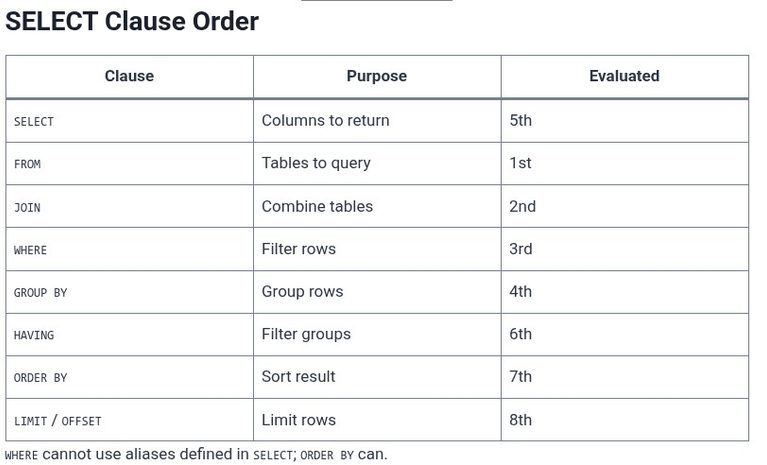
    A quick-reference for SQL syntax, functions, and behavior across PostgreSQL, MySQL, and SQL Server. Organized for lookup, not for reading. SELECT Clause Order Clause Purpose Evaluated SELECT Columns to return 5th FROM Tables to query 1st JOIN Combine tables 2nd WHERE Filter rows 3rd GROUP BY Group rows 4th HAVING Filter groups 6th ORDER BY…

    Read More SQL 131 🛢️ CheatsheetContinue

  • npm 27 🌐 Cheatsheet
    Programming | npm | Tools & Build Systems

    npm 27 🌐 Cheatsheet

    ByKandZ October 22, 2026October 22, 2026

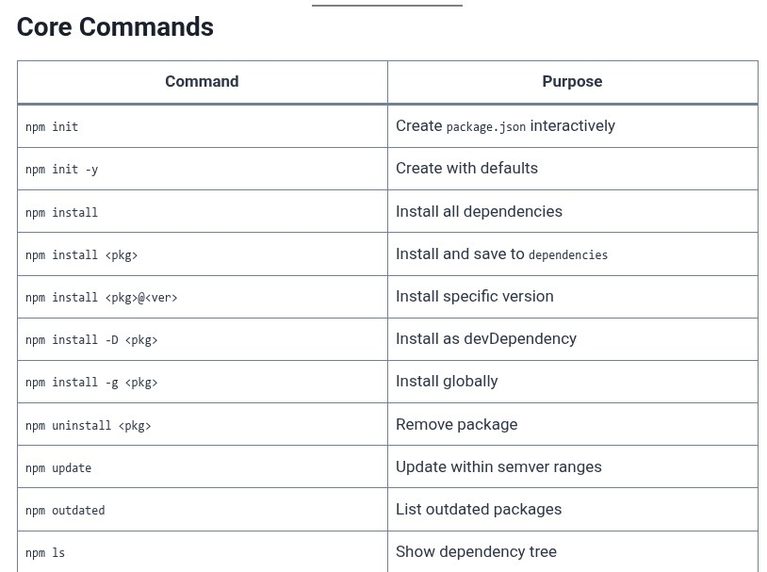
    A quick-reference for npm commands, configuration, and dependency resolution. Organized for lookup, not for reading. Core Commands Command Purpose npm init Create package.json interactively npm init -y Create with defaults npm install Install all dependencies npm install <pkg> Install and save to dependencies npm install <pkg>@<ver> Install specific version npm install -D <pkg> Install as…

    Read More npm 27 🌐 CheatsheetContinue

  • npm 26 🌐 Overrides and Peer Dependencies (overrides, peerDependencies)
    Programming | npm | Tools & Build Systems

    npm 26 🌐 Overrides and Peer Dependencies (overrides, peerDependencies)

    ByKandZ October 22, 2026October 22, 2026

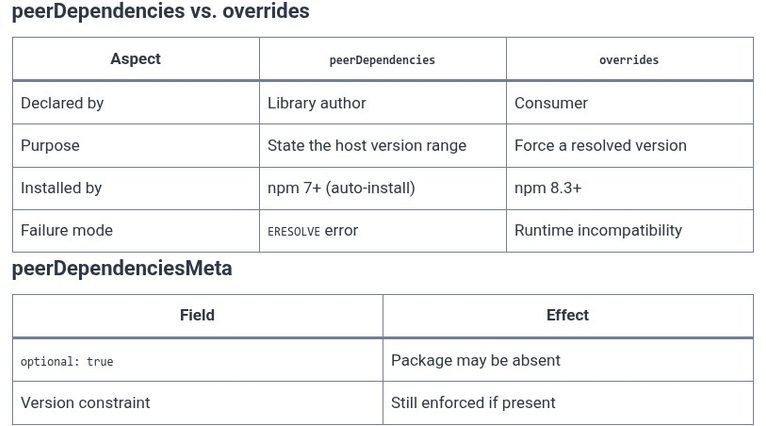
    Two fields in package.json control dependency resolution when the default behavior does not produce the tree the project needs. peerDependencies declares what a package expects its consumer to provide, and peerDependenciesMeta marks specific peers as optional. overrides forces a specific version of a package anywhere in the dependency tree, including transitive dependencies that the project…

    Read More npm 26 🌐 Overrides and Peer Dependencies (overrides, peerDependencies)Continue

  • npm 25 🌐 Security Best Practices & Token Management (npm audit fix, Access Tokens)
    Programming | npm | Tools & Build Systems

    npm 25 🌐 Security Best Practices & Token Management (npm audit fix, Access Tokens)

    ByKandZ October 22, 2026October 22, 2026

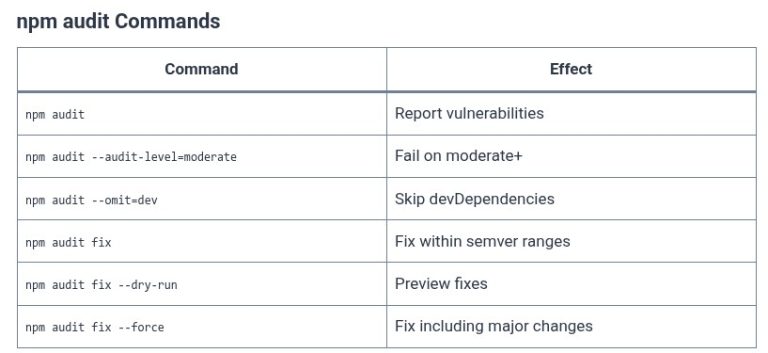
    Security in npm operates on two axes: the dependency tree and the credentials that authorize publishing. The dependency tree is audited with npm audit, which compares installed packages against a vulnerability database and offers automated fixes. The credentials are managed as access tokens, which have been consolidated into a single granular model as of November…

    Read More npm 25 🌐 Security Best Practices & Token Management (npm audit fix, Access Tokens)Continue

  • npm 24 🌐 npm Workspaces (Monorepos)
    Programming | npm | Tools & Build Systems

    npm 24 🌐 npm Workspaces (Monorepos)

    ByKandZ October 22, 2026October 22, 2026

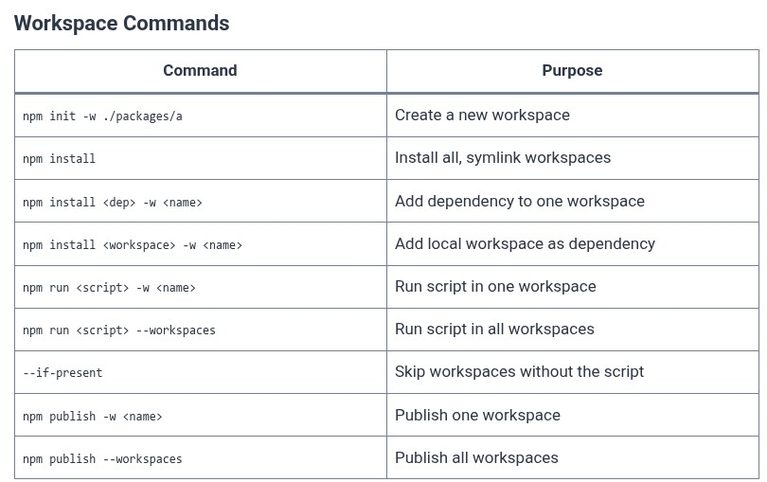
    An npm workspace is a repository whose root package.json contains a workspaces field listing the directories that hold other package.json files. Running npm install at the root installs every workspace’s dependencies in one pass and symlinks the local packages into the root node_modules, so they can depend on each other without being published to a…

    Read More npm 24 🌐 npm Workspaces (Monorepos)Continue

  • npm 23 🌐 Scoped Packages (@org/package)
    Programming | npm | Tools & Build Systems

    npm 23 🌐 Scoped Packages (@org/package)

    ByKandZ October 22, 2026October 22, 2026

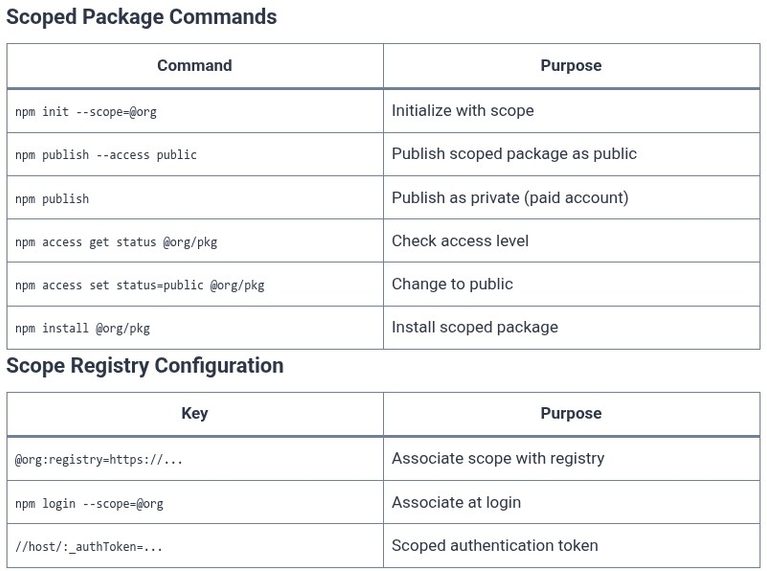
    A scoped package is a package whose name is prefixed with a namespace, written as @scope/package-name. The scope is the part between the @ and the /, and it groups related packages under a single namespace. Scopes exist to prevent name collisions: a package named utils is unique, but @myorg/utils and @otherorg/utils can coexist because…

    Read More npm 23 🌐 Scoped Packages (@org/package)Continue

Page navigation

Previous PagePrevious 1 … 38 39 40 41 42 … 257 Next PageNext
    Search