Skip to content

KandZ - Tuts

  • Operating Systems ▾
    • Linux ▾
      • Distros ▾
        • Fedora
        • Other Distros
        • Ubuntu
      • Gnome 48
      • KDE
      • LFCA - Linux Foundation Certified IT Associate
      • LFCS - Linux Foundation Certified Sysadmin
      • LFCE - Linux Foundation Certified Engineer (Sysadmin + Network Admin)
      • Linux CLI
      • Various
      • Bash Scripting
  • Paths ▾
    • Core Web Stack
    • React & Modern UI Stack
    • Linux Core
  • Programming ▾
    • Frontend (FED) ▾
      • React Ecosystem ▾
        • React
        • React Router
        • TanStack Router
        • TanStack Query (React Query)
        • Zustand
        • Redux Toolkit
      • Angular Ecosystem ▾
        • Angular
      • Vue Ecosystem ▾
        • Vue.js
      • Styling & UI Components ▾
        • Tailwind CSS
    • Languages & Runtimes ▾
      • CSS
      • Dart
      • HTML
      • JavaScript
      • Node.js
      • Rust
      • SQL
      • TypeScript
    • Tools & Build Systems ▾
      • Version Control ▾
        • GitHub
        • Git
        • GitLab
      • Package Managers ▾
        • npm
        • Bun
        • yarn
        • pnpm
      • DevOps & Containers ▾
        • Docker
  • Servers & Self-Hosting ▾
    • Internet ▾
      • Internet Backend - Coming Soon
      • Internet Beginner
      • Internet Frontend - Coming Soon
    • Networking & DNS ▾
      • REST API
  • Tools
  • Windows ▾
    • Windows 11
KandZ - Tuts
AngularBunCSSDartDockerGitGitHubGitLabHTMLJavaScriptNode.jsnpmpnpmReactReact RouterRedux ToolkitRustSQLTailwind CSSTanStack Query (React Query)TanStack RouterTypeScriptVue.jsyarnZustandBash ScriptingFedoraGnome 48KDELFCA - Linux Foundation Certified IT AssociateLFCE - Linux Foundation Certified Engineer (Sysadmin + Network Admin)LFCS - Linux Foundation Certified SysadminLinux CLIOther DistrosUbuntuVariousCore Web StackInternet Backend - Coming SoonInternet BeginnerInternet Frontend - Coming SoonLinux CoreReact & Modern UI StackREST APIToolsWindows 11
  • Rust 97 🦀 Pinning Memory (Pin and Unpin)
    Programming | Languages & Runtimes | Rust

    Rust 97 🦀 Pinning Memory (Pin

    and Unpin)

    ByKandZ October 23, 2026October 23, 2026

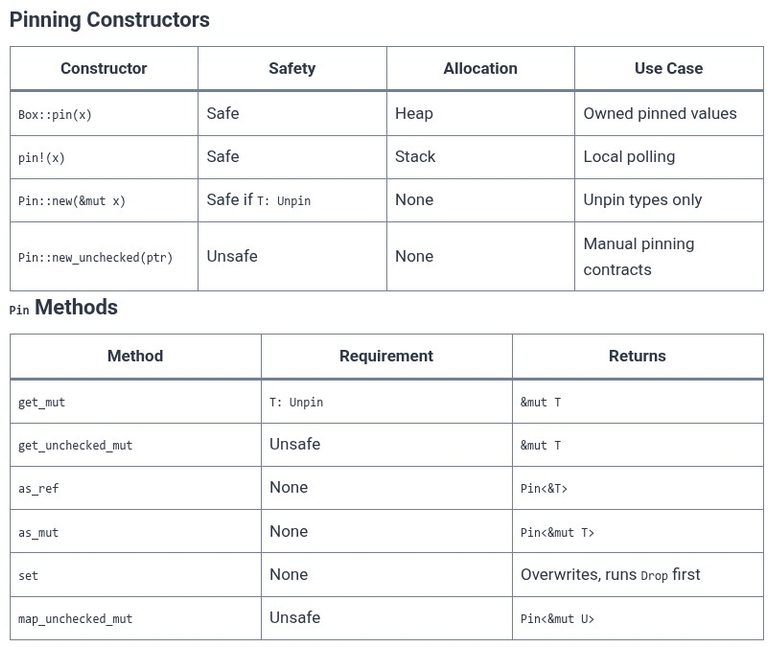
    Rust’s default assumption is that every value can move. Assignment moves, function calls move, returning from a function moves. For the vast majority of types this is harmless: a String owns a heap allocation and the pointer to that allocation travels with the struct when it moves. But some types contain pointers into their own…
    Read More Rust 97 🦀 Pinning Memory (Pin and Unpin)Continue

  • Rust 96 🦀 Inline Assembly (asm!) for Architecture-Specific Optimization
    Programming | Languages & Runtimes | Rust

    Rust 96 🦀 Inline Assembly (asm!) for Architecture-Specific Optimization

    ByKandZ October 23, 2026October 23, 2026

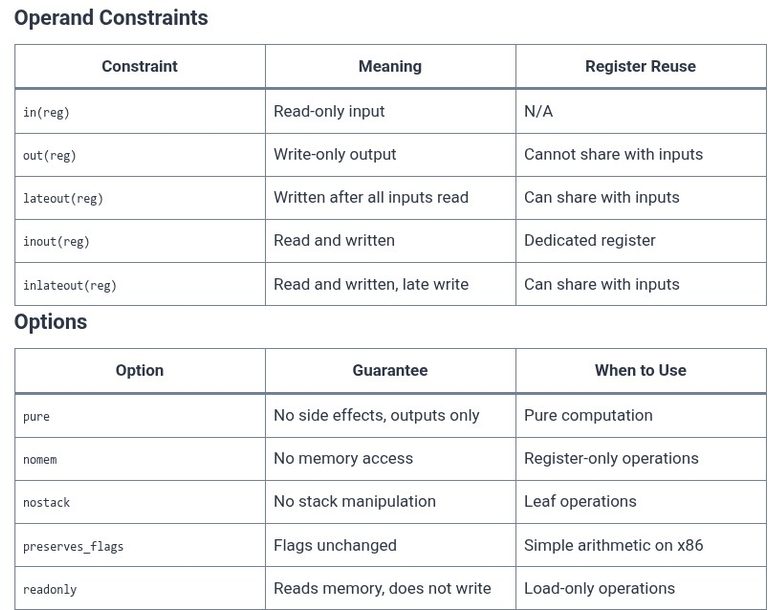
    Rust’s asm! macro is the language’s escape hatch into the raw instruction set of the machine. It exists because some operations cannot be expressed in portable Rust, and some optimizations require control that even LLVM’s best efforts cannot provide. This chapter is about using that escape hatch responsibly: writing inline assembly that is correct, that…

    Read More Rust 96 🦀 Inline Assembly (asm!) for Architecture-Specific OptimizationContinue

  • React 110 ⚛️ Static Site Generation with React-based Frameworks
    Programming | Frontend (FED) | React

    React 110 ⚛️ Static Site Generation with React-based Frameworks

    ByKandZ October 23, 2026October 23, 2026

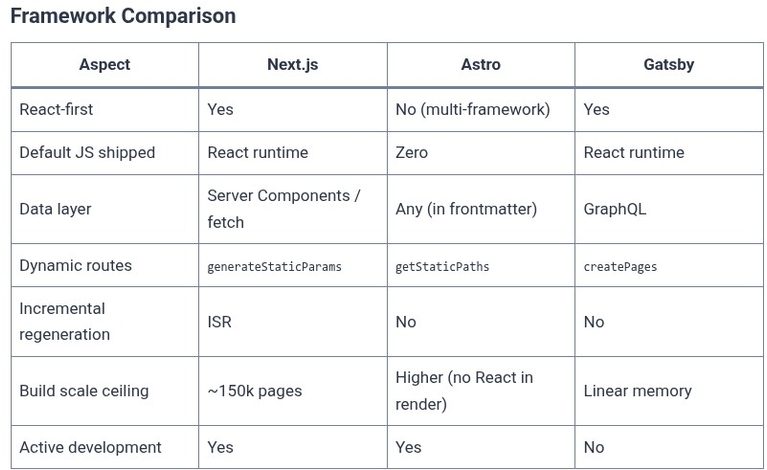
    Static Site Generation produces the HTML for every route at build time. Each URL maps to a file on disk that a CDN can serve from cache in tens of milliseconds, regardless of where the user is or how many other requests are in flight. The server does no work per request, so Time to…

    Read More React 110 ⚛️ Static Site Generation with React-based FrameworksContinue

  • React 109 ⚛️ Progressive and Selective Hydration
    Programming | Frontend (FED) | React

    React 109 ⚛️ Progressive and Selective Hydration

    ByKandZ October 23, 2026October 23, 2026

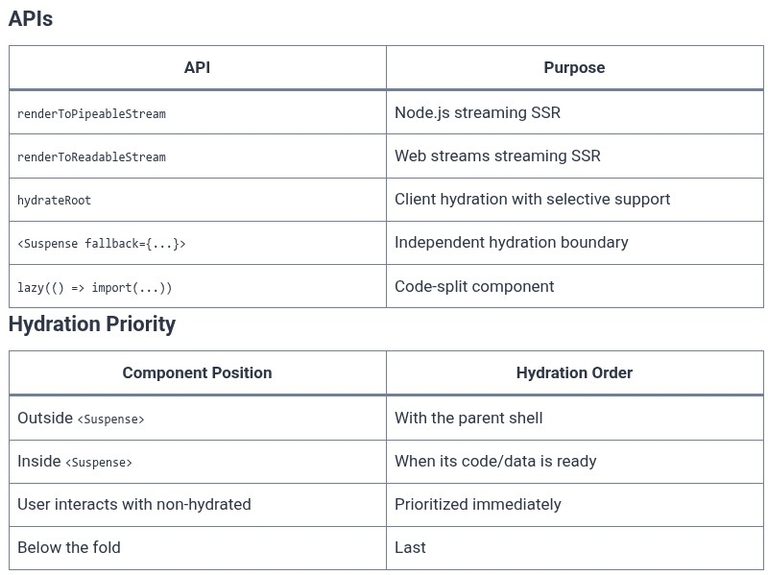
    Hydration has historically been an all-or-nothing operation. The server sends HTML, the browser parses it, and React attaches event handlers to the entire tree before any part of the page becomes interactive. In a large application, the JavaScript bundle can be hundreds of kilobytes, and the main thread can be blocked for hundreds of milliseconds…

    Read More React 109 ⚛️ Progressive and Selective HydrationContinue

  • React 108 ⚛️ Hydration Mismatch Errors and Resolution Strategies
    Programming | Frontend (FED) | React

    React 108 ⚛️ Hydration Mismatch Errors and Resolution Strategies

    ByKandZ October 23, 2026October 23, 2026

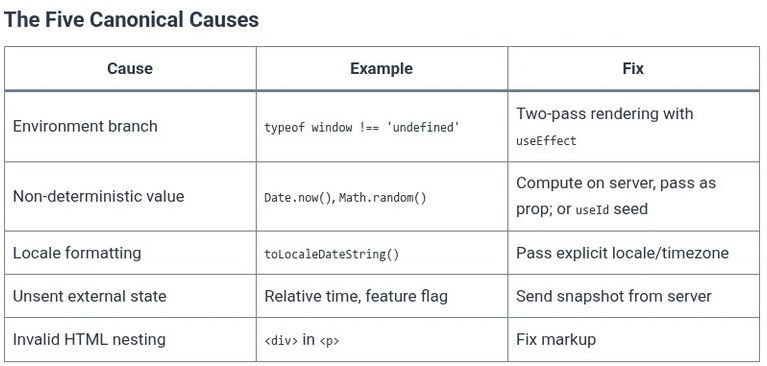
    Hydration mismatches occur when the HTML generated by the server does not match what React expects during the client’s initial render. React’s hydrateRoot treats this as a bug, not a feature. In development, it warns about the mismatch; in production, it may fall back to client rendering from the nearest Suspense boundary, which discards the…

    Read More React 108 ⚛️ Hydration Mismatch Errors and Resolution StrategiesContinue

  • React 107 ⚛️ Synthetic Event Pooling and Event Delegation
    Programming | Frontend (FED) | React

    React 107 ⚛️ Synthetic Event Pooling and Event Delegation

    ByKandZ October 23, 2026October 23, 2026

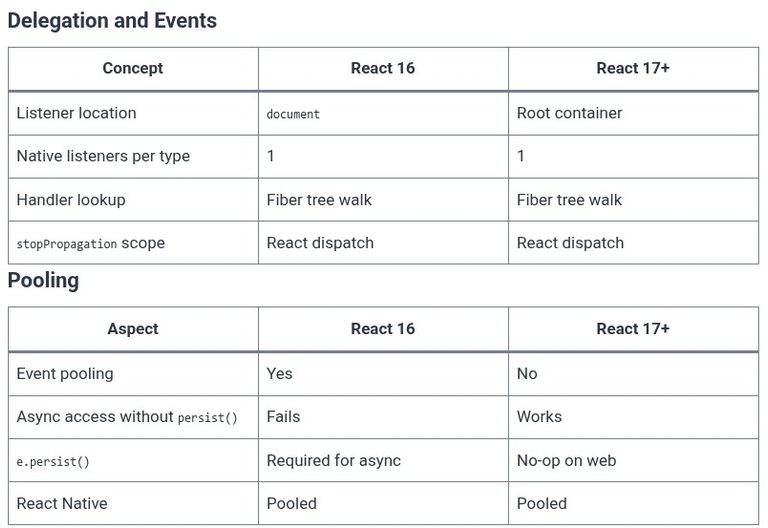
    React does not attach event listeners to the DOM elements you write in JSX. It attaches a single listener per event type to the root container, and when a native event fires, React walks its internal Fiber tree to find the components that have handlers for that event, then calls them with a SyntheticEvent—a cross-browser…

    Read More React 107 ⚛️ Synthetic Event Pooling and Event DelegationContinue

  • React 106 ⚛️ Memory Leak Prevention and Cleanup Strategies
    Programming | Frontend (FED) | React

    React 106 ⚛️ Memory Leak Prevention and Cleanup Strategies

    ByKandZ October 23, 2026October 23, 2026

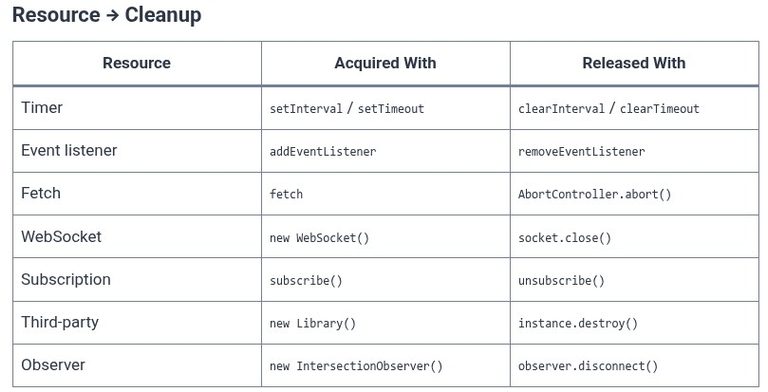
    A React memory leak is not a failure of React’s garbage collection. React unmounts the component, removes its DOM, and drops its internal references. The leak persists because something outside React still holds a reference to the component’s state, its DOM nodes, or its closures. The common sources are timers, event listeners on window or…

    Read More React 106 ⚛️ Memory Leak Prevention and Cleanup StrategiesContinue

  • Vue.js 101 🟢 Cheatsheet
    Programming | Frontend (FED) | Vue.js

    Vue.js 101 🟢 Cheatsheet

    ByKandZ October 23, 2026October 23, 2026

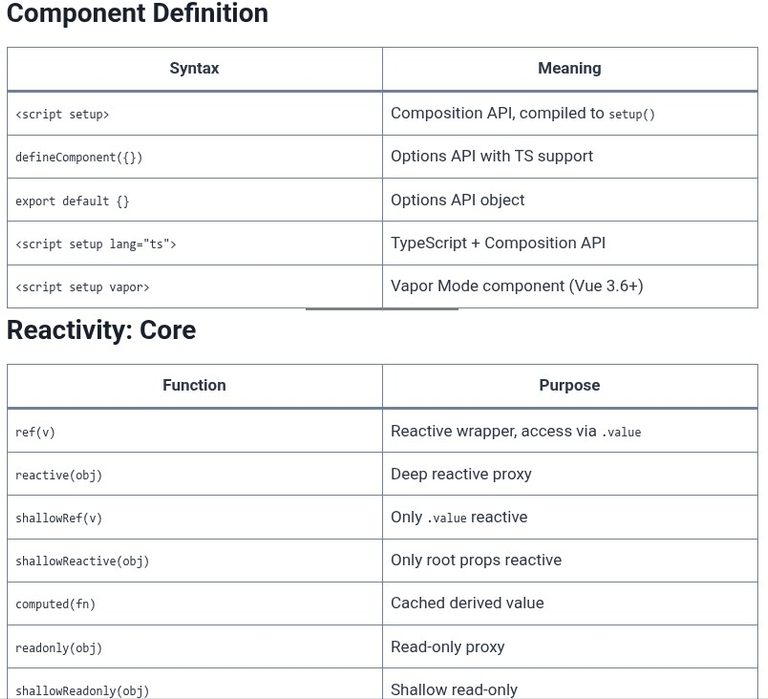
    A quick-reference for Vue 3 APIs, reactivity, components, and internals. Organized for lookup, not for reading. Component Definition Syntax Meaning <script setup> Composition API, compiled to setup() defineComponent({}) Options API with TS support export default {} Options API object <script setup lang=”ts”> TypeScript + Composition API <script setup vapor> Vapor Mode component (Vue 3.6+) Reactivity:…

    Read More Vue.js 101 🟢 CheatsheetContinue

  • Vue.js 100 🟢 Vue Core Internals: Deep Dive into Mount Phase, Render Pipeline, and Scheduler Queue
    Programming | Frontend (FED) | Vue.js

    Vue.js 100 🟢 Vue Core Internals: Deep Dive into Mount Phase, Render Pipeline, and Scheduler Queue

    ByKandZ October 23, 2026October 23, 2026

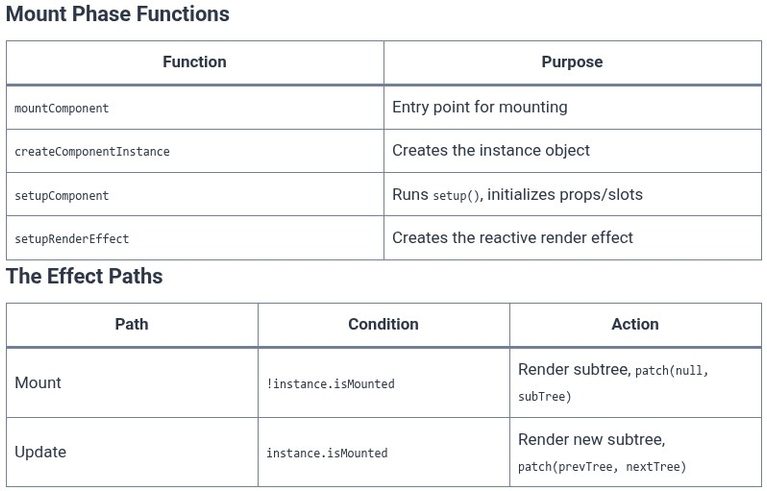
    The mount phase, the render pipeline, and the scheduler queue are three stages of the same mechanism. The mount phase creates the component instance, runs the setup, and executes the render function for the first time. The render pipeline turns the template into a virtual DOM tree and patches it into real DOM nodes. The…

    Read More Vue.js 100 🟢 Vue Core Internals: Deep Dive into Mount Phase, Render Pipeline, and Scheduler QueueContinue

  • Vue.js 99 🟢 Custom AST Transforms and Vue Template Compiler Plugins
    Programming | Frontend (FED) | Vue.js

    Vue.js 99 🟢 Custom AST Transforms and Vue Template Compiler Plugins

    ByKandZ October 23, 2026October 23, 2026

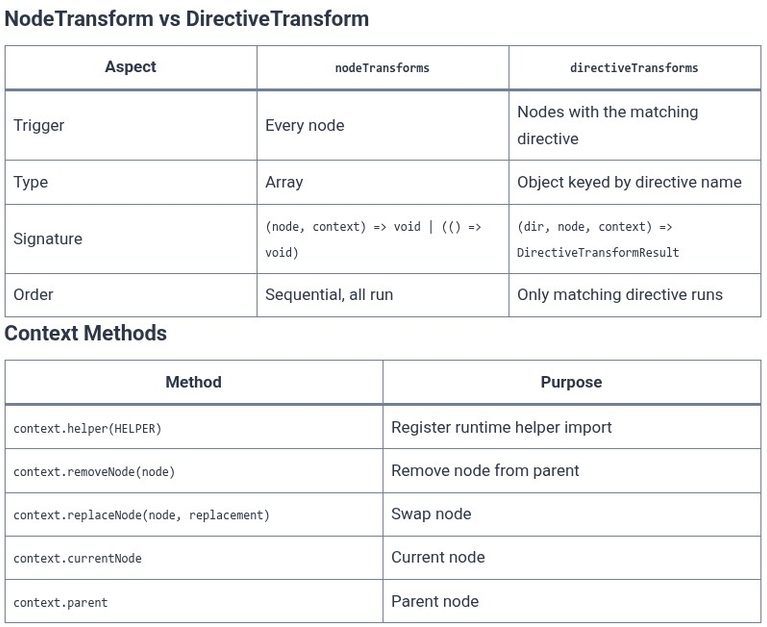
    Vue’s template compiler is not a closed pipeline. The transform stage—the phase between parsing the template into an AST and generating the render function—is built from an array of nodeTransforms functions that run on every node, and a map of directiveTransforms that run on specific directives. A custom compiler plugin is a function inserted into…

    Read More Vue.js 99 🟢 Custom AST Transforms and Vue Template Compiler PluginsContinue

Page navigation

Previous PagePrevious 1 … 36 37 38 39 40 … 257 Next PageNext
    Search