Skip to content

KandZ - Tuts

  • Operating Systems ▾
    • Linux ▾
      • Distros ▾
        • Fedora
        • Other Distros
        • Ubuntu
      • Gnome 48
      • KDE
      • LFCA - Linux Foundation Certified IT Associate
      • LFCS - Linux Foundation Certified Sysadmin
      • LFCE - Linux Foundation Certified Engineer (Sysadmin + Network Admin)
      • Linux CLI
      • Various
      • Bash Scripting
  • Paths ▾
    • Core Web Stack
    • React & Modern UI Stack
    • Linux Core
  • Programming ▾
    • Frontend (FED) ▾
      • React Ecosystem ▾
        • React
        • React Router
        • TanStack Router
        • TanStack Query (React Query)
        • Zustand
        • Redux Toolkit
      • Angular Ecosystem ▾
        • Angular
      • Vue Ecosystem ▾
        • Vue.js
      • Styling & UI Components ▾
        • Tailwind CSS
    • Languages & Runtimes ▾
      • CSS
      • Dart
      • HTML
      • JavaScript
      • Node.js
      • Rust
      • SQL
      • TypeScript
    • Tools & Build Systems ▾
      • Version Control ▾
        • GitHub
        • Git
        • GitLab
      • Package Managers ▾
        • npm
        • Bun
        • yarn
        • pnpm
      • DevOps & Containers ▾
        • Docker
  • Servers & Self-Hosting ▾
    • Internet ▾
      • Internet Backend - Coming Soon
      • Internet Beginner
      • Internet Frontend - Coming Soon
    • Networking & DNS ▾
      • REST API
  • Tools
  • Windows ▾
    • Windows 11
KandZ - Tuts
AngularBunCSSDartDockerGitGitHubGitLabHTMLJavaScriptNode.jsnpmpnpmReactReact RouterRedux ToolkitRustSQLTailwind CSSTanStack Query (React Query)TanStack RouterTypeScriptVue.jsyarnZustandBash ScriptingFedoraGnome 48KDELFCA - Linux Foundation Certified IT AssociateLFCE - Linux Foundation Certified Engineer (Sysadmin + Network Admin)LFCS - Linux Foundation Certified SysadminLinux CLIOther DistrosUbuntuVariousCore Web StackInternet Backend - Coming SoonInternet BeginnerInternet Frontend - Coming SoonLinux CoreReact & Modern UI StackREST APIToolsWindows 11
  • React 105 ⚛️ Automatic Batching Mechanics
    Programming | Frontend (FED) | React

    React 105 ⚛️ Automatic Batching Mechanics

    ByKandZ October 22, 2026October 22, 2026

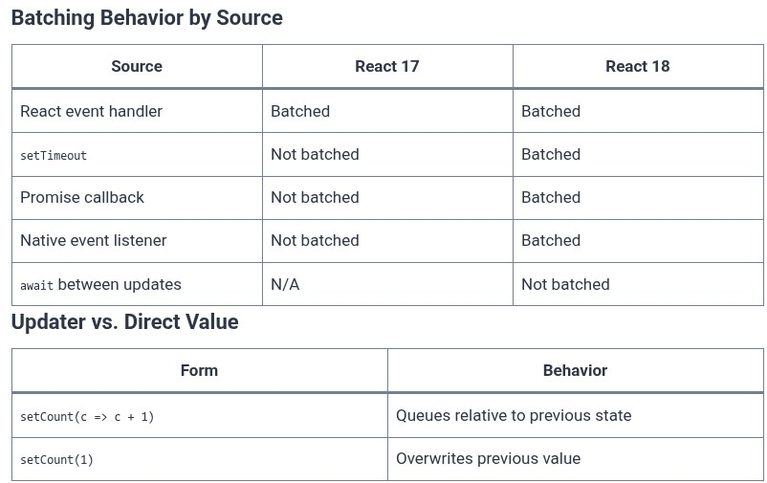
    Batching is the mechanism by which React groups multiple state updates into a single re-render. Before React 18, batching was limited to updates inside React event handlers. An update inside a setTimeout, a promise callback, or a native event listener triggered a separate render for each update. React 18 extended batching to all update sources,…
    Read More React 105 ⚛️ Automatic Batching MechanicsContinue

  • React 104 ⚛️ Concurrent Rendering Scheduler and Priorities
    Programming | Frontend (FED) | React

    React 104 ⚛️ Concurrent Rendering Scheduler and Priorities

    ByKandZ October 22, 2026October 22, 2026

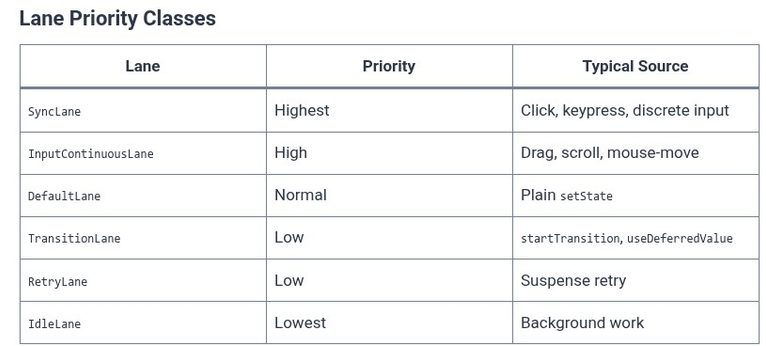
    Concurrent rendering is not a feature that makes React faster. It is a scheduling model that changes when React does its work. The scheduler assigns a priority to every state update, processes the highest-priority work first, and yields to the browser between small slices of work so that user input is never blocked by a…

    Read More React 104 ⚛️ Concurrent Rendering Scheduler and PrioritiesContinue

  • React 103 ⚛️ Double Pass Rendering and Strict Mode Behavior
    Programming | Frontend (FED) | React

    React 103 ⚛️ Double Pass Rendering and Strict Mode Behavior

    ByKandZ October 22, 2026October 22, 2026

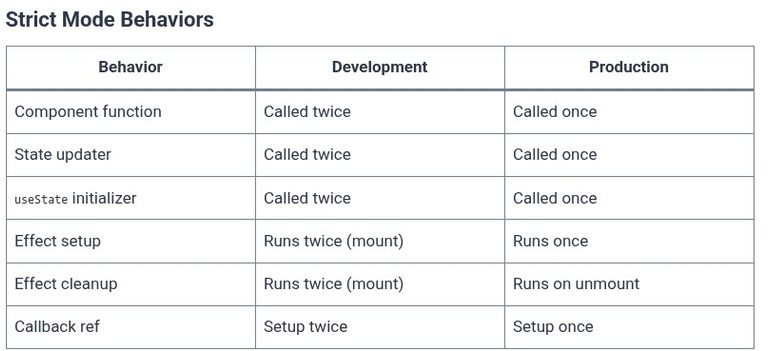
    Strict Mode is a development-only wrapper that deliberately runs certain parts of React’s lifecycle more than once. It is not a bug, a performance problem, or something that happens in production. It is a diagnostic tool that surfaces code which violates React’s rules—impure renders, missing effect cleanups, and state that does not reset correctly. The…

    Read More React 103 ⚛️ Double Pass Rendering and Strict Mode BehaviorContinue

  • React 102 ⚛️ The Commit Phase vs Render Phase
    Programming | Frontend (FED) | React

    React 102 ⚛️ The Commit Phase vs Render Phase

    ByKandZ October 22, 2026October 22, 2026

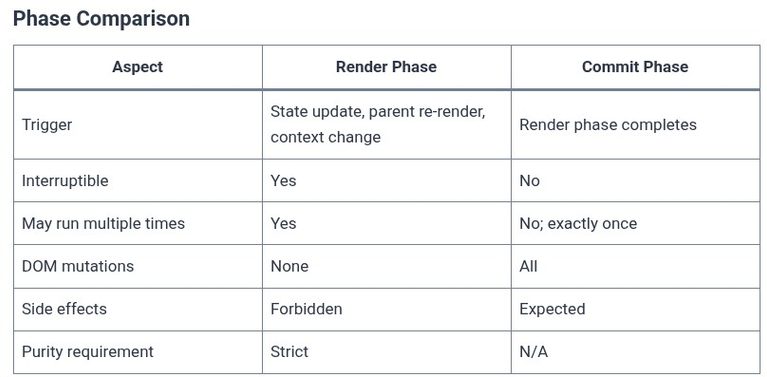
    React’s rendering pipeline is divided into two distinct phases with different rules, different guarantees, and different failure modes. The render phase is where React calls component functions, compares the new element tree to the previous one, and determines what needs to change. The commit phase is where React applies those changes to the DOM, runs…

    Read More React 102 ⚛️ The Commit Phase vs Render PhaseContinue

  • React 101 ⚛️ React Fiber Architecture and Reconciliation Algorithm
    Programming | Frontend (FED) | React

    React 101 ⚛️ React Fiber Architecture and Reconciliation Algorithm

    ByKandZ October 22, 2026October 22, 2026

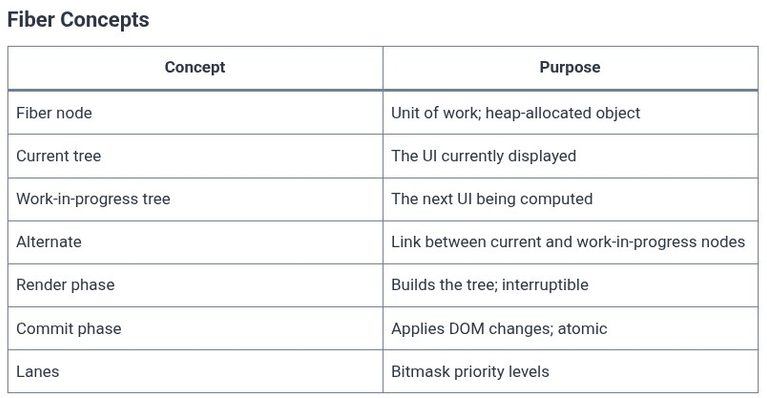
    React Fiber is not a feature that application developers interact with directly. It is the internal engine that determines how and when React renders. Before Fiber, React used a recursive reconciler that walked the component tree synchronously. Once rendering began, it could not be interrupted. A deeply nested component tree or an expensive render could…

    Read More React 101 ⚛️ React Fiber Architecture and Reconciliation AlgorithmContinue

  • SQL 130 🛢️ Database Driver Mechanics and Wire Protocols (PostgreSQL Protocol, MySQL Protocol)
    Programming | Languages & Runtimes | SQL

    SQL 130 🛢️ Database Driver Mechanics and Wire Protocols (PostgreSQL Protocol, MySQL Protocol)

    ByKandZ October 22, 2026October 22, 2026

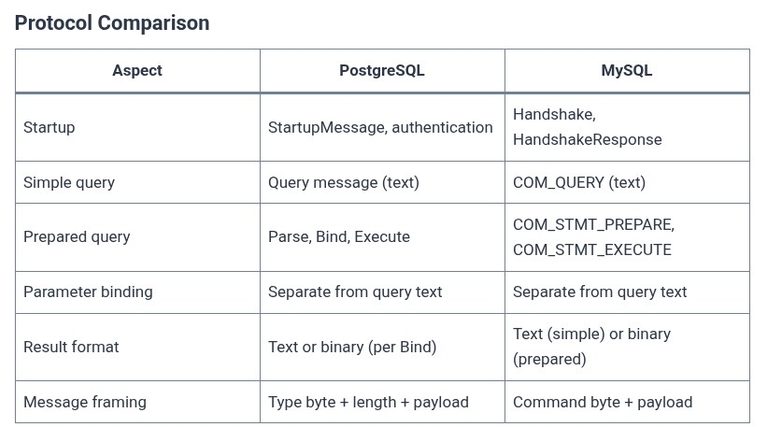
    A database driver is a translator. The application speaks in function calls and typed objects; the database speaks in a binary protocol over a socket. The wire protocol is the contract between them: a sequence of messages with defined framing, a startup handshake that negotiates capabilities and authenticates the user, and a query phase that…

    Read More SQL 130 🛢️ Database Driver Mechanics and Wire Protocols (PostgreSQL Protocol, MySQL Protocol)Continue

  • SQL 129 🛢️ Benchmarking SQL Performance (sysbench, TPC-C, TPC-H)
    Programming | Languages & Runtimes | SQL

    SQL 129 🛢️ Benchmarking SQL Performance (sysbench, TPC-C, TPC-H)

    ByKandZ October 22, 2026October 22, 2026

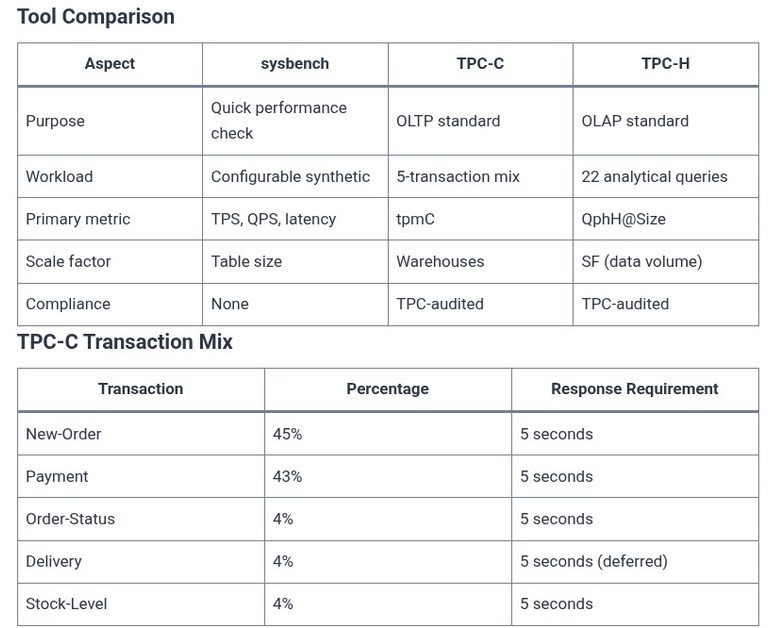
    Database benchmarking is the discipline of measuring a system’s performance under a workload that is defined, repeatable, and representative of the use case. The three tools that dominate the conversation serve different purposes. sysbench is a lightweight, multi-threaded benchmark tool for quick impressions of system performance, with built-in tests for CPU, memory, file I/O, and…

    Read More SQL 129 🛢️ Benchmarking SQL Performance (sysbench, TPC-C, TPC-H)Continue

  • SQL 128 🛢️ Database Unit Testing Frameworks (pgTAP, tSQLt)
    Programming | Languages & Runtimes | SQL

    SQL 128 🛢️ Database Unit Testing Frameworks (pgTAP, tSQLt)

    ByKandZ October 22, 2026October 22, 2026

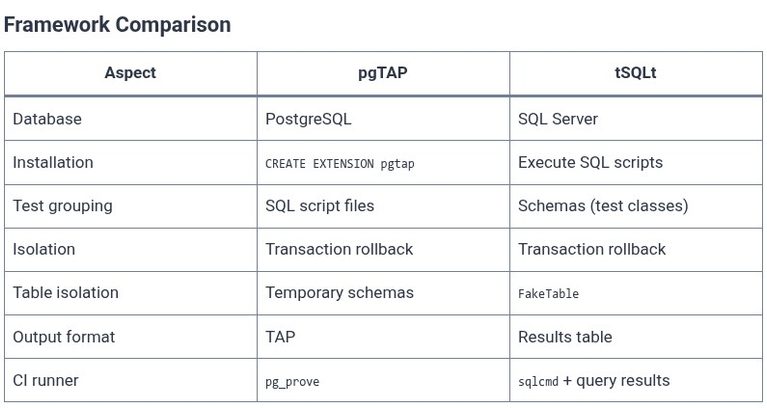
    Database unit testing frameworks exist because the logic inside stored procedures, functions, and triggers is code, and code that is not tested accumulates defects silently. The challenge is that database code does not return values or throw exceptions in the way that application code does. A stored procedure communicates through result sets and output parameters….

    Read More SQL 128 🛢️ Database Unit Testing Frameworks (pgTAP, tSQLt)Continue

  • SQL 127 🛢️ Cross-Database Migration Strategies and Schema Evolution
    Programming | Languages & Runtimes | SQL

    SQL 127 🛢️ Cross-Database Migration Strategies and Schema Evolution

    ByKandZ October 22, 2026October 22, 2026

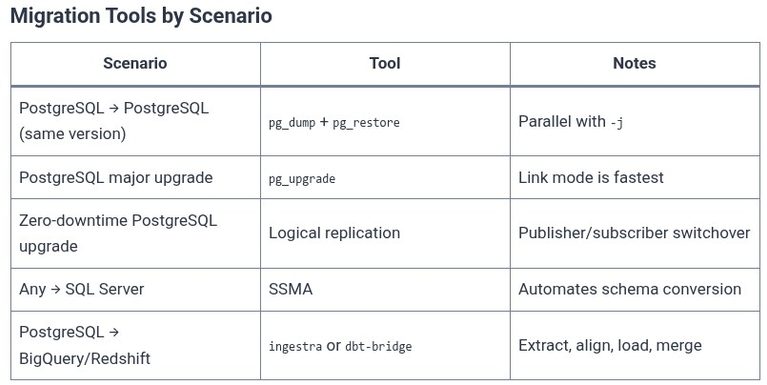
    Cross-database migration and schema evolution are two different problems that are often confused because both involve moving data and changing structure. A cross-database migration moves data from one database engine to another—PostgreSQL to SQL Server, MySQL to PostgreSQL, on-premises to cloud. Schema evolution changes the structure of a database while it is running, with the…

    Read More SQL 127 🛢️ Cross-Database Migration Strategies and Schema EvolutionContinue

  • SQL 126 🛢️ Database Auditing, Compliance Logging, and Event Tracking
    Programming | Languages & Runtimes | SQL

    SQL 126 🛢️ Database Auditing, Compliance Logging, and Event Tracking

    ByKandZ October 22, 2026October 22, 2026

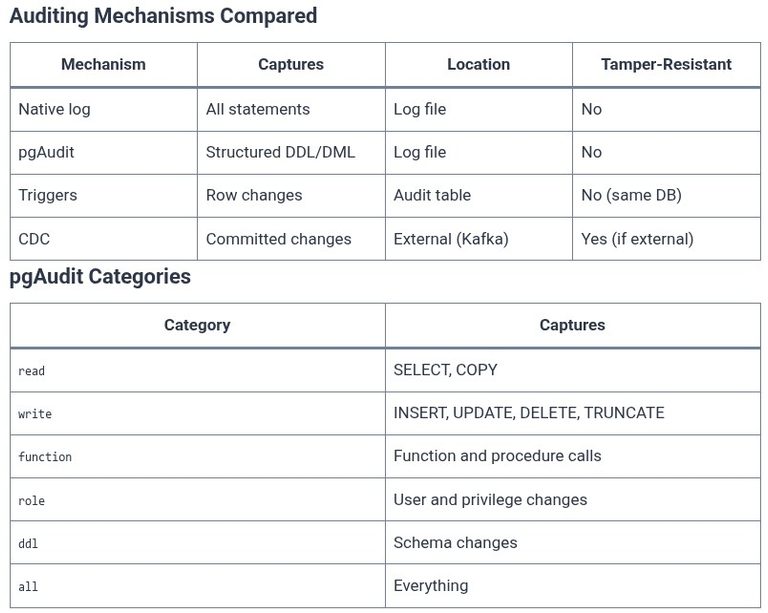
    Database auditing is not a single mechanism but a spectrum of approaches that differ in what they capture, where the record is stored, and whether the record can be tampered with by the same principals being audited. The choice of approach is determined by the compliance framework and the threat model, not by convenience. A…

    Read More SQL 126 🛢️ Database Auditing, Compliance Logging, and Event TrackingContinue

Page navigation

Previous PagePrevious 1 … 41 42 43 44 45 … 257 Next PageNext
    Search