Skip to content

KandZ - Tuts

  • Operating Systems ▾
    • Linux ▾
      • Distros ▾
        • Fedora
        • Other Distros
        • Ubuntu
      • Gnome 48
      • KDE
      • LFCA - Linux Foundation Certified IT Associate
      • LFCS - Linux Foundation Certified Sysadmin
      • LFCE - Linux Foundation Certified Engineer (Sysadmin + Network Admin)
      • Linux CLI
      • Various
      • Bash Scripting
  • Paths ▾
    • Core Web Stack
    • React & Modern UI Stack
    • Linux Core
  • Programming ▾
    • Frontend (FED) ▾
      • React Ecosystem ▾
        • React
        • React Router
        • TanStack Router
        • TanStack Query (React Query)
        • Zustand
        • Redux Toolkit
      • Angular Ecosystem ▾
        • Angular
      • Vue Ecosystem ▾
        • Vue.js
      • Styling & UI Components ▾
        • Tailwind CSS
    • Languages & Runtimes ▾
      • CSS
      • Dart
      • HTML
      • JavaScript
      • Node.js
      • Rust
      • SQL
      • TypeScript
    • Tools & Build Systems ▾
      • Version Control ▾
        • GitHub
        • Git
        • GitLab
      • Package Managers ▾
        • npm
        • Bun
        • yarn
        • pnpm
      • DevOps & Containers ▾
        • Docker
  • Servers & Self-Hosting ▾
    • Internet ▾
      • Internet Backend - Coming Soon
      • Internet Beginner
      • Internet Frontend - Coming Soon
    • Networking & DNS ▾
      • REST API
  • Tools
  • Windows ▾
    • Windows 11
KandZ - Tuts
AngularBunCSSDartDockerGitGitHubGitLabHTMLJavaScriptNode.jsnpmpnpmReactReact RouterRedux ToolkitRustSQLTailwind CSSTanStack Query (React Query)TanStack RouterTypeScriptVue.jsyarnZustandBash ScriptingFedoraGnome 48KDELFCA - Linux Foundation Certified IT AssociateLFCE - Linux Foundation Certified Engineer (Sysadmin + Network Admin)LFCS - Linux Foundation Certified SysadminLinux CLIOther DistrosUbuntuVariousCore Web StackInternet Backend - Coming SoonInternet BeginnerInternet Frontend - Coming SoonLinux CoreReact & Modern UI StackREST APIToolsWindows 11
  • SQL 125 🛢️ Dynamic SQL and SQL Injection Hazards in Procedural Code
    Programming | Languages & Runtimes | SQL

    SQL 125 🛢️ Dynamic SQL and SQL Injection Hazards in Procedural Code

    ByKandZ October 22, 2026October 22, 2026

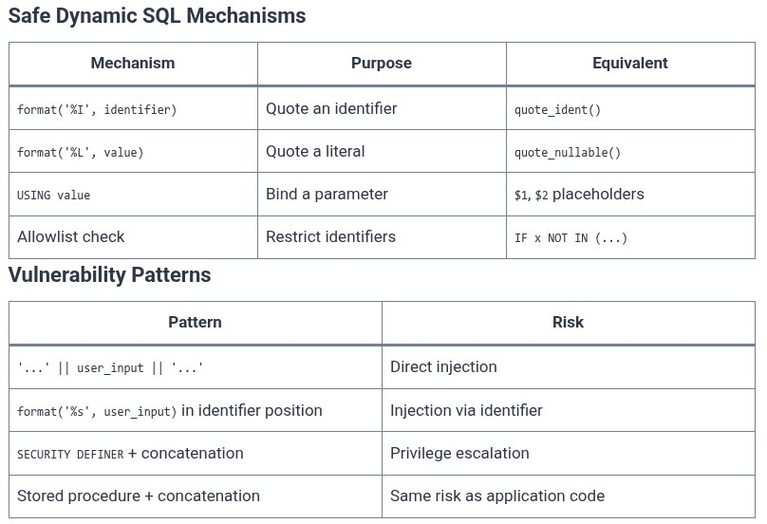
    Dynamic SQL is the construction of a SQL statement as a string at runtime, then executing it. It exists because some parts of a query cannot be parameterized: table names, column names, sort directions, and identifiers that the query planner needs to see as structure rather than data. The hazard is that the same mechanism…
    Read More SQL 125 🛢️ Dynamic SQL and SQL Injection Hazards in Procedural CodeContinue

  • SQL 124 🛢️ Foreign Data Wrappers (FDW) and Federated Queries
    Programming | Languages & Runtimes | SQL

    SQL 124 🛢️ Foreign Data Wrappers (FDW) and Federated Queries

    ByKandZ October 22, 2026October 22, 2026

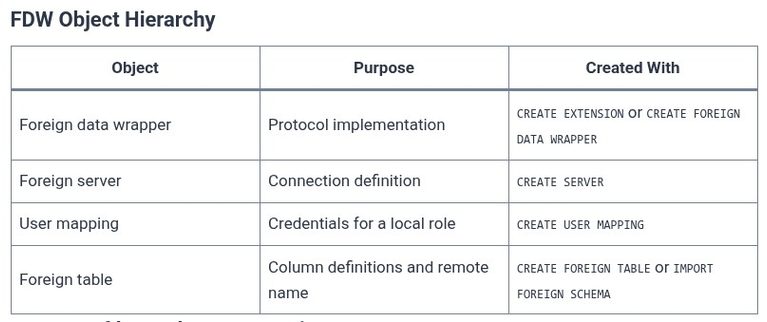
    A Foreign Data Wrapper is PostgreSQL’s implementation of the SQL/MED standard: a library that lets the database treat data residing outside PostgreSQL as if it were a local table . The wrapper handles the protocol for connecting to the external source, fetching rows, and returning them to the PostgreSQL executor. The postgres_fdw extension is the…

    Read More SQL 124 🛢️ Foreign Data Wrappers (FDW) and Federated QueriesContinue

  • SQL 123 🛢️ Change Data Capture (CDC) with Debezium and Database Triggers
    Programming | Languages & Runtimes | SQL

    SQL 123 🛢️ Change Data Capture (CDC) with Debezium and Database Triggers

    ByKandZ October 22, 2026October 22, 2026

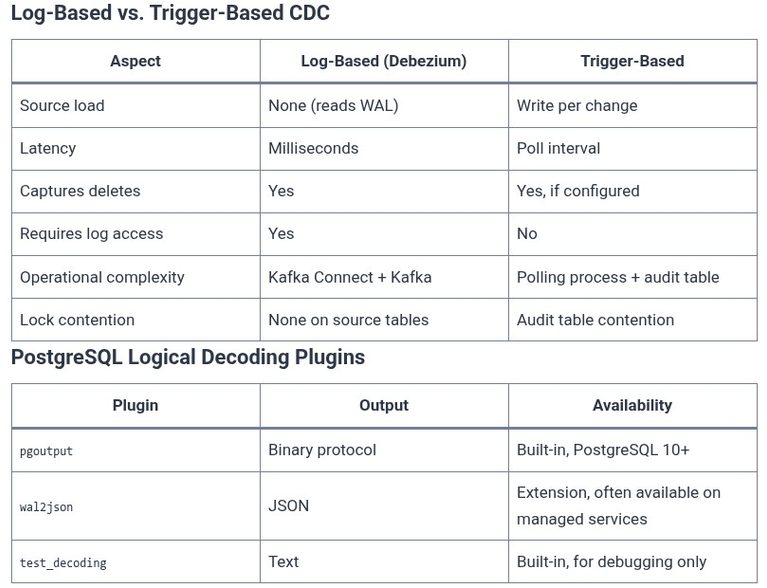
    Change Data Capture is the pattern of detecting row-level changes—inserts, updates, and deletes—as they happen, and streaming them to downstream systems. The two dominant approaches in relational databases are log-based CDC, which reads the database’s transaction log, and trigger-based CDC, which installs database triggers that write to an audit table. Debezium is the de-facto open-source…

    Read More SQL 123 🛢️ Change Data Capture (CDC) with Debezium and Database TriggersContinue

  • SQL 122 🛢️ Vector Search and Embeddings in SQL (pgvector, HNSW indexes)
    Programming | Languages & Runtimes | SQL

    SQL 122 🛢️ Vector Search and Embeddings in SQL (pgvector, HNSW indexes)

    ByKandZ October 22, 2026October 22, 2026

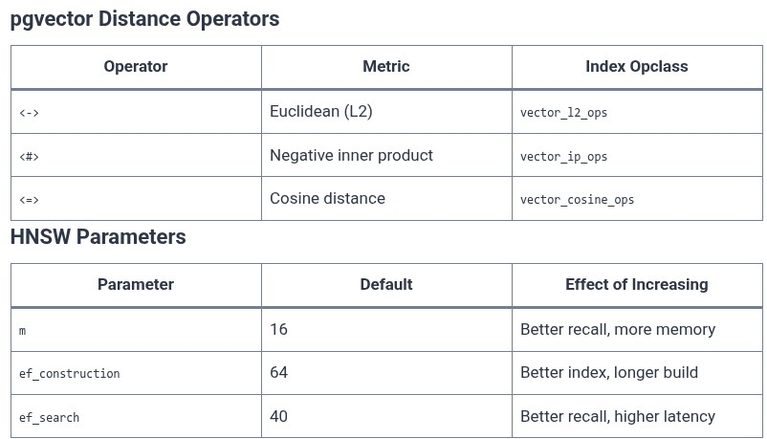
    Vector search brings the core operation of modern AI applications—finding items that are semantically similar—into the relational database. An embedding is a high-dimensional vector of floating-point numbers that represents the meaning of text, an image, or any other data. Two embeddings that are close in vector space represent items with similar meaning. pgvector is the…

    Read More SQL 122 🛢️ Vector Search and Embeddings in SQL (pgvector, HNSW indexes)Continue

  • SQL 121 🛢️ Querying Unstructured Data with XML and XPath
    Programming | Languages & Runtimes | SQL

    SQL 121 🛢️ Querying Unstructured Data with XML and XPath

    ByKandZ October 22, 2026October 22, 2026

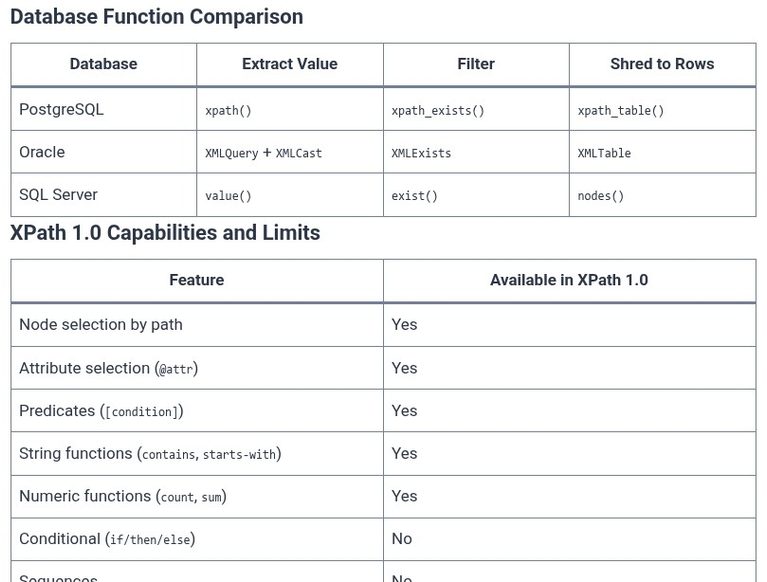
    Relational databases have stored XML data for decades, but the mechanism for querying it is not SQL. XPath is a separate expression language with its own syntax, its own type system, and its own limitations. The SQL functions that expose XPath—PostgreSQL’s xpath() and xpath_exists(), Oracle’s XMLExists and XMLQuery, SQL Server’s xml methods—are bridges between two…

    Read More SQL 121 🛢️ Querying Unstructured Data with XML and XPathContinue

  • Free TSV Row Deduplicator
    Tools

    Free TSV Row Deduplicator

    ByKandZ October 22, 2026October 22, 2026

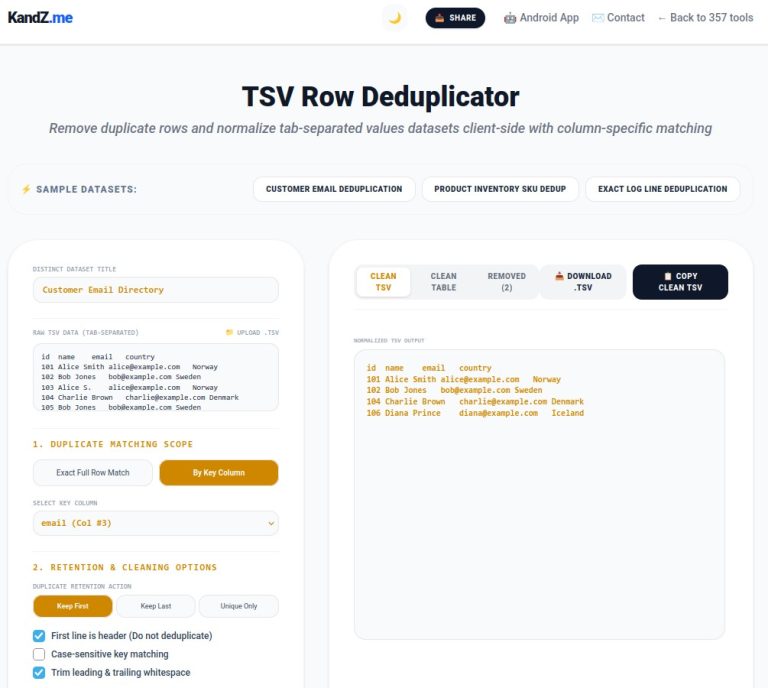
    Duplicate rows in TSV files are a pain. You sort. You scan. You delete one by one. And if you accidentally delete the wrong tab, the whole dataset shifts. I built a free tool that solves this. What it does: Use cases: Privacy:100% client-side. Nothing uploaded. Try it: tools.kandz.me/tsv-row-deduplicator

    Read More Free TSV Row DeduplicatorContinue

  • npm 20 🌐 Unpublishing, Deprecating, and Transferring Packages
    Programming | npm | Tools & Build Systems

    npm 20 🌐 Unpublishing, Deprecating, and Transferring Packages

    ByKandZ October 21, 2026October 21, 2026

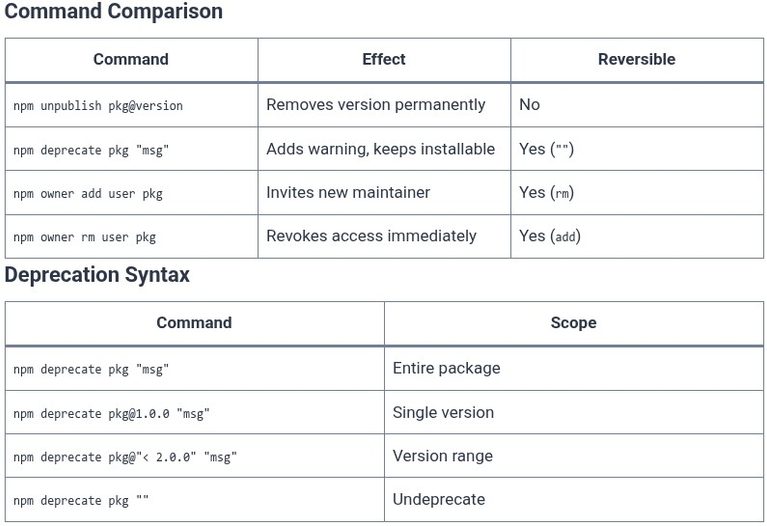
    Package lifecycle management extends beyond publishing. A maintainer eventually faces one of three decisions: remove a package entirely, mark it as no longer recommended while keeping it installable, or hand it to someone else. npm provides a distinct command for each, and the registry’s policies determine which commands are even permitted. The default recommendation from…

    Read More npm 20 🌐 Unpublishing, Deprecating, and Transferring PackagesContinue

  • npm 19 🌐 Managing Package Tags (npm dist-tag)
    Programming | npm | Tools & Build Systems

    npm 19 🌐 Managing Package Tags (npm dist-tag)

    ByKandZ October 21, 2026October 21, 2026

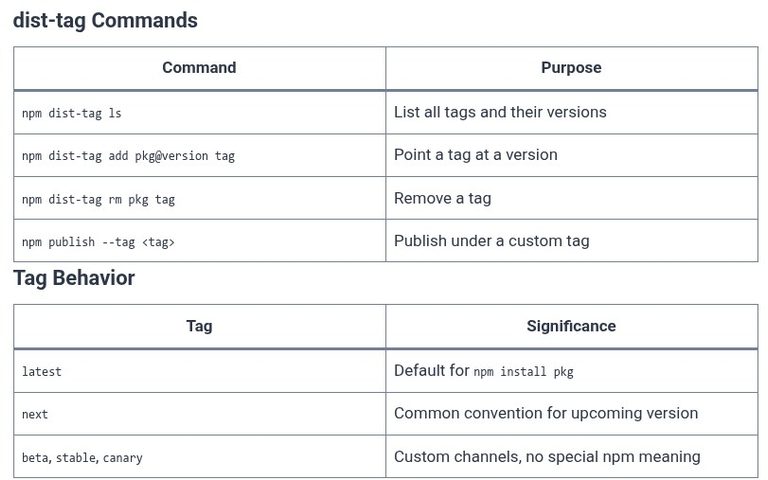
    Distribution tags (dist-tags) are human-readable labels that point to specific versions of a published package. The latest tag is the one npm uses by default when a consumer runs npm install package-name without a version or tag specifier. Every other tag—next, beta, stable, canary—is a custom pointer that the publisher creates and manages. The npm…

    Read More npm 19 🌐 Managing Package Tags (npm dist-tag)Continue

  • npm 18 🌐 Publishing Public and Private Packages (npm publish, –access public)
    Programming | npm | Tools & Build Systems

    npm 18 🌐 Publishing Public and Private Packages (npm publish, –access public)

    ByKandZ October 21, 2026October 21, 2026

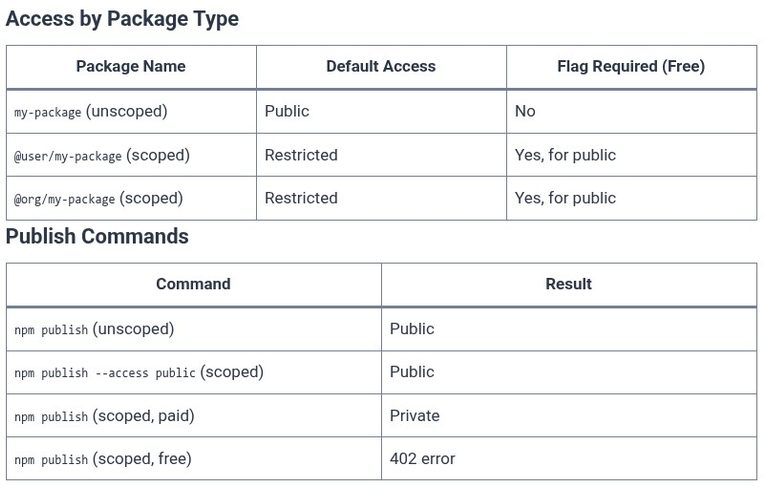
    Publishing a package to the npm registry is a single command, but the result depends on a decision made before the command runs: is the package scoped or unscoped, and is the account paid or free? The npm publish command reads the package name in package.json and applies a default access level based on whether…

    Read More npm 18 🌐 Publishing Public and Private Packages (npm publish, –access public)Continue

  • npm 17 🌐 Version Management (npm version patch|minor|major)
    Programming | npm | Tools & Build Systems

    npm 17 🌐 Version Management (npm version patch|minor|major)

    ByKandZ October 21, 2026October 21, 2026

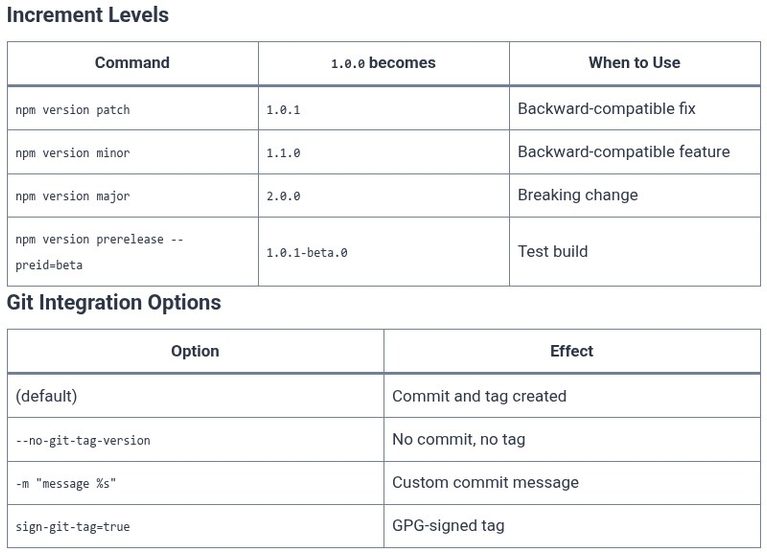
    Version management is the discipline of incrementing a package’s version number in a way that communicates the nature of the change to the consumers who depend on it. The npm version command automates this increment, writing the new version to package.json and package-lock.json, and—when run inside a Git repository—creating a commit and a tag that…

    Read More npm 17 🌐 Version Management (npm version patch|minor|major)Continue

Page navigation

Previous PagePrevious 1 … 43 44 45 46 47 … 258 Next PageNext
    Search