Skip to content

KandZ - Tuts

  • Operating Systems ▾
    • Linux ▾
      • Distros ▾
        • Fedora
        • Other Distros
        • Ubuntu
      • Gnome 48
      • KDE
      • LFCA - Linux Foundation Certified IT Associate
      • LFCS - Linux Foundation Certified Sysadmin
      • LFCE - Linux Foundation Certified Engineer (Sysadmin + Network Admin)
      • Linux CLI
      • Various
      • Bash Scripting
  • Paths ▾
    • Core Web Stack
    • React & Modern UI Stack
    • Linux Core
  • Programming ▾
    • Frontend (FED) ▾
      • React Ecosystem ▾
        • React
        • React Router
        • TanStack Router
        • TanStack Query (React Query)
        • Zustand
        • Redux Toolkit
      • Angular Ecosystem ▾
        • Angular
      • Vue Ecosystem ▾
        • Vue.js
      • Styling & UI Components ▾
        • Tailwind CSS
    • Languages & Runtimes ▾
      • CSS
      • Dart
      • HTML
      • JavaScript
      • Node.js
      • Rust
      • SQL
      • TypeScript
    • Tools & Build Systems ▾
      • Version Control ▾
        • GitHub
        • Git
        • GitLab
      • Package Managers ▾
        • npm
        • Bun
        • yarn
        • pnpm
      • DevOps & Containers ▾
        • Docker
  • Servers & Self-Hosting ▾
    • Internet ▾
      • Internet Backend - Coming Soon
      • Internet Beginner
      • Internet Frontend - Coming Soon
    • Networking & DNS ▾
      • REST API
  • Tools
  • Windows ▾
    • Windows 11
KandZ - Tuts
AngularBunCSSDartDockerGitGitHubGitLabHTMLJavaScriptNode.jsnpmpnpmReactReact RouterRedux ToolkitRustSQLTailwind CSSTanStack Query (React Query)TanStack RouterTypeScriptVue.jsyarnZustandBash ScriptingFedoraGnome 48KDELFCA - Linux Foundation Certified IT AssociateLFCE - Linux Foundation Certified Engineer (Sysadmin + Network Admin)LFCS - Linux Foundation Certified SysadminLinux CLIOther DistrosUbuntuVariousCore Web StackInternet Backend - Coming SoonInternet BeginnerInternet Frontend - Coming SoonLinux CoreReact & Modern UI StackREST APIToolsWindows 11
  • Vue.js 81 🟢 Performance Profiling with Vue DevTools (Timeline, Component Render Metrics)
    Programming | Frontend (FED) | Vue.js

    Vue.js 81 🟢 Performance Profiling with Vue DevTools (Timeline, Component Render Metrics)

    ByKandZ October 21, 2026October 21, 2026

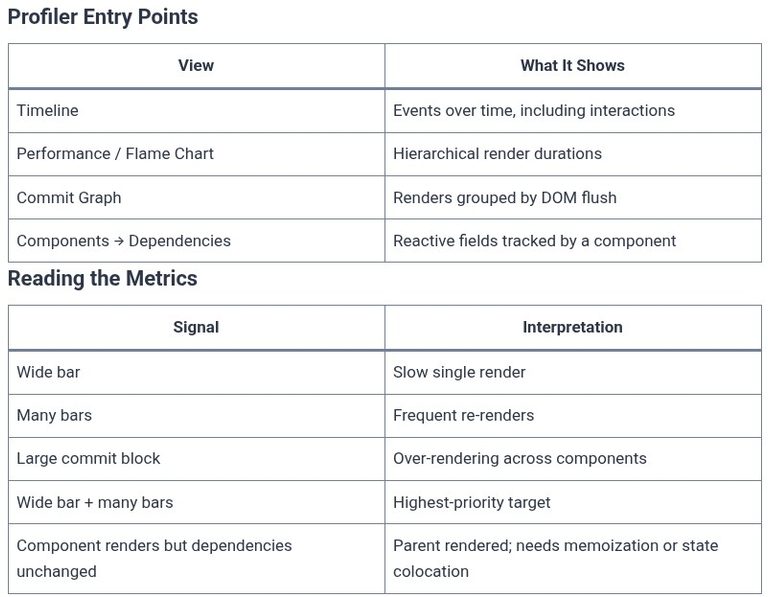
    Vue DevTools includes a performance profiling feature that records component render activity and displays it on a timeline. The tool exists to replace guesswork with measurement: instead of assuming a component is slow, you record an interaction, inspect the flame chart, and see exactly which components rendered, how long each render took, and whether a…
    Read More Vue.js 81 🟢 Performance Profiling with Vue DevTools (Timeline, Component Render Metrics)Continue

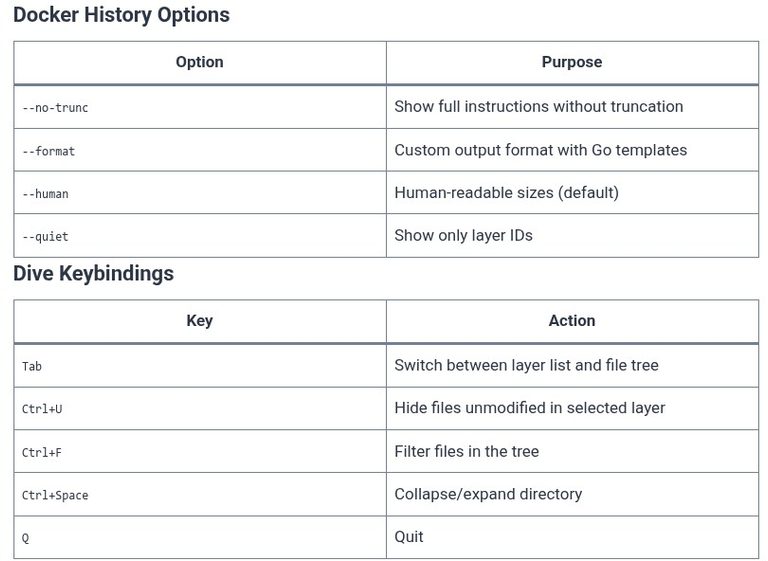
  • Docker 95 🐳 Reverse Engineering Docker Images: Extracting Dockerfiles using dive and Layer Inspection
    Programming | Docker | Tools & Build Systems

    Docker 95 🐳 Reverse Engineering Docker Images: Extracting Dockerfiles using dive and Layer Inspection

    ByKandZ October 21, 2026October 21, 2026

    Docker images do not store the original Dockerfile. The image is a stack of layers, and each layer records the instruction that created it, but the full build context—the files that were copied, the arguments passed to docker build—is not preserved in a form that can be reconstructed exactly . Reverse engineering a Dockerfile is…

    Read More Docker 95 🐳 Reverse Engineering Docker Images: Extracting Dockerfiles using dive and Layer InspectionContinue

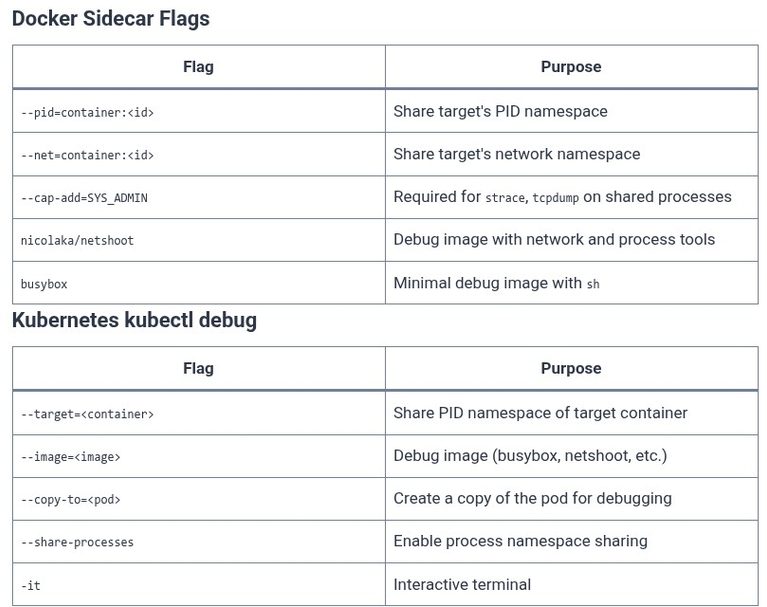
  • Docker 94 🐳 Debugging Ephemeral / Crashed Containers: Debugging Distroless Containers with Ephemeral Containers
    Programming | Docker | Tools & Build Systems

    Docker 94 🐳 Debugging Ephemeral / Crashed Containers: Debugging Distroless Containers with Ephemeral Containers

    ByKandZ October 21, 2026October 21, 2026

    Distroless images exist to reduce attack surface: they contain the application binary and its runtime dependencies, and nothing else. No shell, no package manager, no curl, no strace. When a distroless container crashes or misbehaves, the standard debugging reflex—docker exec -it <container> /bin/sh—fails because there is no shell to execute . The ephemeral container pattern…

    Read More Docker 94 🐳 Debugging Ephemeral / Crashed Containers: Debugging Distroless Containers with Ephemeral ContainersContinue

  • Docker 93 🐳 Kernel Resource Auditing: Tracing System Calls inside Containers using strace and eBPF
    Programming | Docker | Tools & Build Systems

    Docker 93 🐳 Kernel Resource Auditing: Tracing System Calls inside Containers using strace and eBPF

    ByKandZ October 21, 2026October 21, 2026

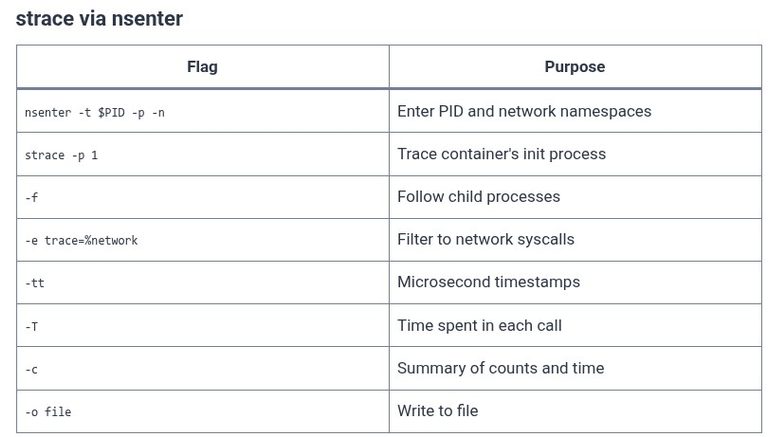
    Container system call tracing is complicated by two facts that are easy to overlook. First, minimal container images—the ones most likely to be deployed in production—often exclude strace and other debugging tools precisely because they increase the attack surface . Second, strace relies on the ptrace system call, which requires the CAP_SYS_PTRACE capability that Docker…

    Read More Docker 93 🐳 Kernel Resource Auditing: Tracing System Calls inside Containers using strace and eBPFContinue

  • Docker 92 🐳 Storage Performance Tuning: I/O Bottlenecks, Direct I/O, and Benchmark Tooling inside Containers
    Programming | Docker | Tools & Build Systems

    Docker 92 🐳 Storage Performance Tuning: I/O Bottlenecks, Direct I/O, and Benchmark Tooling inside Containers

    ByKandZ October 21, 2026October 21, 2026

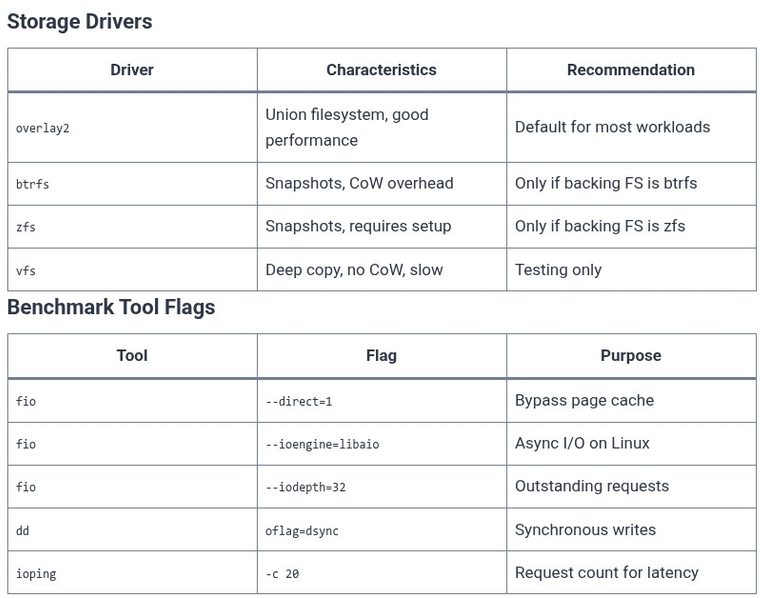
    Container storage performance is not the same as host storage performance. The storage driver, the writable layer, and the volume configuration all sit between the application and the disk, and each can become the bottleneck that limits throughput or inflates latency. The diagnostic challenge is that the bottleneck is often not the disk itself: a…

    Read More Docker 92 🐳 Storage Performance Tuning: I/O Bottlenecks, Direct I/O, and Benchmark Tooling inside ContainersContinue

  • Docker 91 🐳 Debugging Networking Issues: tcpdump, nsenter, and Inspecting Container Network Namespaces
    Programming | Docker | Tools & Build Systems

    Docker 91 🐳 Debugging Networking Issues: tcpdump, nsenter, and Inspecting Container Network Namespaces

    ByKandZ October 21, 2026October 21, 2026

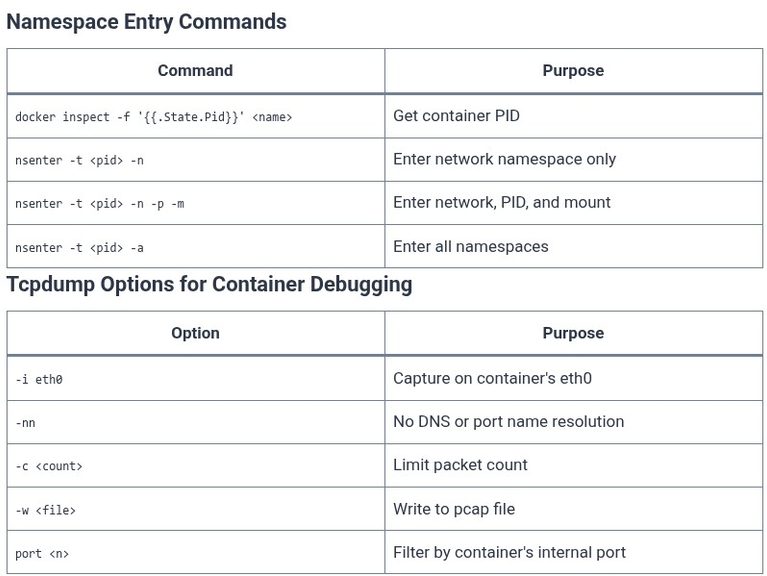
    Docker networking issues are difficult to diagnose from the host because each container has its own isolated network namespace. The eth0 interface, routing table, and socket state that belong to the container are invisible from the host’s default namespace. The tools that solve this problem are nsenter, which lets you enter the container’s network namespace…

    Read More Docker 91 🐳 Debugging Networking Issues: tcpdump, nsenter, and Inspecting Container Network NamespacesContinue

  • Dart 95 🎯 Internal Architecture: How Async/Await Desugars into State Machines
    Programming | Dart | Languages & Runtimes

    Dart 95 🎯 Internal Architecture: How Async/Await Desugars into State Machines

    ByKandZ October 21, 2026October 22, 2026

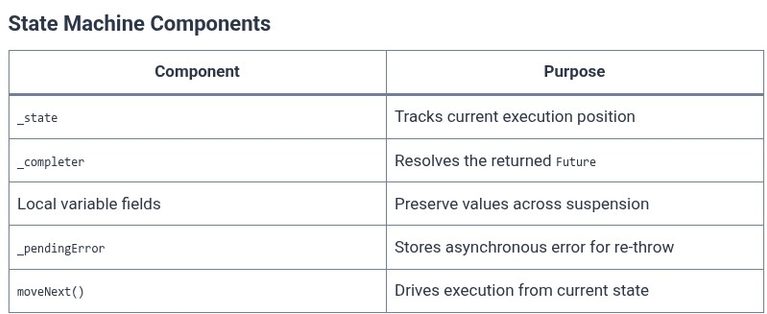
    The async and await keywords are the most consequential syntactic sugar in Dart. They allow a developer to write asynchronous code that reads like synchronous code, while the compiler transforms the function into an object with a moveNext method and a state variable that records how far execution has progressed. The transformation is not a…

    Read More Dart 95 🎯 Internal Architecture: How Async/Await Desugars into State MachinesContinue

  • Dart 94 🎯 Internal Architecture: Deep Dive into Dart AOT Snapshot Binary Format
    Programming | Dart | Languages & Runtimes

    Dart 94 🎯 Internal Architecture: Deep Dive into Dart AOT Snapshot Binary Format

    ByKandZ October 21, 2026October 22, 2026

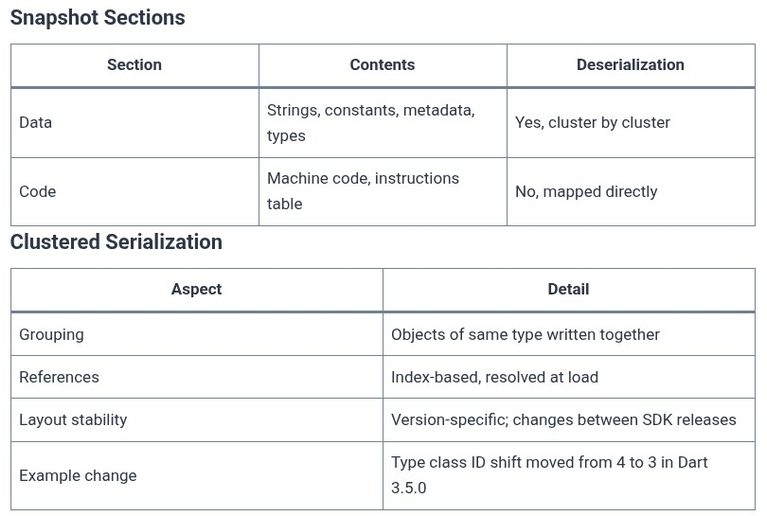
    The Dart AOT snapshot is not a traditional executable. It is a serialized representation of the Dart VM heap graph, written to disk by the AOT compiler and mapped into memory at startup by the precompiled runtime. The format is deliberately low-level and optimized for fast startup: it is essentially a list of objects to…

    Read More Dart 94 🎯 Internal Architecture: Deep Dive into Dart AOT Snapshot Binary FormatContinue

  • Dart 93 🎯 Internal Architecture: Garbage Collector Safepoints and Mutator Pauses
    Programming | Dart | Languages & Runtimes

    Dart 93 🎯 Internal Architecture: Garbage Collector Safepoints and Mutator Pauses

    ByKandZ October 21, 2026October 22, 2026

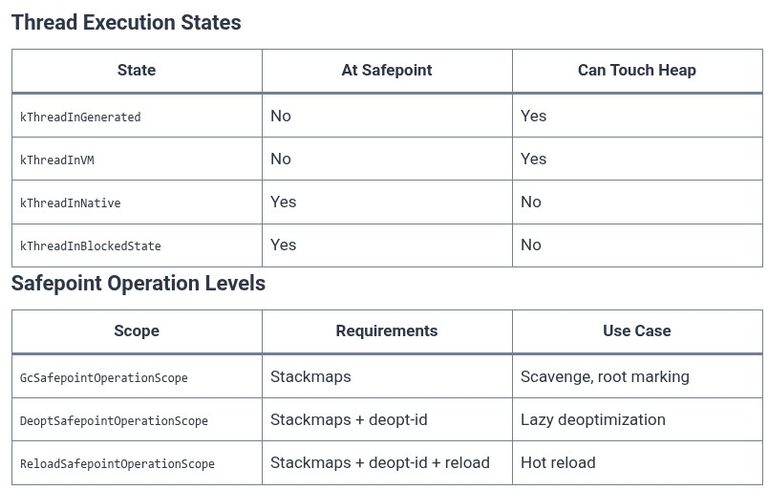
    A safepoint is the mechanism by which the Dart VM stops all mutator threads at a known, safe location so that a garbage collection operation can proceed without the heap changing underneath it. The concept is simple: before the GC can visit roots or move objects, every thread that could allocate, read, or write the…

    Read More Dart 93 🎯 Internal Architecture: Garbage Collector Safepoints and Mutator PausesContinue

  • Dart 92 🎯 Internal Architecture: Inline Caches (IC) and Polymorphic Call Sites
    Programming | Dart | Languages & Runtimes

    Dart 92 🎯 Internal Architecture: Inline Caches (IC) and Polymorphic Call Sites

    ByKandZ October 21, 2026October 22, 2026

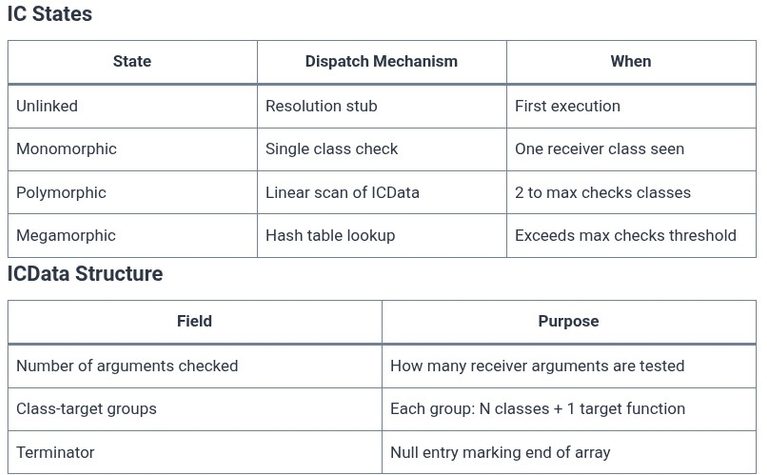
    Inline caches are the Dart VM’s mechanism for making dynamic method dispatch fast without giving up the flexibility of a dynamically typed language. The first time a call site executes, the VM does not know which class the receiver will be. The call goes through a resolution stub, the target is looked up, and the…

    Read More Dart 92 🎯 Internal Architecture: Inline Caches (IC) and Polymorphic Call SitesContinue

Page navigation

Previous PagePrevious 1 … 45 46 47 48 49 … 258 Next PageNext
    Search