Skip to content

KandZ - Tuts

  • Operating Systems ▾
    • Linux ▾
      • Distros ▾
        • Fedora
        • Other Distros
        • Ubuntu
      • Gnome 48
      • KDE
      • LFCA - Linux Foundation Certified IT Associate
      • LFCS - Linux Foundation Certified Sysadmin
      • LFCE - Linux Foundation Certified Engineer (Sysadmin + Network Admin)
      • Linux CLI
      • Various
      • Bash Scripting
  • Paths ▾
    • Core Web Stack
    • React & Modern UI Stack
    • Linux Core
  • Programming ▾
    • Frontend (FED) ▾
      • React Ecosystem ▾
        • React
        • React Router
        • TanStack Router
        • TanStack Query (React Query)
        • Zustand
        • Redux Toolkit
      • Angular Ecosystem ▾
        • Angular
      • Vue Ecosystem ▾
        • Vue.js
      • Styling & UI Components ▾
        • Tailwind CSS
    • Languages & Runtimes ▾
      • CSS
      • Dart
      • HTML
      • JavaScript
      • Node.js
      • Rust
      • SQL
      • TypeScript
    • Tools & Build Systems ▾
      • Version Control ▾
        • GitHub
        • Git
        • GitLab
      • Package Managers ▾
        • npm
        • Bun
        • yarn
        • pnpm
      • DevOps & Containers ▾
        • Docker
  • Servers & Self-Hosting ▾
    • Internet ▾
      • Internet Backend - Coming Soon
      • Internet Beginner
      • Internet Frontend - Coming Soon
    • Networking & DNS ▾
      • REST API
  • Tools
  • Windows ▾
    • Windows 11
KandZ - Tuts
AngularBunCSSDartDockerGitGitHubGitLabHTMLJavaScriptNode.jsnpmpnpmReactReact RouterRedux ToolkitRustSQLTailwind CSSTanStack Query (React Query)TanStack RouterTypeScriptVue.jsyarnZustandBash ScriptingFedoraGnome 48KDELFCA - Linux Foundation Certified IT AssociateLFCE - Linux Foundation Certified Engineer (Sysadmin + Network Admin)LFCS - Linux Foundation Certified SysadminLinux CLIOther DistrosUbuntuVariousCore Web StackInternet Backend - Coming SoonInternet BeginnerInternet Frontend - Coming SoonLinux CoreReact & Modern UI StackREST APIToolsWindows 11
  • LFCS 108 🐧 Firewalld — Rich Rules and Services
    Linux | Operating Systems | LFCS - Linux Foundation Certified Sysadmin

    LFCS 108 🐧 Firewalld — Rich Rules and Services

    ByKandZ October 28, 2026October 28, 2026

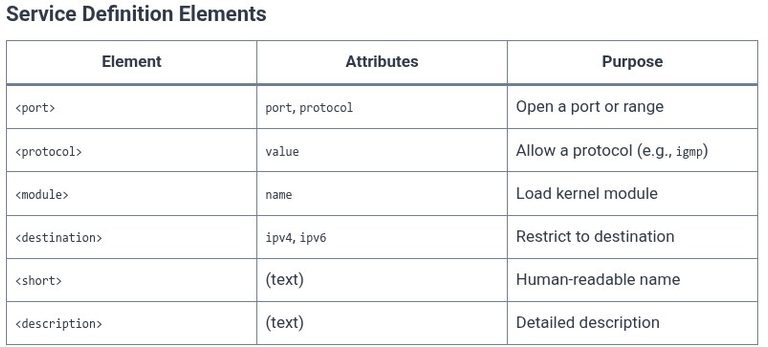
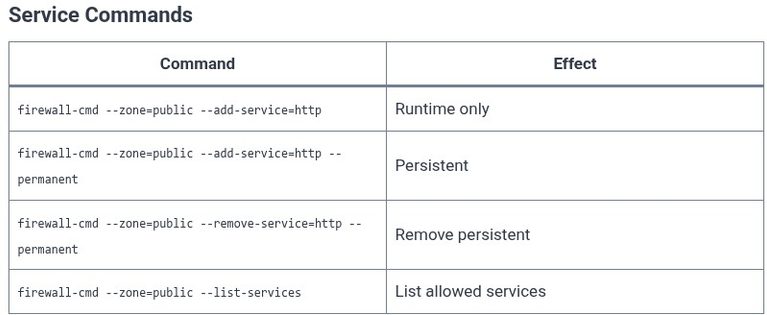
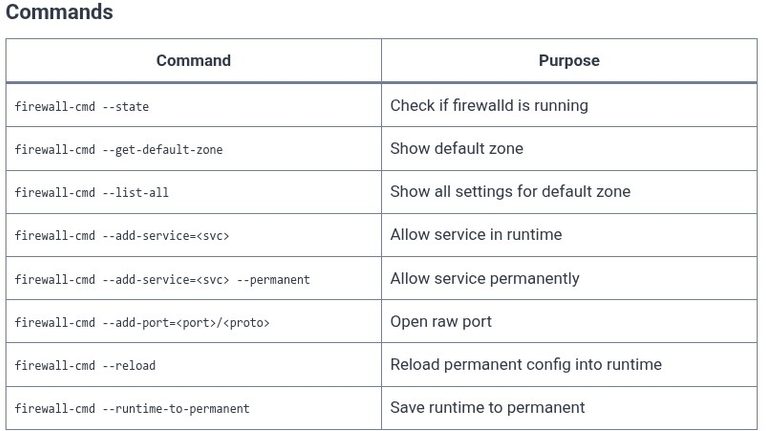
    The previous chapter introduced services and rich rules as the mechanisms for controlling traffic within a zone. This chapter goes deeper into both. A service is not just a name that opens a port—it is an XML definition that can specify multiple ports, protocols, kernel modules, and destination addresses. A rich rule is not just…
    Read More LFCS 108 🐧 Firewalld — Rich Rules and ServicesContinue

  • LFCS 107 🐧 Firewalld — Zones and Rules
    Linux | Operating Systems | LFCS - Linux Foundation Certified Sysadmin

    LFCS 107 🐧 Firewalld — Zones and Rules

    ByKandZ October 28, 2026October 28, 2026

    The previous chapter established the conceptual model: zones as trust boundaries, services as named port sets, and the runtime-versus-permanent split. This chapter moves from theory to configuration. The LFCS exam tests the specific commands that create, modify, and verify zone rules, and it tests the traps that cause a working configuration to fail after a…

    Read More LFCS 107 🐧 Firewalld — Zones and RulesContinue

  • LFCS 106 🐧 Firewalld — Concepts
    Linux | Operating Systems | LFCS - Linux Foundation Certified Sysadmin

    LFCS 106 🐧 Firewalld — Concepts

    ByKandZ October 28, 2026October 28, 2026

    A firewall is not a single rule. It is a system of trust boundaries, and firewalld is the daemon that enforces them on most modern Linux distributions, including RHEL, CentOS, Fedora, and SUSE. Unlike raw iptables or nftables, firewalld introduces a layer of abstraction: zones, services, and policies. These abstractions simplify the configuration of common…

    Read More LFCS 106 🐧 Firewalld — ConceptsContinue

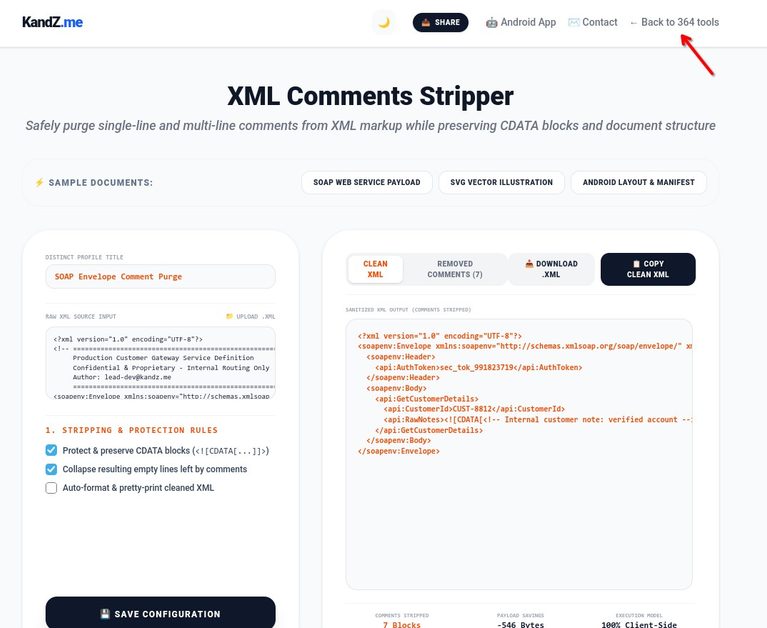
  • Free XML Comments Stripper
    Tools

    Free XML Comments Stripper

    ByKandZ October 28, 2026October 28, 2026

    Stripping comments from XML shouldn’t be hard. But one wrong regex and you accidentally delete code instead of comments. You break the markup. You corrupt the file. I built a free tool that solves this. What it does: Use cases: Privacy:100% client-side. Nothing uploaded. Try it: tools.kandz.me/xml-comments-stripper

    Read More Free XML Comments StripperContinue

  • pnpm 10 📦 Offline Mode and Caching Best Practices in pnpm
    Programming | Tools & Build Systems | pnpm | Package Managers

    pnpm 10 📦 Offline Mode and Caching Best Practices in pnpm

    ByKandZ October 27, 2026October 27, 2026

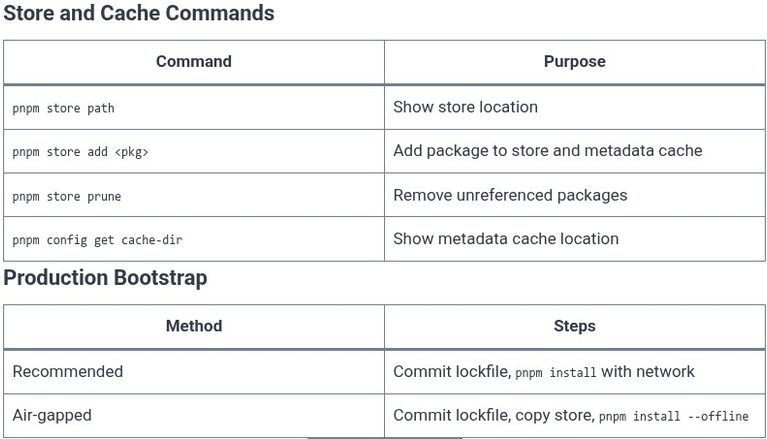
    pnpm’s offline capabilities are a direct consequence of its content-addressable store architecture. Every package file that pnpm has ever downloaded is stored once in a global directory. When you run pnpm install –offline, pnpm does not contact the registry. It resolves the dependency tree from the lockfile, locates the required files in the store, and…

    Read More pnpm 10 📦 Offline Mode and Caching Best Practices in pnpmContinue

  • pnpm 09 📦 Filtering Workspaces and Running Parallel Tasks
    Programming | Tools & Build Systems | pnpm | Package Managers

    pnpm 09 📦 Filtering Workspaces and Running Parallel Tasks

    ByKandZ October 27, 2026October 27, 2026

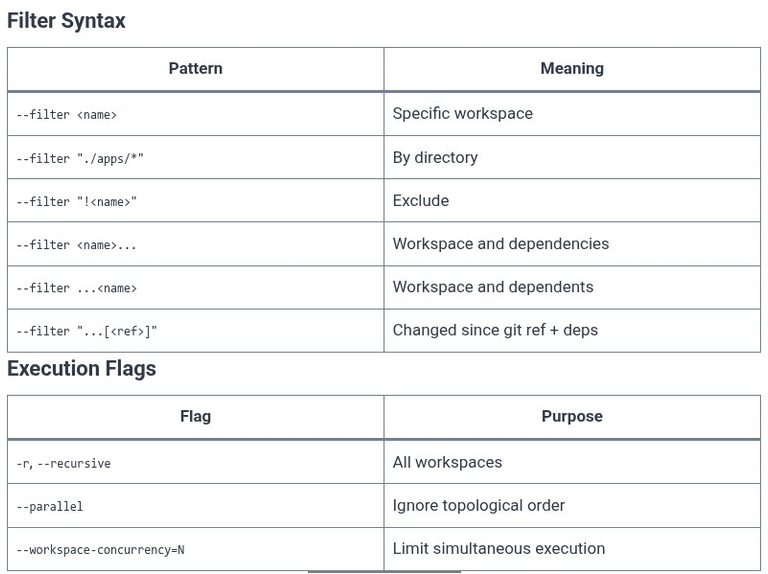
    A monorepo with ten workspaces requires orchestration. Running pnpm test in each workspace manually is tedious. Running it in every workspace simultaneously overloads the machine. The –filter flag selects which workspaces to target, and the –parallel and –workspace-concurrency flags control how many run at once. The filter syntax is more than a simple name matcher—it…

    Read More pnpm 09 📦 Filtering Workspaces and Running Parallel TasksContinue

  • pnpm 08 📦 pnpm Workspaces and Monorepo Architecture Management
    Programming | Tools & Build Systems | pnpm | Package Managers

    pnpm 08 📦 pnpm Workspaces and Monorepo Architecture Management

    ByKandZ October 27, 2026October 27, 2026

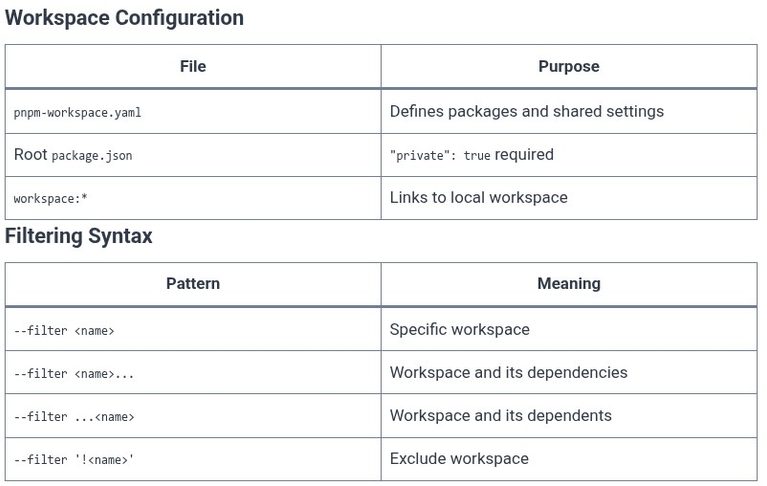
    A monorepo stores multiple packages in a single repository. pnpm Workspaces is the mechanism that makes this practical: it installs all packages’ dependencies together into a single virtual store, links packages to each other without publishing to a registry, and provides commands to run scripts across the entire project. The architecture is defined by a…

    Read More pnpm 08 📦 pnpm Workspaces and Monorepo Architecture ManagementContinue

  • pnpm 07 📦 Running Scripts and Executing Binaries with pnpm run and pnpm dlx
    Programming | Tools & Build Systems | pnpm | Package Managers

    pnpm 07 📦 Running Scripts and Executing Binaries with pnpm run and pnpm dlx

    ByKandZ October 27, 2026October 27, 2026

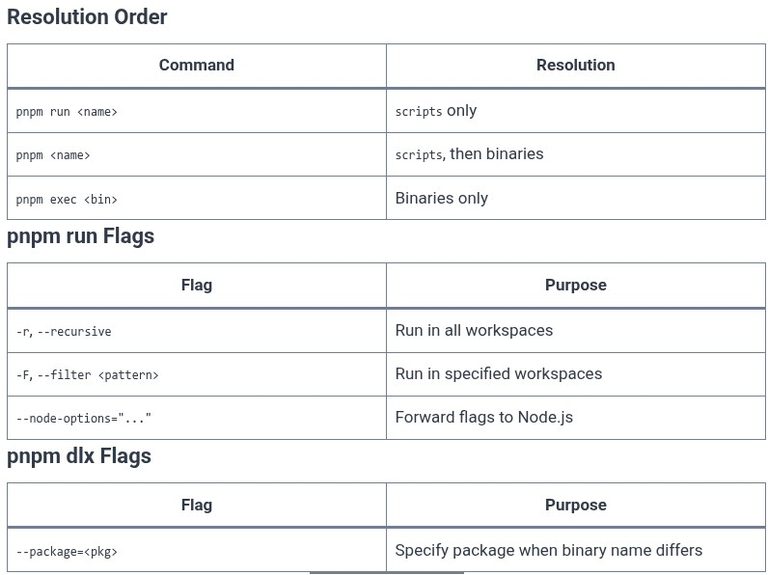
    A project’s package.json is both a manifest and a command registry. The scripts field defines named commands that can be invoked with a short alias, and pnpm provides a resolution layer that decides whether a given name refers to a script, a taskfile, or a binary from a dependency. In pnpm, the run keyword is…

    Read More pnpm 07 📦 Running Scripts and Executing Binaries with pnpm run and pnpm dlxContinue

  • pnpm 06 📦 Strict Dependency Trees and Hoisting Limitations (symlinks vs flat node_modules)
    Programming | Tools & Build Systems | pnpm | Package Managers

    pnpm 06 📦 Strict Dependency Trees and Hoisting Limitations (symlinks vs flat node_modules)

    ByKandZ October 27, 2026October 27, 2026

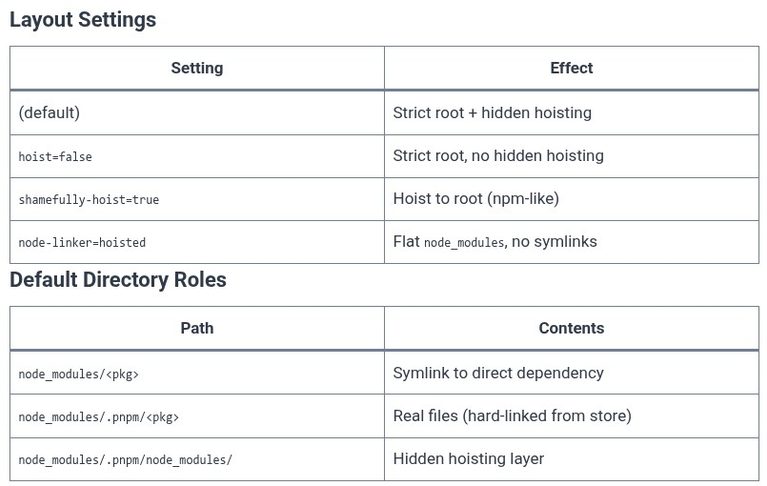
    The previous chapters established how pnpm links packages from a global store and constructs a virtual store. This chapter explains the consequence: a strictly isolated node_modules layout that forbids access to undeclared dependencies. npm and Yarn Classic hoist packages to the root, allowing a project to import anything in the tree. pnpm’s default behavior is…

    Read More pnpm 06 📦 Strict Dependency Trees and Hoisting Limitations (symlinks vs flat node_modules)Continue

  • GitHub 25 🌐 Cheatsheet
    Programming | GitHub | Tools & Build Systems | Version Control

    GitHub 25 🌐 Cheatsheet

    ByKandZ October 27, 2026October 27, 2026

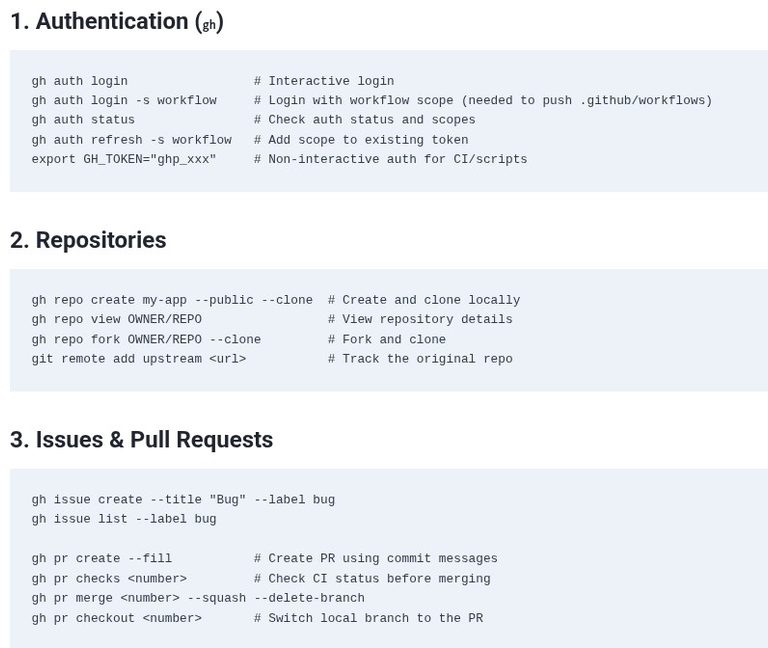
    1. Authentication (gh) 2. Repositories 3. Issues & Pull Requests 4. GitHub Actions (gh) 5. Releases 6. Git: Commits, Tags, Remotes 7. Git: Merging Strategies 8. CODEOWNERS & Branch Protection 9. Workflow Configuration (.github/workflows/ci.yml) 10. GitHub Packages (GHCR) 11. Security & Dependabot 12. GitHub Pages & Custom Domains 13. .github Directory Layout

    Read More GitHub 25 🌐 CheatsheetContinue

Page navigation

Previous PagePrevious 1 … 21 22 23 24 25 … 257 Next PageNext
    Search