Skip to content

KandZ - Tuts

  • Operating Systems ▾
    • Linux ▾
      • Distros ▾
        • Fedora
        • Other Distros
        • Ubuntu
      • Gnome 48
      • KDE
      • LFCA - Linux Foundation Certified IT Associate
      • LFCS - Linux Foundation Certified Sysadmin
      • LFCE - Linux Foundation Certified Engineer (Sysadmin + Network Admin)
      • Linux CLI
      • Various
      • Bash Scripting
  • Paths ▾
    • Core Web Stack
    • React & Modern UI Stack
    • Linux Core
  • Programming ▾
    • Frontend (FED) ▾
      • React Ecosystem ▾
        • React
        • React Router
        • TanStack Router
        • TanStack Query (React Query)
        • Zustand
        • Redux Toolkit
      • Angular Ecosystem ▾
        • Angular
      • Vue Ecosystem ▾
        • Vue.js
      • Styling & UI Components ▾
        • Tailwind CSS
    • Languages & Runtimes ▾
      • CSS
      • Dart
      • HTML
      • JavaScript
      • Node.js
      • Rust
      • SQL
      • TypeScript
    • Tools & Build Systems ▾
      • Version Control ▾
        • GitHub
        • Git
        • GitLab
      • Package Managers ▾
        • npm
        • Bun
        • yarn
        • pnpm
      • DevOps & Containers ▾
        • Docker
  • Servers & Self-Hosting ▾
    • Internet ▾
      • Internet Backend - Coming Soon
      • Internet Beginner
      • Internet Frontend - Coming Soon
    • Networking & DNS ▾
      • REST API
  • Tools
  • Windows ▾
    • Windows 11
KandZ - Tuts
AngularBunCSSDartDockerGitGitHubGitLabHTMLJavaScriptNode.jsnpmpnpmReactReact RouterRedux ToolkitRustSQLTailwind CSSTanStack Query (React Query)TanStack RouterTypeScriptVue.jsyarnZustandBash ScriptingFedoraGnome 48KDELFCA - Linux Foundation Certified IT AssociateLFCE - Linux Foundation Certified Engineer (Sysadmin + Network Admin)LFCS - Linux Foundation Certified SysadminLinux CLIOther DistrosUbuntuVariousCore Web StackInternet Backend - Coming SoonInternet BeginnerInternet Frontend - Coming SoonLinux CoreReact & Modern UI StackREST APIToolsWindows 11
  • Bun 07 ⚡ Running JavaScript, TypeScript, and JSX Files Natively Without Transpilation
    Programming | Tools & Build Systems | Bun | Package Managers

    Bun 07 ⚡ Running JavaScript, TypeScript, and JSX Files Natively Without Transpilation

    ByKandZ October 28, 2026October 28, 2026

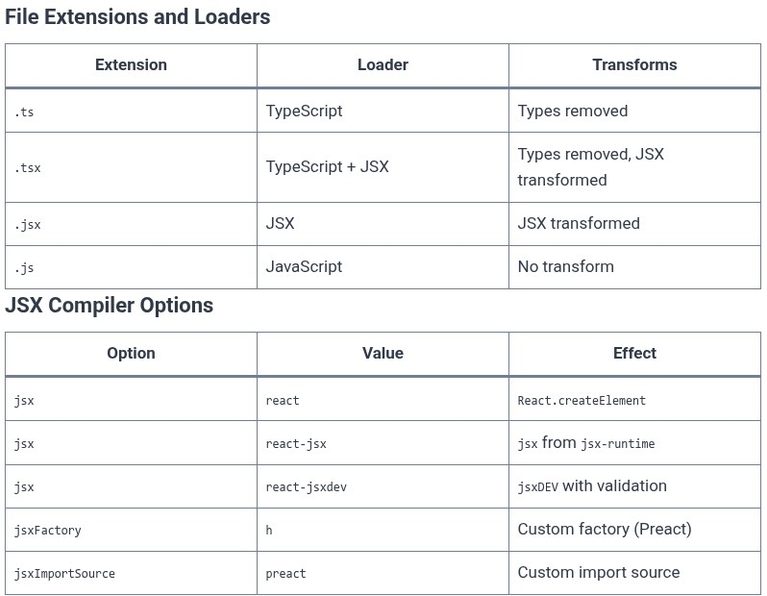
    Bun’s runtime is built around a full transpiler, not a type-stripper. When you run a .ts, .tsx, or .jsx file with bun run, the engine reads the source, applies the JSX transform specified in tsconfig.json (or bunfig.toml), strips the TypeScript type annotations, and executes the resulting JavaScript directly . There is no separate tsc step,…
    Read More Bun 07 ⚡ Running JavaScript, TypeScript, and JSX Files Natively Without TranspilationContinue

  • Bun 06 ⚡ Running Scripts and Executing Binaries via bun run and bunx
    Programming | Tools & Build Systems | Bun | Package Managers

    Bun 06 ⚡ Running Scripts and Executing Binaries via bun run and bunx

    ByKandZ October 28, 2026October 28, 2026

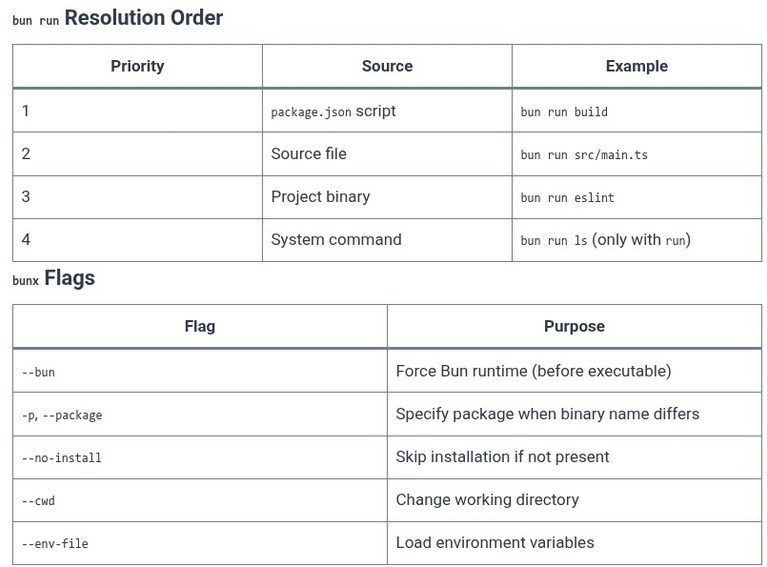
    Bun’s execution layer is split into two distinct commands that serve different purposes. bun run executes scripts defined in package.json or runs source files directly. bunx executes binaries from npm packages, installing them temporarily if they are not already present. The distinction matters: bun run operates within the project’s context, while bunx operates at the…

    Read More Bun 06 ⚡ Running Scripts and Executing Binaries via bun run and bunxContinue

  • pnpm 16 📦 Cheat Sheet
    Programming | Tools & Build Systems | pnpm | Package Managers

    pnpm 16 📦 Cheat Sheet

    ByKandZ October 28, 2026October 28, 2026

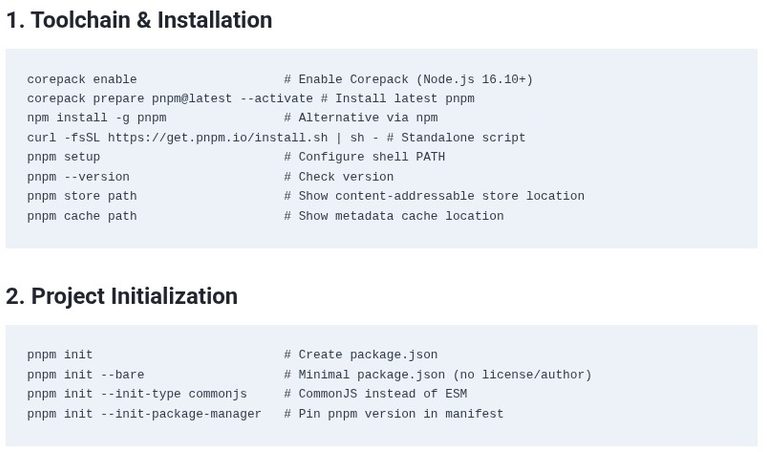
    1. Toolchain & Installation 2. Project Initialization 3. Dependency Management 4. Installation & Lockfile 5. Running Scripts & Binaries 6. Workspaces (Monorepos) 7. Configuration (.npmrc vs pnpm-workspace.yaml) 8. Strict Dependency Trees 9. Patches and Overrides 10. CI/CD Integration 11. Publishing Packages 12. Offline Mode 13. Environment Variables 14. Migration from npm/Yarn 15. Key File Locations…

    Read More pnpm 16 📦 Cheat SheetContinue

  • pnpm 15 📦 Migrating Existing Projects from npm or Yarn to pnpm
    Programming | Tools & Build Systems | pnpm | Package Managers

    pnpm 15 📦 Migrating Existing Projects from npm or Yarn to pnpm

    ByKandZ October 28, 2026October 28, 2026

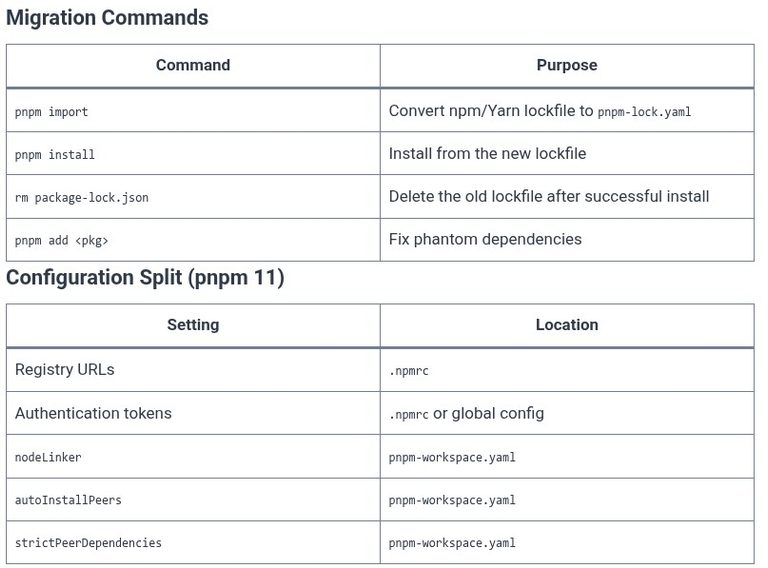
    Migrating a project from npm or Yarn to pnpm is not a single command. It is a sequence of decisions: how to convert the lockfile, how to handle the strict dependency resolution that pnpm enforces, how to rewrite CI scripts, and how to deal with the inevitable phantom dependency that npm’s hoisting was hiding. The…

    Read More pnpm 15 📦 Migrating Existing Projects from npm or Yarn to pnpmContinue

  • pnpm 14 📦 Publishing Packages and Managing Scoped Registries
    Programming | Tools & Build Systems | pnpm | Package Managers

    pnpm 14 📦 Publishing Packages and Managing Scoped Registries

    ByKandZ October 28, 2026October 28, 2026

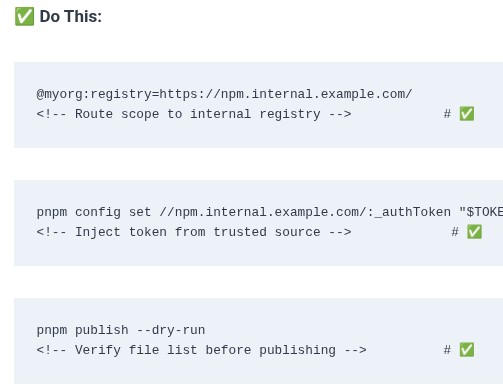
    Publishing with pnpm is not a wrapper around the npm CLI. Since pnpm 11, pnpm publish is implemented natively, which means the behavior differs from npm in several important ways: OTP is passed through PNPM_CONFIG_OTP instead of NPM_CONFIG_OTP, web-based authentication prints a QR code, and the packageManager field is stripped from the published manifest unless…

    Read More pnpm 14 📦 Publishing Packages and Managing Scoped RegistriesContinue

  • pnpm 13 📦 CI/CD Integration with pnpm install –frozen-lockfile
    Programming | Tools & Build Systems | pnpm | Package Managers

    pnpm 13 📦 CI/CD Integration with pnpm install –frozen-lockfile

    ByKandZ October 28, 2026October 28, 2026

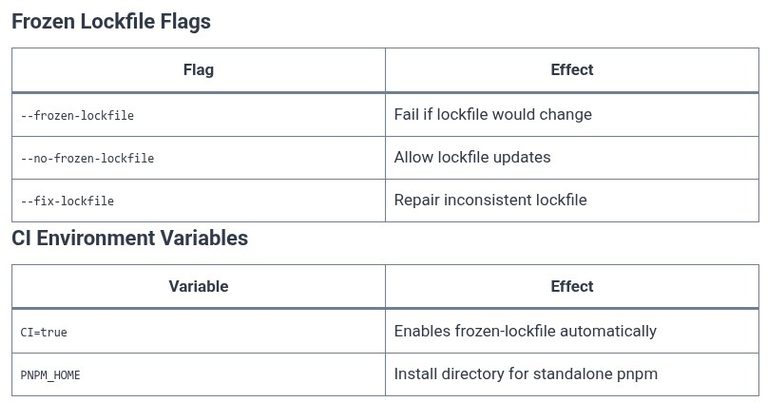
    A lockfile that is committed but not enforced is a suggestion, not a contract. The –frozen-lockfile flag is the mechanism that turns the lockfile into an enforcement tool: it installs the exact versions recorded in the lockfile and fails if the lockfile would need to change. In pnpm, this flag is not just recommended for…

    Read More pnpm 13 📦 CI/CD Integration with pnpm install –frozen-lockfileContinue

  • pnpm 12 📦 Patches and Overrides: Customizing Third-Party Dependencies
    Programming | Tools & Build Systems | pnpm | Package Managers

    pnpm 12 📦 Patches and Overrides: Customizing Third-Party Dependencies

    ByKandZ October 28, 2026October 28, 2026

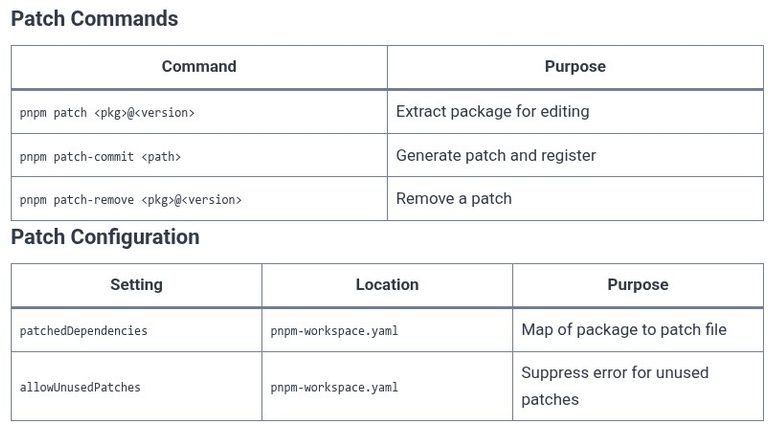
    A dependency has a bug. The upstream fix is months away, or the maintainer is unresponsive, or the fix exists only in a pull request that has not been merged. Forking the repository is heavy: you lose the link to the original, you must maintain the fork, and your package.json points to a Git URL…

    Read More pnpm 12 📦 Patches and Overrides: Customizing Third-Party DependenciesContinue

  • pnpm 11 📦 Configuring pnpm with .npmrc and pnpmfile.js
    Programming | Tools & Build Systems | pnpm | Package Managers

    pnpm 11 📦 Configuring pnpm with .npmrc and pnpmfile.js

    ByKandZ October 28, 2026October 28, 2026

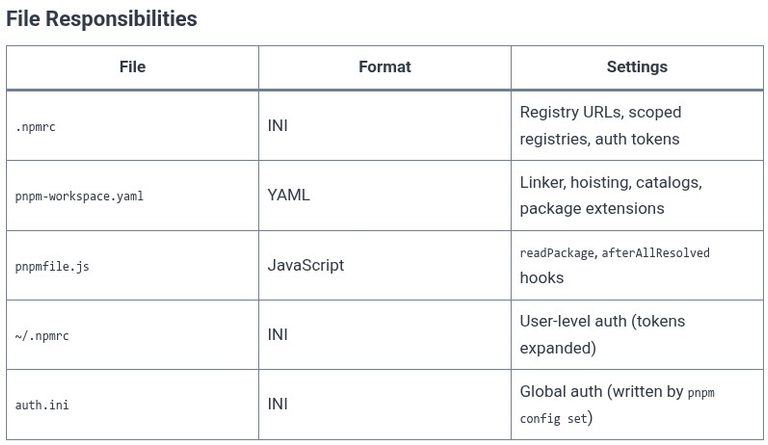
    Configuration in pnpm 11 is not a single file. It is a deliberate split: authentication and registry settings live in .npmrc (INI format), while pnpm-specific behavior lives in pnpm-workspace.yaml (YAML format). The pnpmfile.js is a third mechanism entirely—a hook system that intercepts the dependency resolution process before the lockfile is written. Understanding which file controls…

    Read More pnpm 11 📦 Configuring pnpm with .npmrc and pnpmfile.jsContinue

  • LFCS 110 🐧 UFW — Rules and Profiles
    Linux | Operating Systems | LFCS - Linux Foundation Certified Sysadmin

    LFCS 110 🐧 UFW — Rules and Profiles

    ByKandZ October 28, 2026October 28, 2026

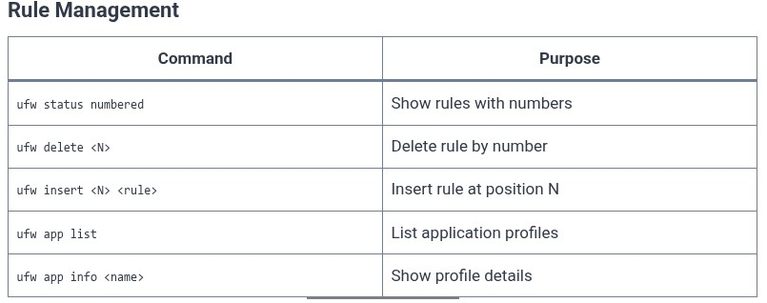
    The previous chapter established the default policies and the critical safety step of allowing SSH before enabling the firewall. This chapter focuses on the rule syntax that extends beyond simple allow and deny commands. UFW rules can restrict traffic by source address, destination port, network interface, protocol, and application profile. The LFCS exam tests the…

    Read More LFCS 110 🐧 UFW — Rules and ProfilesContinue

  • LFCS 109 🐧 UFW — Concepts and Setup
    Linux | Operating Systems | LFCS - Linux Foundation Certified Sysadmin

    LFCS 109 🐧 UFW — Concepts and Setup

    ByKandZ October 28, 2026October 28, 2026

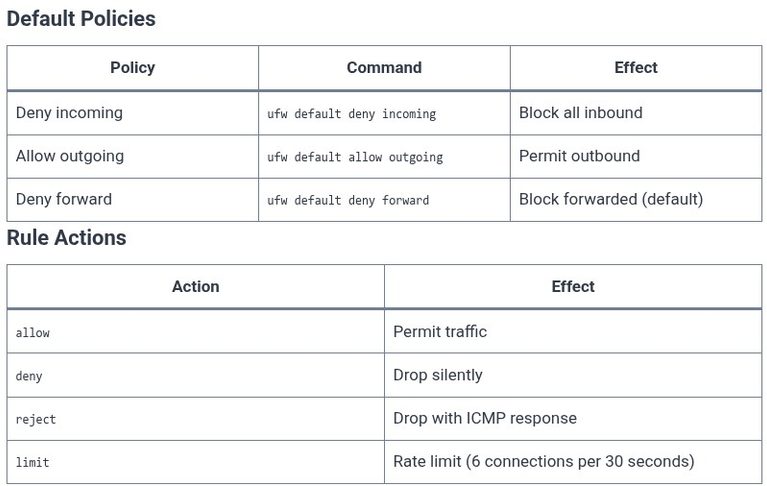
    UFW (Uncomplicated Firewall) is the default firewall configuration tool on Ubuntu and Debian-based systems. It is not a replacement for the kernel’s packet filtering framework—it is a frontend. Under the hood, UFW manages iptables rules, which in turn are translated to nftables on modern kernels . The “uncomplicated” part is the CLI: instead of writing…

    Read More LFCS 109 🐧 UFW — Concepts and SetupContinue

Page navigation

Previous PagePrevious 1 … 19 20 21 22 23 … 256 Next PageNext
    Search