Skip to content

KandZ - Tuts

  • Operating Systems ▾
    • Linux ▾
      • Distros ▾
        • Fedora
        • Other Distros
        • Ubuntu
      • Gnome 48
      • KDE
      • LFCA - Linux Foundation Certified IT Associate
      • LFCS - Linux Foundation Certified Sysadmin
      • LFCE - Linux Foundation Certified Engineer (Sysadmin + Network Admin)
      • Linux CLI
      • Various
      • Bash Scripting
  • Paths ▾
    • Core Web Stack
    • React & Modern UI Stack
    • Linux Core
  • Programming ▾
    • Frontend (FED) ▾
      • React Ecosystem ▾
        • React
        • React Router
        • TanStack Router
        • TanStack Query (React Query)
        • Zustand
        • Redux Toolkit
      • Angular Ecosystem ▾
        • Angular
      • Vue Ecosystem ▾
        • Vue.js
      • Styling & UI Components ▾
        • Tailwind CSS
    • Languages & Runtimes ▾
      • CSS
      • Dart
      • HTML
      • JavaScript
      • Node.js
      • Rust
      • SQL
      • TypeScript
    • Tools & Build Systems ▾
      • Version Control ▾
        • GitHub
        • Git
        • GitLab
      • Package Managers ▾
        • npm
        • Bun
        • yarn
        • pnpm
      • DevOps & Containers ▾
        • Docker
  • Servers & Self-Hosting ▾
    • Internet ▾
      • Internet Backend - Coming Soon
      • Internet Beginner
      • Internet Frontend - Coming Soon
    • Networking & DNS ▾
      • REST API
  • Tools
  • Windows ▾
    • Windows 11
KandZ - Tuts
AngularBunCSSDartDockerGitGitHubGitLabHTMLJavaScriptNode.jsnpmpnpmReactReact RouterRedux ToolkitRustSQLTailwind CSSTanStack Query (React Query)TanStack RouterTypeScriptVue.jsyarnZustandBash ScriptingFedoraGnome 48KDELFCA - Linux Foundation Certified IT AssociateLFCE - Linux Foundation Certified Engineer (Sysadmin + Network Admin)LFCS - Linux Foundation Certified SysadminLinux CLIOther DistrosUbuntuVariousCore Web StackInternet Backend - Coming SoonInternet BeginnerInternet Frontend - Coming SoonLinux CoreReact & Modern UI StackREST APIToolsWindows 11
  • Vue.js 78 🟢 Micro-Frontend Architectures with Vue and Module Federation
    Programming | Frontend (FED) | Vue.js

    Vue.js 78 🟢 Micro-Frontend Architectures with Vue and Module Federation

    ByKandZ October 20, 2026October 20, 2026

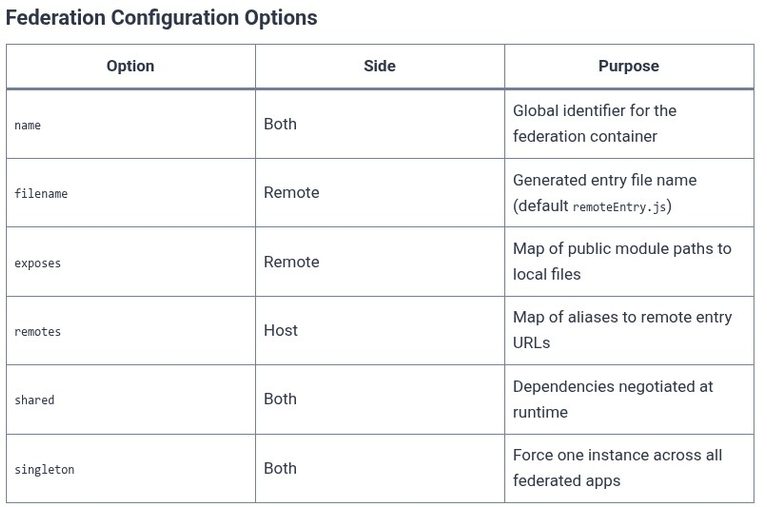
    Micro-frontends apply the principle of service decomposition to the browser. Instead of one monolithic Vue application, the UI is split into independently developed, tested, and deployed fragments that a shell application composes at runtime. Module Federation is the mechanism that makes this composition practical: it allows a JavaScript application to expose modules to other applications…
    Read More Vue.js 78 🟢 Micro-Frontend Architectures with Vue and Module FederationContinue

  • Vue.js 77 🟢 Nuxt Modules, Server Engine Rules, and Auto-Imports System
    Programming | Frontend (FED) | Vue.js

    Vue.js 77 🟢 Nuxt Modules, Server Engine Rules, and Auto-Imports System

    ByKandZ October 20, 2026October 20, 2026

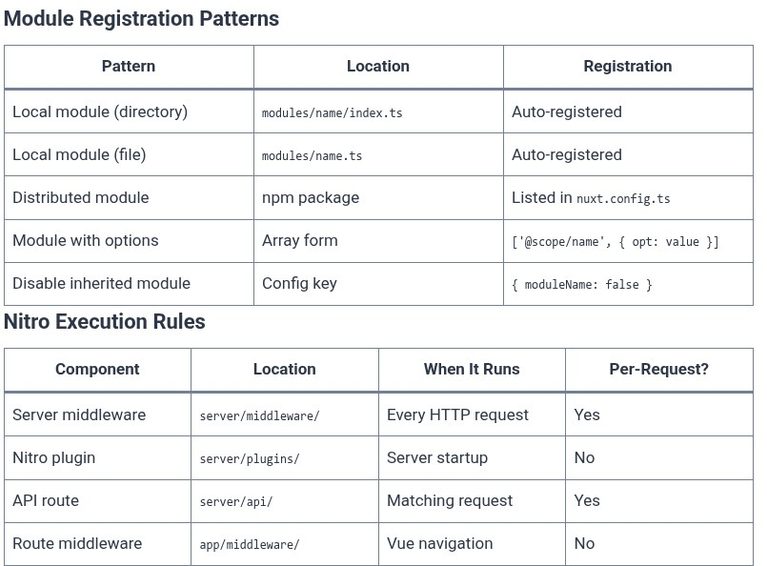
    Nuxt’s power comes not just from routing and data fetching, but from three interlocking systems that make the framework extensible, deployable, and ergonomic. Modules let you package and share framework modifications. The Nitro server engine compiles your server code into a standalone output that runs anywhere. Auto-imports eliminate the boilerplate of explicit imports while preserving…

    Read More Vue.js 77 🟢 Nuxt Modules, Server Engine Rules, and Auto-Imports SystemContinue

  • Vue.js 76 🟢 Full-Stack Framework Integration with Nuxt (File-System Routing, Data Fetching, Nitro Server)
    Programming | Frontend (FED) | Vue.js

    Vue.js 76 🟢 Full-Stack Framework Integration with Nuxt (File-System Routing, Data Fetching, Nitro Server)

    ByKandZ October 20, 2026October 20, 2026

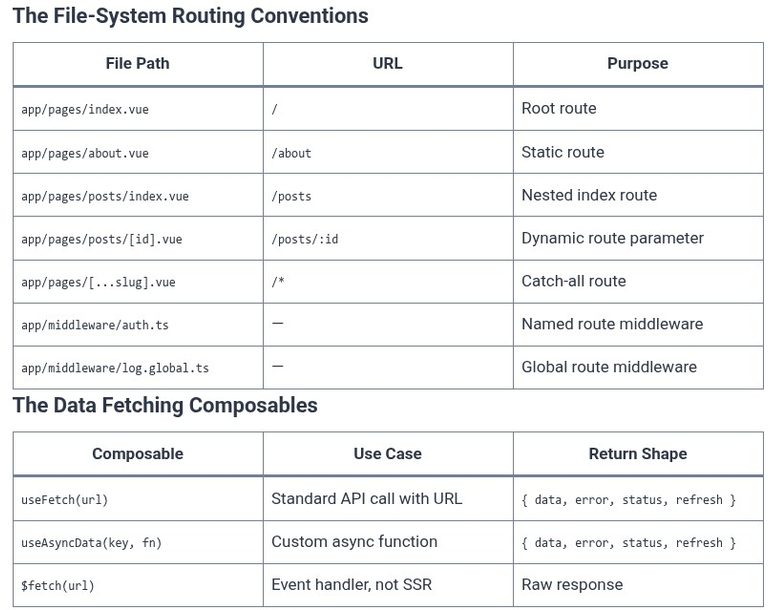
    Nuxt is the full-stack framework built on top of Vue. It takes the component model you already know and wraps it in a server engine, a routing system, and a data-fetching layer that work together without configuration. Where a plain Vue application requires you to assemble Vue Router, decide on a build tool, and wire…

    Read More Vue.js 76 🟢 Full-Stack Framework Integration with Nuxt (File-System Routing, Data Fetching, Nitro Server)Continue

  • Node.js 85 🟢 Cheatsheet
    Programming | Languages & Runtimes | Node.js

    Node.js 85 🟢 Cheatsheet

    ByKandZ October 20, 2026October 20, 2026

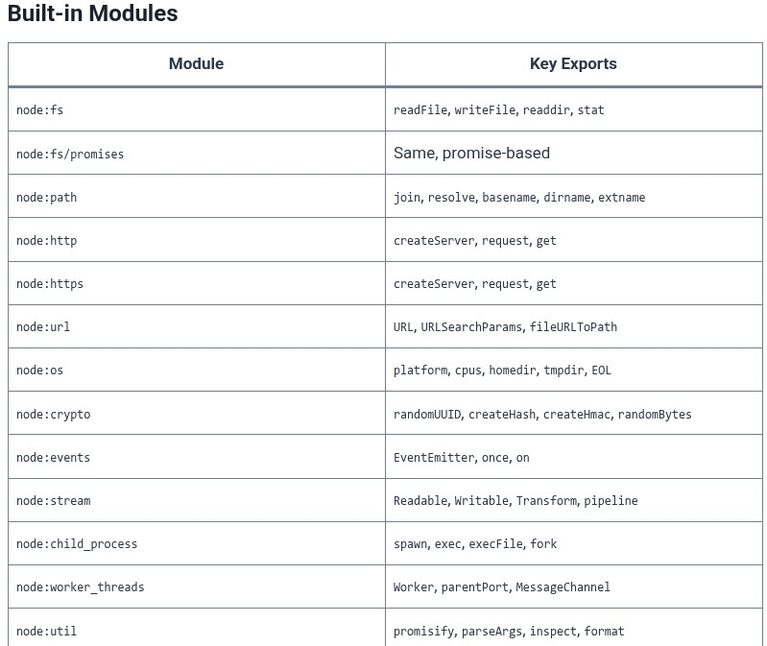
    CLI & Runtime Flags Flag Purpose node file.js Run a script node -e “code” Evaluate inline code node –watch file.js Auto-restart on change node –env-file=.env app.js Load env file natively node –inspect app.js Start inspector on :9229 node –inspect-brk app.js Break on first line node –prof app.js Generate V8 CPU profile node –prof-process isolate-*.log Read…

    Read More Node.js 85 🟢 CheatsheetContinue

  • Internet Beginner 11 🌐 Cheatsheet
    Servers & Self-Hosting | Internet | Internet Beginner

    Internet Beginner 11 🌐 Cheatsheet

    ByKandZ October 20, 2026October 20, 2026

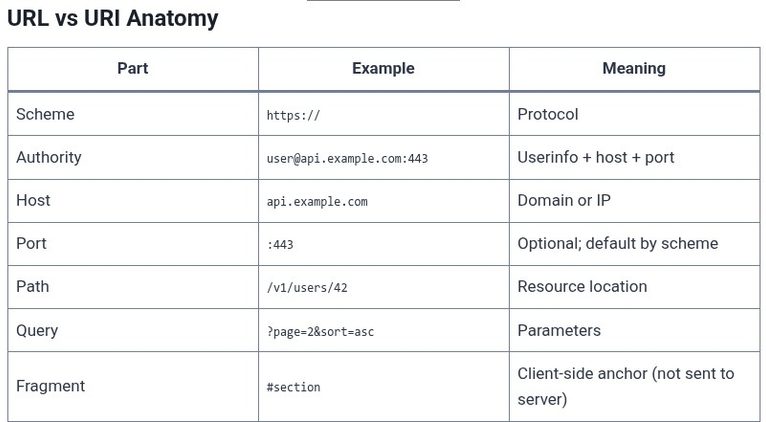
    Key point: A web request travels through DNS (name to IP), TCP (connection), TLS (encryption), and HTTP (request/response), and the browser is the environment that orchestrates all four. Every concept in this cheatsheet maps to one stage of that journey. The Internet vs the Web Term Meaning Internet The global network of interconnected networks Web…

    Read More Internet Beginner 11 🌐 CheatsheetContinue

  • Docker 90 🐳 Networking Deep Dive: Packet Flow Tracking through iptables, NAT, and veth Pairs
    Programming | Docker | Tools & Build Systems

    Docker 90 🐳 Networking Deep Dive: Packet Flow Tracking through iptables, NAT, and veth Pairs

    ByKandZ October 20, 2026October 20, 2026

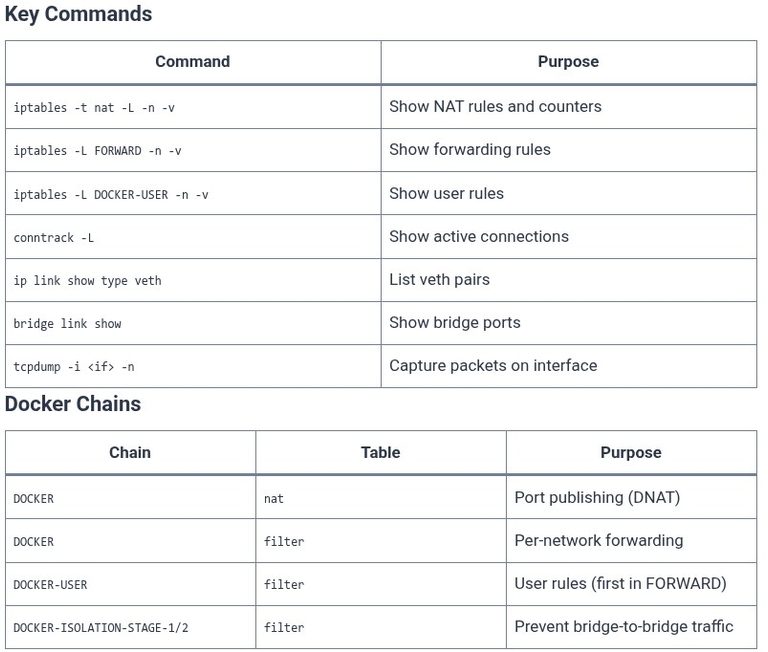
    A packet that leaves a container and reaches the internet passes through at least four distinct processing stages, and each stage is implemented by a different kernel subsystem. The veth pair is the virtual cable between the container’s network namespace and the host’s. The Linux bridge is the switch that connects the host-side veth to…

    Read More Docker 90 🐳 Networking Deep Dive: Packet Flow Tracking through iptables, NAT, and veth PairsContinue

  • Docker 89 🐳 Backup and Disaster Recovery Strategies for Docker Volumes and Container States
    Programming | Docker | Tools & Build Systems

    Docker 89 🐳 Backup and Disaster Recovery Strategies for Docker Volumes and Container States

    ByKandZ October 20, 2026October 20, 2026

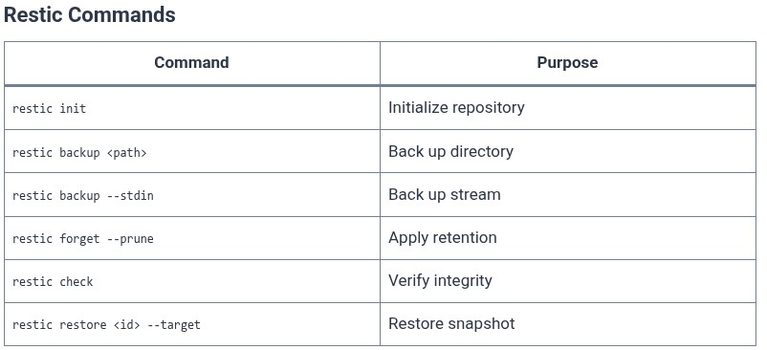
    Docker’s persistence model creates a specific backup problem: named volumes and bind mounts hold the data that matters, but the container’s writable layer is disposable, and the image is reproducible from a registry. A backup strategy that copies the entire /var/lib/docker directory is fragile and often inconsistent; a strategy that stops the stack and tars…

    Read More Docker 89 🐳 Backup and Disaster Recovery Strategies for Docker Volumes and Container StatesContinue

  • Docker 88 🐳 Reverse Proxying Docker Containers with Automatic SSL/TLS via Traefik & Let’s Encrypt
    Programming | Docker | Tools & Build Systems

    Docker 88 🐳 Reverse Proxying Docker Containers with Automatic SSL/TLS via Traefik & Let’s Encrypt

    ByKandZ October 20, 2026October 20, 2026

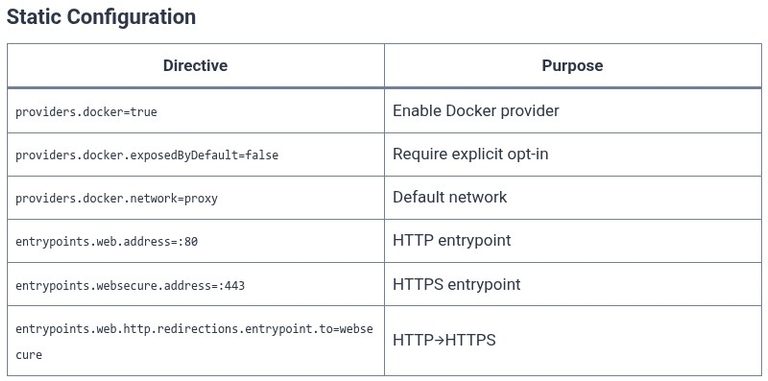
    Traefik is a reverse proxy that discovers Docker containers through the Docker socket and routes traffic to them based on labels attached to the container itself. The routing configuration is not a separate file that must be edited when a service is added; it is a set of traefik.http.routers.* and traefik.http.services.* labels on the container,…

    Read More Docker 88 🐳 Reverse Proxying Docker Containers with Automatic SSL/TLS via Traefik & Let’s EncryptContinue

  • Docker 87 🐳 GitOps Workflows for Container Deployments using Watchtower and ArgoCD
    Programming | Docker | Tools & Build Systems

    Docker 87 🐳 GitOps Workflows for Container Deployments using Watchtower and ArgoCD

    ByKandZ October 20, 2026October 20, 2026

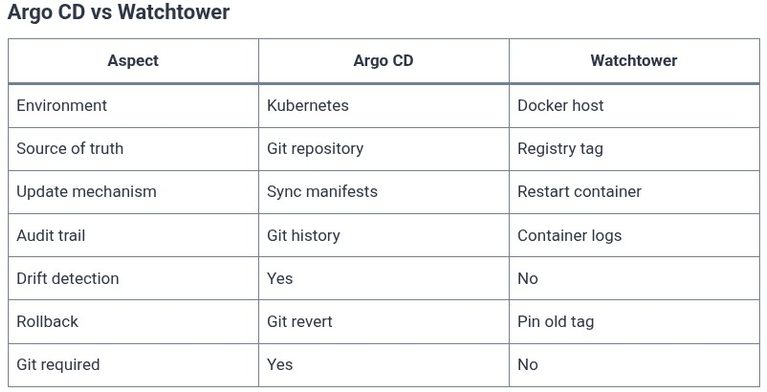
    GitOps is a deployment model in which the desired state of the infrastructure is stored in a Git repository, and a controller continuously reconciles the running state with the committed state. The model has two implementations that are often confused: pull-based reconciliation, where an in-cluster agent watches Git and applies changes, and image-update automation, where…

    Read More Docker 87 🐳 GitOps Workflows for Container Deployments using Watchtower and ArgoCDContinue

  • Docker 86 🐳 Docker-in-Docker (DinD) vs Docker-outside-of-Docker (DooD) in CI Runners
    Programming | Docker | Tools & Build Systems

    Docker 86 🐳 Docker-in-Docker (DinD) vs Docker-outside-of-Docker (DooD) in CI Runners

    ByKandZ October 20, 2026October 20, 2026

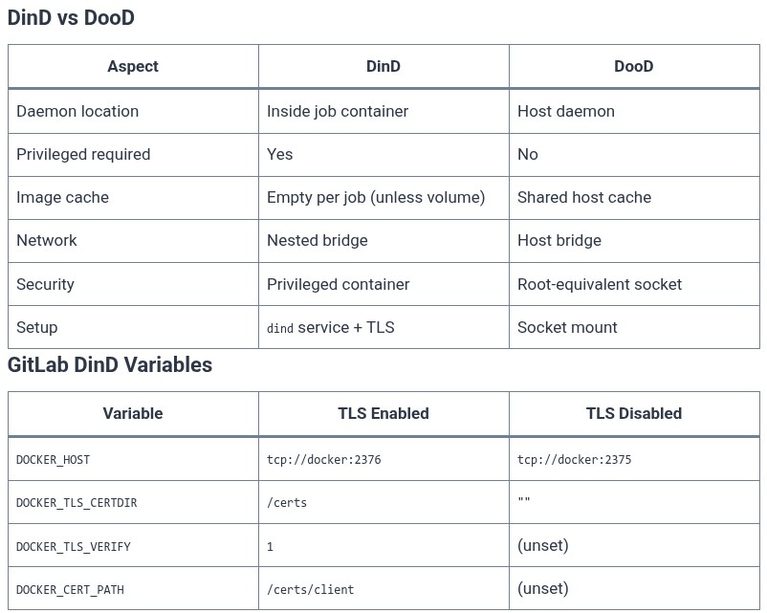
    The choice between DinD and DooD is a choice about where the Docker daemon lives and who controls it. Docker-in-Docker runs a nested daemon inside the CI job container, giving each job its own isolated Docker environment with its own image cache, network, and storage. Docker-outside-of-Docker mounts the host’s Docker socket into the job container,…

    Read More Docker 86 🐳 Docker-in-Docker (DinD) vs Docker-outside-of-Docker (DooD) in CI RunnersContinue

Page navigation

Previous PagePrevious 1 … 49 50 51 52 53 … 258 Next PageNext
    Search