Skip to content

KandZ - Tuts

  • Operating Systems ▾
    • Linux ▾
      • Distros ▾
        • Fedora
        • Other Distros
        • Ubuntu
      • Gnome 48
      • KDE
      • LFCA - Linux Foundation Certified IT Associate
      • LFCS - Linux Foundation Certified Sysadmin
      • LFCE - Linux Foundation Certified Engineer (Sysadmin + Network Admin)
      • Linux CLI
      • Various
      • Bash Scripting
  • Paths ▾
    • Core Web Stack
    • React & Modern UI Stack
    • Linux Core
  • Programming ▾
    • Frontend (FED) ▾
      • React Ecosystem ▾
        • React
        • React Router
        • TanStack Router
        • TanStack Query (React Query)
        • Zustand
        • Redux Toolkit
      • Angular Ecosystem ▾
        • Angular
      • Vue Ecosystem ▾
        • Vue.js
      • Styling & UI Components ▾
        • Tailwind CSS
    • Languages & Runtimes ▾
      • CSS
      • Dart
      • HTML
      • JavaScript
      • Node.js
      • Rust
      • SQL
      • TypeScript
    • Tools & Build Systems ▾
      • Version Control ▾
        • GitHub
        • Git
        • GitLab
      • Package Managers ▾
        • npm
        • Bun
        • yarn
        • pnpm
      • DevOps & Containers ▾
        • Docker
  • Servers & Self-Hosting ▾
    • Internet ▾
      • Internet Backend - Coming Soon
      • Internet Beginner
      • Internet Frontend - Coming Soon
    • Networking & DNS ▾
      • REST API
  • Tools
  • Windows ▾
    • Windows 11
KandZ - Tuts
AngularBunCSSDartDockerGitGitHubGitLabHTMLJavaScriptNode.jsnpmpnpmReactReact RouterRedux ToolkitRustSQLTailwind CSSTanStack Query (React Query)TanStack RouterTypeScriptVue.jsyarnZustandBash ScriptingFedoraGnome 48KDELFCA - Linux Foundation Certified IT AssociateLFCE - Linux Foundation Certified Engineer (Sysadmin + Network Admin)LFCS - Linux Foundation Certified SysadminLinux CLIOther DistrosUbuntuVariousCore Web StackInternet Backend - Coming SoonInternet BeginnerInternet Frontend - Coming SoonLinux CoreReact & Modern UI StackREST APIToolsWindows 11
  • Rust 86 🦀 Asynchronous SQL Database Drivers (sqlx and diesel)
    Programming | Languages & Runtimes | Rust

    Rust 86 🦀 Asynchronous SQL Database Drivers (sqlx and diesel)

    ByKandZ October 20, 2026October 20, 2026

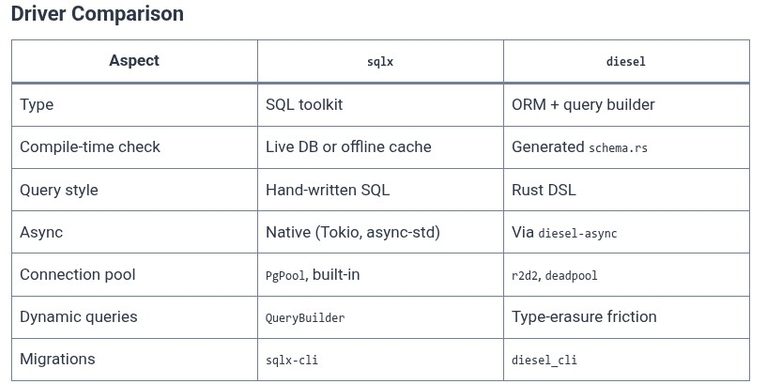
    Rust’s database story splits along a single axis: whether the SQL is written by hand or generated by a type-safe DSL. sqlx is a SQL toolkit—you write the query, and the macro sqlx::query! checks it against a live database (or a cached schema) at compile time, verifying column names and types without generating any query…
    Read More Rust 86 🦀 Asynchronous SQL Database Drivers (sqlx and diesel)Continue

  • Dart 90 🎯 Internal Architecture: Dart VM Architecture, Kernel AST, and IL Optimizations
    Programming | Dart | Languages & Runtimes

    Dart 90 🎯 Internal Architecture: Dart VM Architecture, Kernel AST, and IL Optimizations

    ByKandZ October 20, 2026October 20, 2026

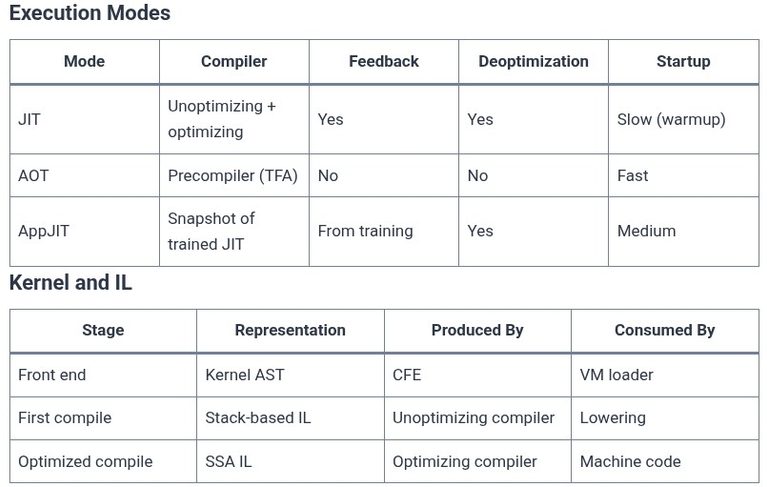
    The Dart VM is not a single interpreter. It is a collection of execution pipelines that share a common front end but diverge at the point where Dart code becomes machine code. The Common Front End (CFE), written in Dart, parses source files and produces a Kernel AST serialized into a .dill file. The VM…

    Read More Dart 90 🎯 Internal Architecture: Dart VM Architecture, Kernel AST, and IL OptimizationsContinue

  • Dart 89 🎯 Publishing Open-Source Dart Packages to pub.dev with Automated Workflows
    Programming | Dart | Languages & Runtimes

    Dart 89 🎯 Publishing Open-Source Dart Packages to pub.dev with Automated Workflows

    ByKandZ October 20, 2026October 20, 2026

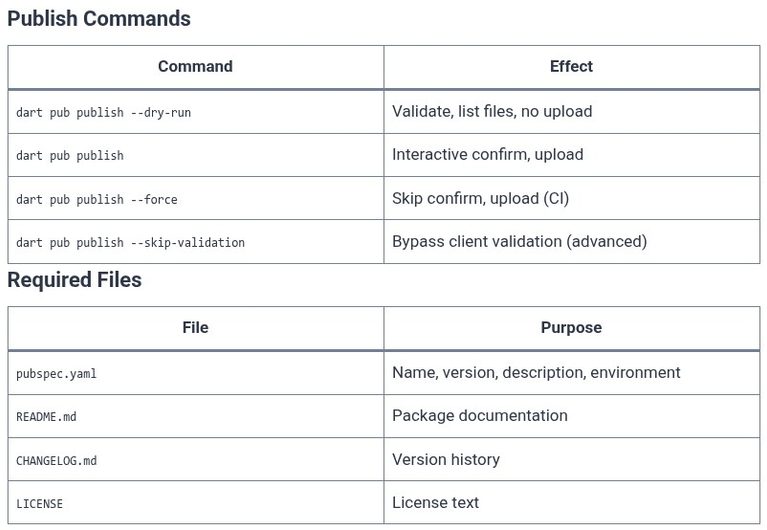
    Publishing a Dart package to pub.dev is a one-way operation: once a version is uploaded, it cannot be deleted or overwritten. The manual workflow is a sequence of validation steps that catch problems before the irreversible upload, and the automated workflow replaces the manual confirmation with an OpenID Connect token exchange that GitHub Actions can…

    Read More Dart 89 🎯 Publishing Open-Source Dart Packages to pub.dev with Automated WorkflowsContinue

  • Dart 88 🎯 Continuous Integration pipelines for Dart Codebase Quality Gates
    Programming | Dart | Languages & Runtimes

    Dart 88 🎯 Continuous Integration pipelines for Dart Codebase Quality Gates

    ByKandZ October 20, 2026October 20, 2026

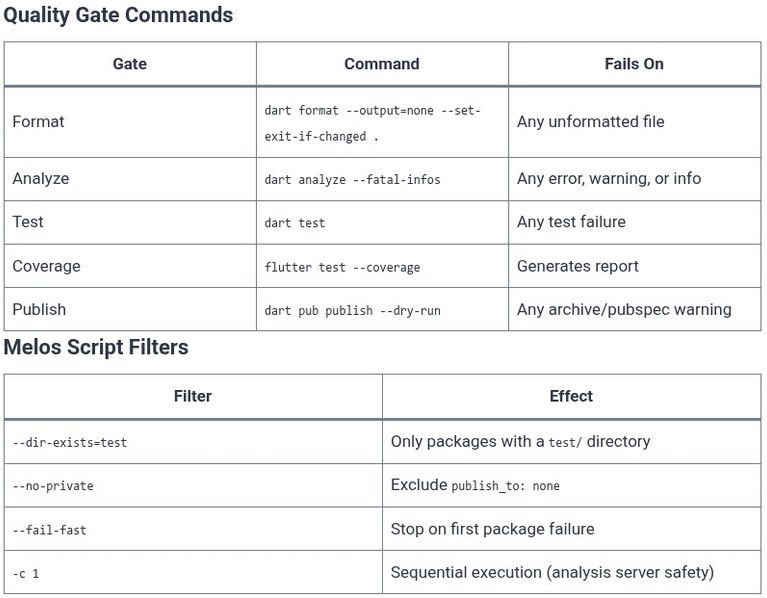
    A Dart CI pipeline is not a single dart test command. It is a sequence of independent gates—formatting, static analysis, testing, coverage, and publishability—each of which fails the build for a different class of defect. The Dart team’s own repositories enforce these gates in a fixed order: format check, then analyze with –fatal-infos, then test…

    Read More Dart 88 🎯 Continuous Integration pipelines for Dart Codebase Quality GatesContinue

  • Dart 87 🎯 Monorepo Management for Dart Packages using melos
    Programming | Dart | Languages & Runtimes

    Dart 87 🎯 Monorepo Management for Dart Packages using melos

    ByKandZ October 20, 2026October 20, 2026

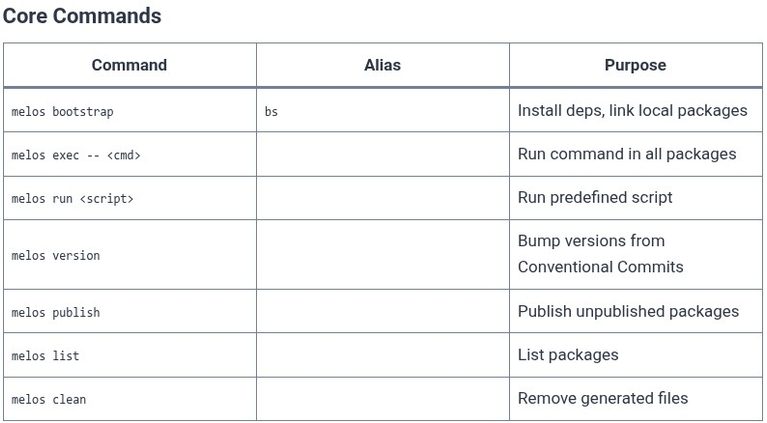
    A Dart monorepo without a management tool is a collection of packages that happen to share a Git repository. Each package has its own pubspec.yaml, its own dependencies, and its own version. Changing a shared package requires manually updating every dependent package, and publishing a release requires bumping versions in the correct order. melos solves…

    Read More Dart 87 🎯 Monorepo Management for Dart Packages using melosContinue

  • Dart 86 🎯 Writing Dynamic Code Evaluators and Parsers in Dart
    Programming | Dart | Languages & Runtimes

    Dart 86 🎯 Writing Dynamic Code Evaluators and Parsers in Dart

    ByKandZ October 20, 2026October 20, 2026

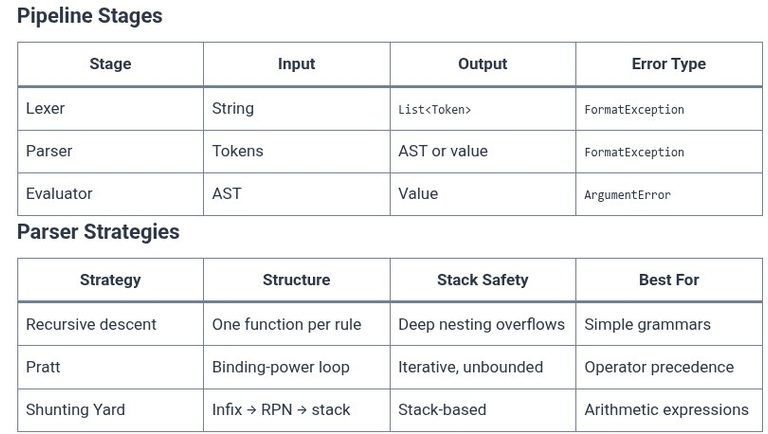
    Dart has no eval function. The language compiles ahead of time, and the runtime does not include a mechanism to parse and execute arbitrary Dart source from a string. The Stack Overflow revision citing a Dart team member is direct: “Dart will never have eval” . This is a deliberate design decision, not an omission….

    Read More Dart 86 🎯 Writing Dynamic Code Evaluators and Parsers in DartContinue

  • React 95 ⚛️ Micro-Frontend Architecture with Module Federation
    Programming | Frontend (FED) | React

    React 95 ⚛️ Micro-Frontend Architecture with Module Federation

    ByKandZ October 20, 2026October 20, 2026

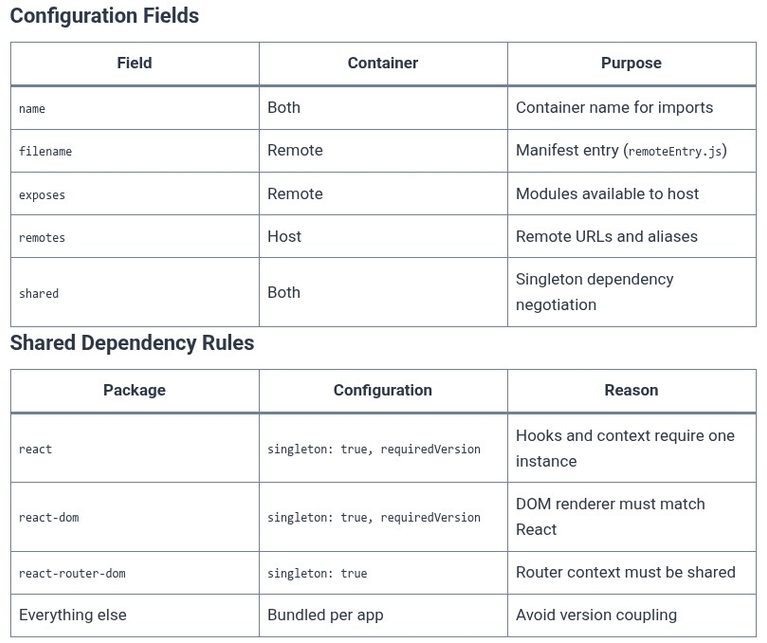
    Micro-frontends solve an organizational problem, not a technical one. When multiple teams contribute to the same React application, the codebase becomes a coordination bottleneck: a small change in one feature can break an unrelated feature, builds slow down as the bundle grows, and releases require synchronized deployment across every team . Module Federation addresses this…

    Read More React 95 ⚛️ Micro-Frontend Architecture with Module FederationContinue

  • React 94 ⚛️ Streaming SSR and Progressive Hydration
    Programming | Frontend (FED) | React

    React 94 ⚛️ Streaming SSR and Progressive Hydration

    ByKandZ October 20, 2026October 20, 2026

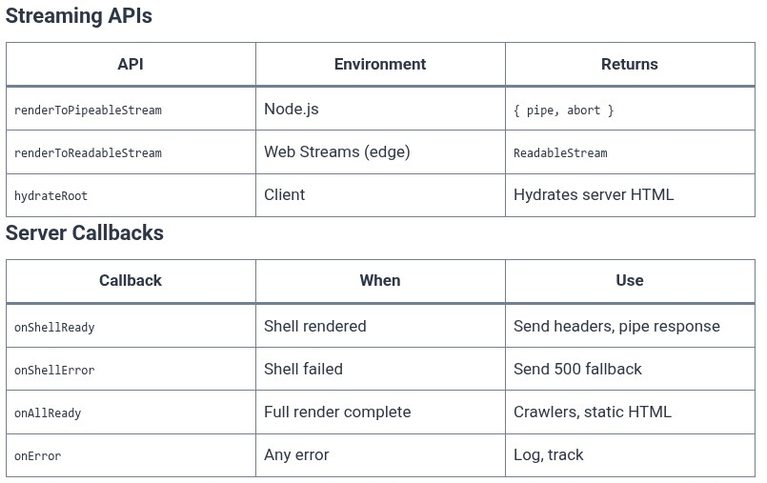
    Streaming SSR and progressive hydration are two sides of the same performance strategy. Streaming SSR changes when the server sends HTML: instead of waiting for the entire tree to render and sending one large response, the server sends the shell immediately and streams the slower regions as their data resolves . Progressive hydration changes when…

    Read More React 94 ⚛️ Streaming SSR and Progressive HydrationContinue

  • React 93 ⚛️ Next.js Layouts, Pages, and Loading UI
    Programming | Frontend (FED) | React

    React 93 ⚛️ Next.js Layouts, Pages, and Loading UI

    ByKandZ October 20, 2026October 20, 2026

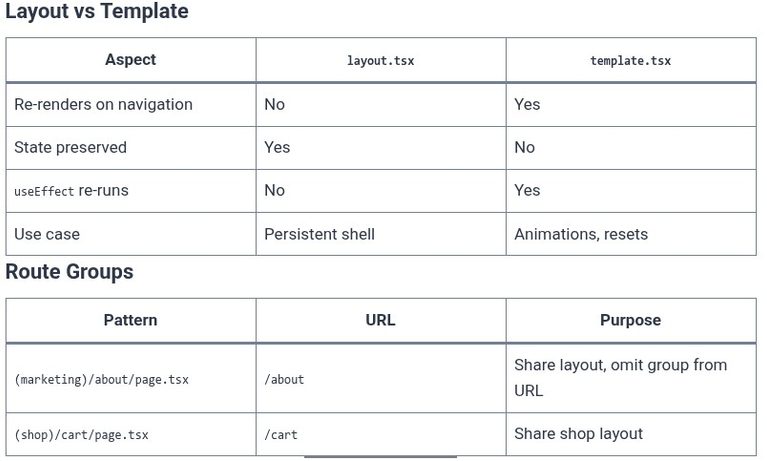
    The App Router’s file conventions separate three concerns that the Pages Router merged into a single component: the persistent shell (layout.tsx), the route-specific content (page.tsx), and the pending state while that content resolves (loading.tsx). The separation is what makes navigation fast. When a user moves from /blog to /blog/hello, the layout does not re-render because…

    Read More React 93 ⚛️ Next.js Layouts, Pages, and Loading UIContinue

  • React 92 ⚛️ Framework Setup with Next.js App Router
    Programming | Frontend (FED) | React

    React 92 ⚛️ Framework Setup with Next.js App Router

    ByKandZ October 20, 2026October 20, 2026

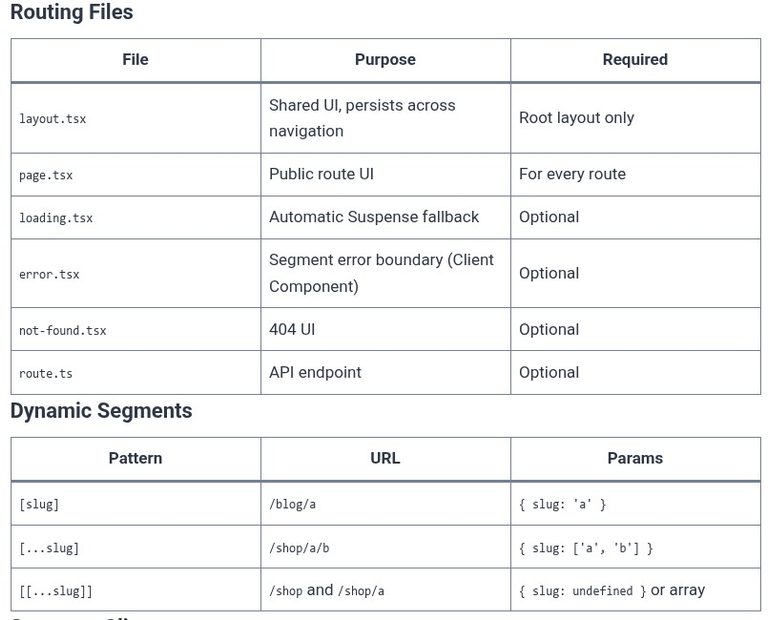
    The Next.js App Router is not a configuration layer on top of React. It is a file-system router built on React Server Components, where the folder structure under app/ defines the routes, layouts persist across navigations, and every component is a Server Component by default until a ‘use client’ directive marks the boundary where interactivity…

    Read More React 92 ⚛️ Framework Setup with Next.js App RouterContinue

Page navigation

Previous PagePrevious 1 … 52 53 54 55 56 … 260 Next PageNext
    Search