Skip to content

KandZ - Tuts

  • Operating Systems ▾
    • Linux ▾
      • Distros ▾
        • Fedora
        • Other Distros
        • Ubuntu
      • Gnome 48
      • KDE
      • LFCA - Linux Foundation Certified IT Associate
      • LFCS - Linux Foundation Certified Sysadmin
      • LFCE - Linux Foundation Certified Engineer (Sysadmin + Network Admin)
      • Linux CLI
      • Various
      • Bash Scripting
  • Paths ▾
    • Core Web Stack
    • React & Modern UI Stack
    • Linux Core
  • Programming ▾
    • Frontend (FED) ▾
      • React Ecosystem ▾
        • React
        • React Router
        • TanStack Router
        • TanStack Query (React Query)
        • Zustand
        • Redux Toolkit
      • Angular Ecosystem ▾
        • Angular
      • Vue Ecosystem ▾
        • Vue.js
      • Styling & UI Components ▾
        • Tailwind CSS
    • Languages & Runtimes ▾
      • CSS
      • Dart
      • HTML
      • JavaScript
      • Node.js
      • Rust
      • SQL
      • TypeScript
    • Tools & Build Systems ▾
      • Version Control ▾
        • GitHub
        • Git
        • GitLab
      • Package Managers ▾
        • npm
        • Bun
        • yarn
        • pnpm
      • DevOps & Containers ▾
        • Docker
  • Servers & Self-Hosting ▾
    • Internet ▾
      • Internet Backend - Coming Soon
      • Internet Beginner
      • Internet Frontend - Coming Soon
    • Networking & DNS ▾
      • REST API
  • Tools
  • Windows ▾
    • Windows 11
KandZ - Tuts
AngularBunCSSDartDockerGitGitHubGitLabHTMLJavaScriptNode.jsnpmpnpmReactReact RouterRedux ToolkitRustSQLTailwind CSSTanStack Query (React Query)TanStack RouterTypeScriptVue.jsyarnZustandBash ScriptingFedoraGnome 48KDELFCA - Linux Foundation Certified IT AssociateLFCE - Linux Foundation Certified Engineer (Sysadmin + Network Admin)LFCS - Linux Foundation Certified SysadminLinux CLIOther DistrosUbuntuVariousCore Web StackInternet Backend - Coming SoonInternet BeginnerInternet Frontend - Coming SoonLinux CoreReact & Modern UI StackREST APIToolsWindows 11
  • Docker 67 🐳 High Availability Homelab / Server Deployment with Docker Swarm and Portainer
    Programming | Docker | Tools & Build Systems

    Docker 67 🐳 High Availability Homelab / Server Deployment with Docker Swarm and Portainer

    ByKandZ October 17, 2026October 17, 2026

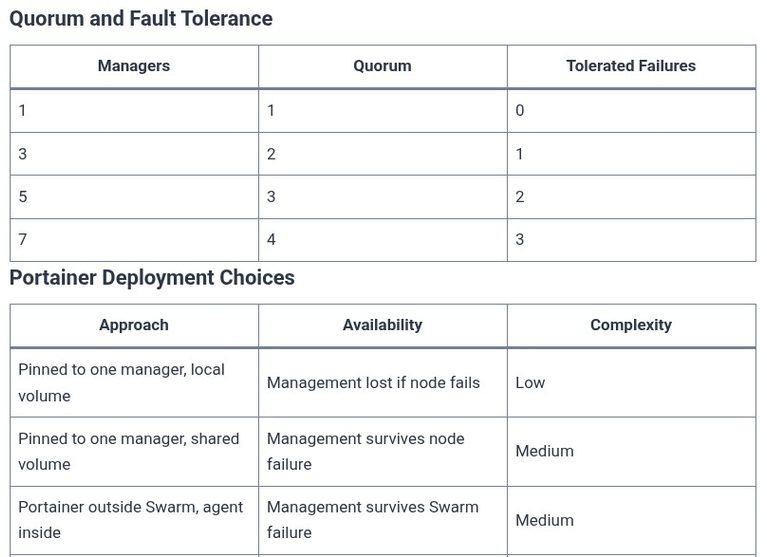
    A homelab or small server deployment that runs on a single machine is not highly available. When that machine reboots, every service goes down. When a disk fails, every container is lost. The purpose of building a Swarm cluster for a homelab is not to match the scale of a cloud provider—it is to eliminate…
    Read More Docker 67 🐳 High Availability Homelab / Server Deployment with Docker Swarm and PortainerContinue

  • Docker 66 🐳 Swarm Secrets and Configs: Native Encrypted State Distribution Across Cluster Nodes
    Programming | Docker | Tools & Build Systems

    Docker 66 🐳 Swarm Secrets and Configs: Native Encrypted State Distribution Across Cluster Nodes

    ByKandZ October 17, 2026October 17, 2026

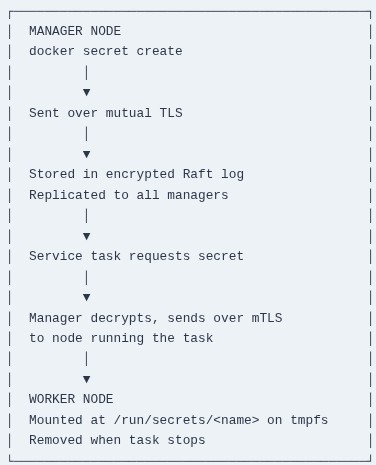
    Docker Swarm provides two native cluster objects for delivering data to services: secrets for sensitive information and configs for non-sensitive configuration. Both solve the same fundamental problem—how to inject data into containers without baking it into images or passing it through environment variables—but they differ in one critical dimension: secrets are encrypted at rest in…

    Read More Docker 66 🐳 Swarm Secrets and Configs: Native Encrypted State Distribution Across Cluster NodesContinue

  • Internet Beginner 10 🌐 Inspecting Networks with Browser DevTools
    Servers & Self-Hosting | Internet | Internet Beginner

    Internet Beginner 10 🌐 Inspecting Networks with Browser DevTools

    ByKandZ October 17, 2026October 17, 2026

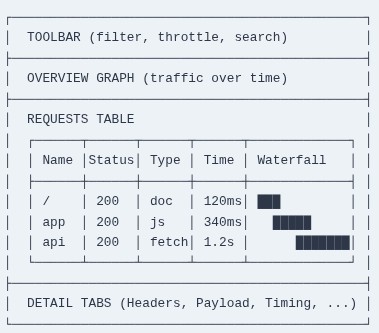
    Every page load is a conversation between your browser and a server, but the conversation is invisible. You see the result—the rendered page—but not the requests that fetched it, the headers that carried the metadata, or the timing that explains why one resource arrived instantly while another took two seconds. Browser DevTools makes that conversation…

    Read More Internet Beginner 10 🌐 Inspecting Networks with Browser DevToolsContinue

  • Internet Beginner 09 🌐 Browsers and How They Work
    Servers & Self-Hosting | Internet | Internet Beginner

    Internet Beginner 09 🌐 Browsers and How They Work

    ByKandZ October 17, 2026October 17, 2026

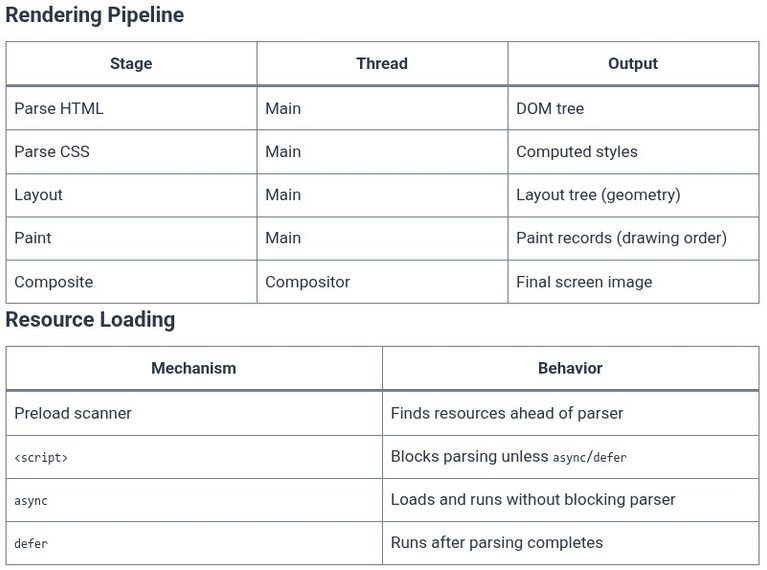
    A web browser is not a single program. It is a collection of processes and threads working together, each responsible for a different part of the job: one process handles the address bar and tabs, another fetches data from the network, and another turns HTML, CSS, and JavaScript into the page you see and interact…

    Read More Internet Beginner 09 🌐 Browsers and How They WorkContinue

  • Internet Beginner 08 🌐 Basic HTTP Requests and Responses
    Servers & Self-Hosting | Internet | Internet Beginner

    Internet Beginner 08 🌐 Basic HTTP Requests and Responses

    ByKandZ October 17, 2026October 17, 2026

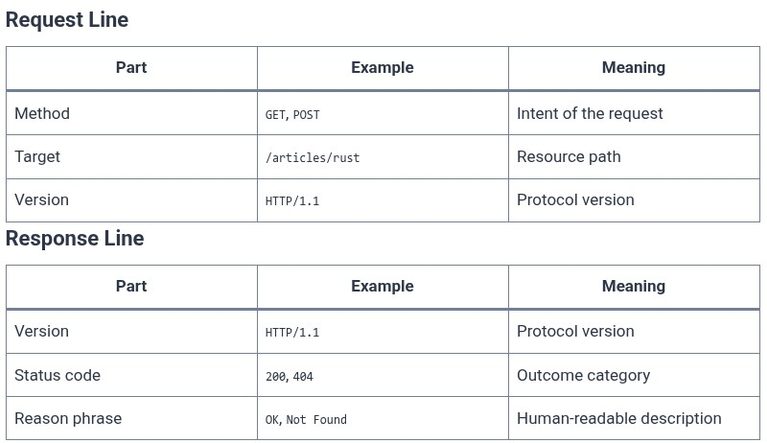
    Every time a web page loads, a conversation happens between your browser and a server. The browser sends a message describing what it wants, and the server sends back a message containing the answer. These two messages are the fundamental units of the web. Understanding their structure—what each part does, what order it appears in,…

    Read More Internet Beginner 08 🌐 Basic HTTP Requests and ResponsesContinue

  • Internet Beginner 07 🌐 What is HTTP
    Servers & Self-Hosting | Internet | Internet Beginner

    Internet Beginner 07 🌐 What is HTTP

    ByKandZ October 17, 2026October 17, 2026

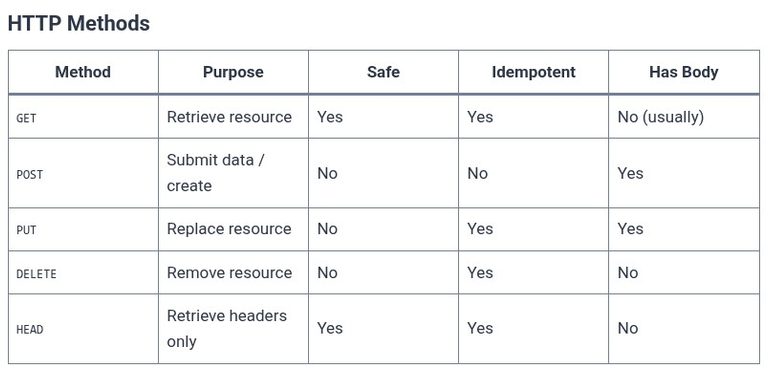
    When you type a web address into your browser and the page appears, a conversation has just taken place. Your browser asked a server for a document, and the server sent it back. The language they spoke is HTTP—the Hypertext Transfer Protocol. It is the set of rules that defines how a client (your browser)…

    Read More Internet Beginner 07 🌐 What is HTTPContinue

  • Internet Beginner 06 🌐 DNS and How It Works
    Servers & Self-Hosting | Internet | Internet Beginner

    Internet Beginner 06 🌐 DNS and How It Works

    ByKandZ October 17, 2026October 17, 2026

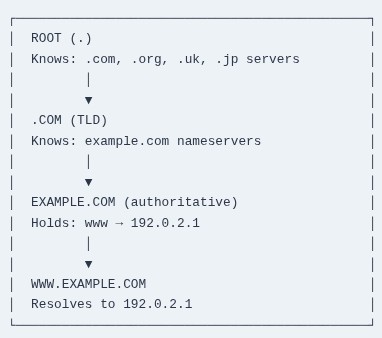
    When you type a website address into your browser and press Enter, your computer knows the name but not the destination. It has no idea where example.com lives, which server holds its files, or which network path leads there. The Domain Name System is the global lookup service that answers that question. It translates the…

    Read More Internet Beginner 06 🌐 DNS and How It WorksContinue

  • Rust 70 🦀 Orphan Rule and Implementing External Traits on External Types
    Programming | Languages & Runtimes | Rust

    Rust 70 🦀 Orphan Rule and Implementing External Traits on External Types

    ByKandZ October 17, 2026October 17, 2026

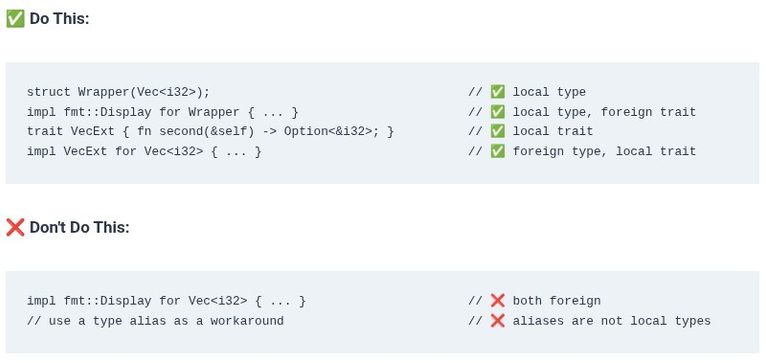
    The orphan rule is the constraint that makes Rust’s trait system coherent across independently compiled crates. Its short form is simple: you can implement your own trait for any type, you can implement any trait for your own type, but you cannot implement a foreign trait for a foreign type. The reason is link-safety and…

    Read More Rust 70 🦀 Orphan Rule and Implementing External Traits on External TypesContinue

  • Rust 69 🦀 Fully Qualified Syntax for Method Calls (Type::method)
    Programming | Languages & Runtimes | Rust

    Rust 69 🦀 Fully Qualified Syntax for Method Calls (Type::method)

    ByKandZ October 17, 2026October 17, 2026

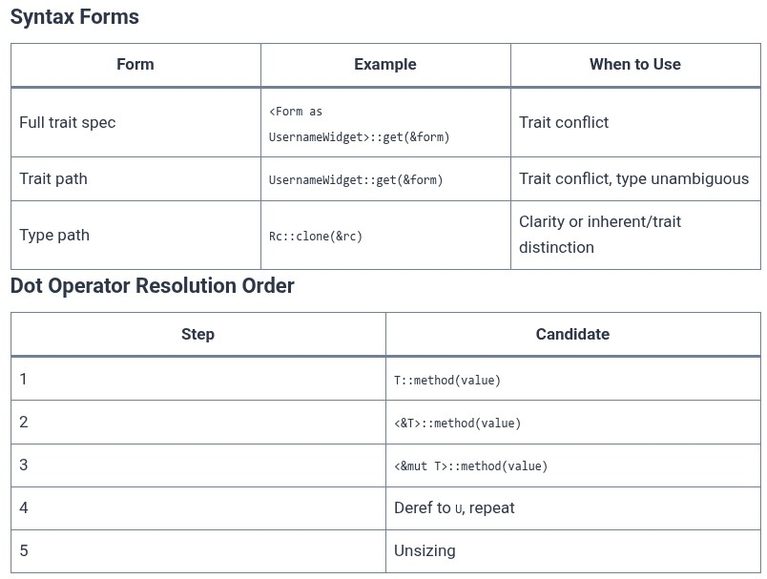
    Rust’s dot operator is remarkably accommodating. When you write value.method(), the compiler performs a sequence of automatic adjustments—auto-referencing, auto-dereferencing, and unsizing—until it finds a method that matches . This convenience is one of the reasons Rust feels ergonomic. But it also creates a specific problem: when a type implements multiple traits that both define a…

    Read More Rust 69 🦀 Fully Qualified Syntax for Method Calls (Type::method)Continue

  • Rust 68 🦀 Associated Types vs Generic Parameters in Traits
    Programming | Languages & Runtimes | Rust

    Rust 68 🦀 Associated Types vs Generic Parameters in Traits

    ByKandZ October 17, 2026October 17, 2026

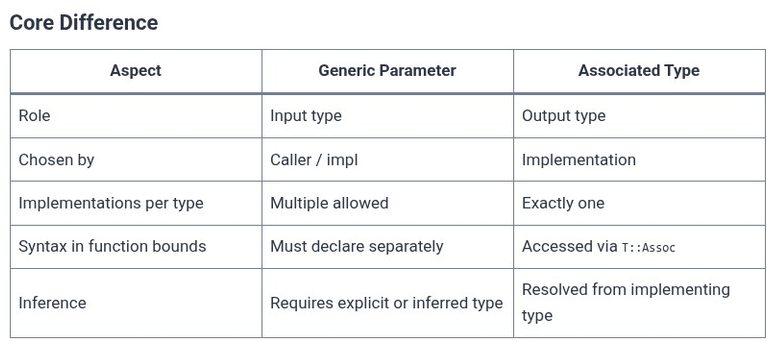
    Traits in Rust can be parameterized in two ways: with generic type parameters on the trait itself, or with associated types declared inside the trait body. Both allow an implementor to specify a concrete type, and in simple cases they look interchangeable. The difference is semantic: a generic parameter is an input that the caller…

    Read More Rust 68 🦀 Associated Types vs Generic Parameters in TraitsContinue

Page navigation

Previous PagePrevious 1 … 73 74 75 76 77 … 262 Next PageNext
    Search