Skip to content

KandZ - Tuts

  • Operating Systems â–¾
    • Linux â–¾
      • Distros â–¾
        • Fedora
        • Other Distros
        • Ubuntu
      • Gnome 48
      • KDE
      • LFCA - Linux Foundation Certified IT Associate
      • LFCS - Linux Foundation Certified Sysadmin
      • LFCE - Linux Foundation Certified Engineer (Sysadmin + Network Admin)
      • Linux CLI
      • Various
      • Bash Scripting
  • Paths â–¾
    • Core Web Stack
    • React & Modern UI Stack
    • Linux Core
  • Programming â–¾
    • Frontend (FED) â–¾
      • React Ecosystem â–¾
        • React
        • React Router
        • TanStack Router
        • TanStack Query (React Query)
        • Zustand
        • Redux Toolkit
      • Angular Ecosystem â–¾
        • Angular
      • Vue Ecosystem â–¾
        • Vue.js
      • Styling & UI Components â–¾
        • Tailwind CSS
    • Languages & Runtimes â–¾
      • CSS
      • Dart
      • HTML
      • JavaScript
      • Node.js
      • Rust
      • SQL
      • TypeScript
    • Tools & Build Systems â–¾
      • Version Control â–¾
        • GitHub
        • Git
        • GitLab
      • Package Managers â–¾
        • npm
        • Bun
        • yarn
        • pnpm
      • DevOps & Containers â–¾
        • Docker
  • Servers & Self-Hosting â–¾
    • Internet â–¾
      • Internet Backend - Coming Soon
      • Internet Beginner
      • Internet Frontend - Coming Soon
    • Networking & DNS â–¾
      • REST API
  • Tools
  • Windows â–¾
    • Windows 11
KandZ - Tuts
AngularBunCSSDartDockerGitGitHubGitLabHTMLJavaScriptNode.jsnpmpnpmReactReact RouterRedux ToolkitRustSQLTailwind CSSTanStack Query (React Query)TanStack RouterTypeScriptVue.jsyarnZustandBash ScriptingFedoraGnome 48KDELFCA - Linux Foundation Certified IT AssociateLFCE - Linux Foundation Certified Engineer (Sysadmin + Network Admin)LFCS - Linux Foundation Certified SysadminLinux CLIOther DistrosUbuntuVariousCore Web StackInternet Backend - Coming SoonInternet BeginnerInternet Frontend - Coming SoonLinux CoreReact & Modern UI StackREST APIToolsWindows 11
  • Node.js 78 🟢 Containerizing Node.js Applications with Docker
    Programming | Languages & Runtimes | Node.js

    Node.js 78 🟢 Containerizing Node.js Applications with Docker

    ByKandZ October 18, 2026October 18, 2026

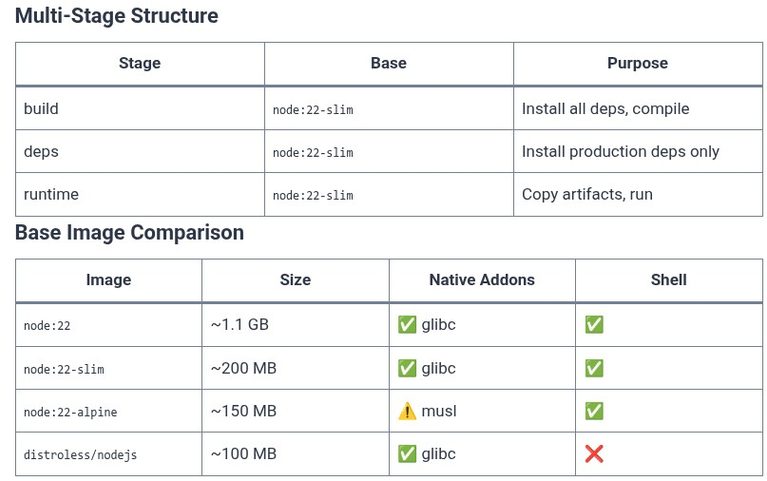
    A Node.js application containerized naively produces an image over a gigabyte, runs as root, ships every dev dependency and the TypeScript compiler into production, and ignores SIGTERM when Docker tries to stop it gracefully. Each of these is fixable with a few Dockerfile lines, and the fixes are not new—multi-stage builds have existed since 2017—yet…
    Read More Node.js 78 🟢 Containerizing Node.js Applications with DockerContinue

  • Node.js 77 🟢 Profiling Event Loop Lag, CPU Spikes, and Async Hooks
    Programming | Languages & Runtimes | Node.js

    Node.js 77 🟢 Profiling Event Loop Lag, CPU Spikes, and Async Hooks

    ByKandZ October 18, 2026October 18, 2026

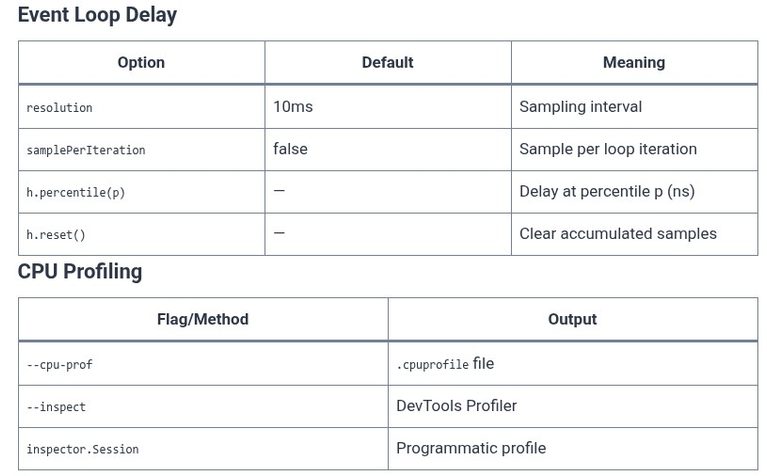
    Node.js performance problems fall into two categories: the event loop is blocked by synchronous work, or the event loop is busy but not blocked—it is processing too many callbacks, or the callbacks themselves are slow. The distinction matters because the tools are different. perf_hooks.monitorEventLoopDelay measures the first: how long a scheduled timer has to wait…

    Read More Node.js 77 🟢 Profiling Event Loop Lag, CPU Spikes, and Async HooksContinue

  • Node.js 76 🟢 Memory Leak Detection, Heap Profiling, and Heap Snapshots
    Programming | Languages & Runtimes | Node.js

    Node.js 76 🟢 Memory Leak Detection, Heap Profiling, and Heap Snapshots

    ByKandZ October 18, 2026October 18, 2026

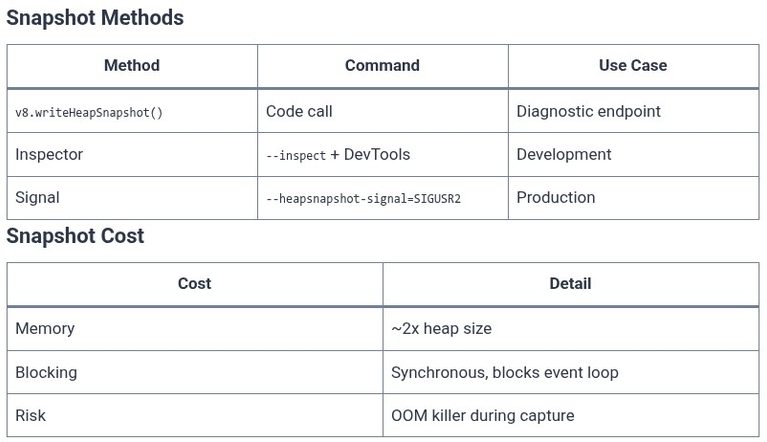
    A memory leak in Node.js is not a crash. It is a slow, silent bleed. The process starts at 80 MB, climbs to 200 MB over a few hours, then 500 MB overnight, and eventually the container hits its memory limit and is killed by the OOM killer. The application “works” until it doesn’t, and…

    Read More Node.js 76 🟢 Memory Leak Detection, Heap Profiling, and Heap SnapshotsContinue

  • Node.js 75 🟢 Application Debugging using V8 Inspector and Chrome DevTools
    Programming | Languages & Runtimes | Node.js

    Node.js 75 🟢 Application Debugging using V8 Inspector and Chrome DevTools

    ByKandZ October 18, 2026October 18, 2026

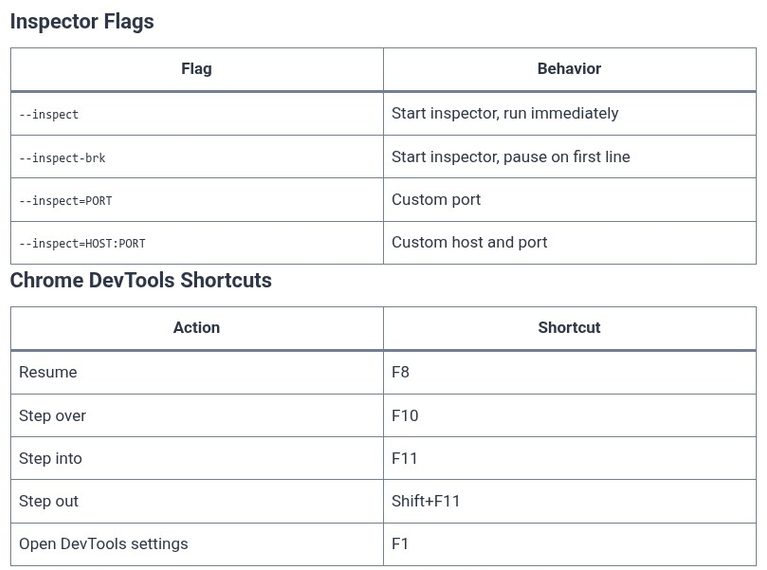
    The V8 Inspector is the debugging protocol built into Node.js. It exposes the runtime’s internal state—execution stack, scope variables, breakpoints, CPU profiles, and heap snapshots—over a WebSocket connection. Chrome DevTools speaks this protocol, which means the same debugging interface you use for browser JavaScript can attach to a Node.js process and give you breakpoints, step-through…

    Read More Node.js 75 🟢 Application Debugging using V8 Inspector and Chrome DevToolsContinue

  • Node.js 74 🟢 Mocking External APIs and Services with MSW
    Programming | Languages & Runtimes | Node.js

    Node.js 74 🟢 Mocking External APIs and Services with MSW

    ByKandZ October 18, 2026October 18, 2026

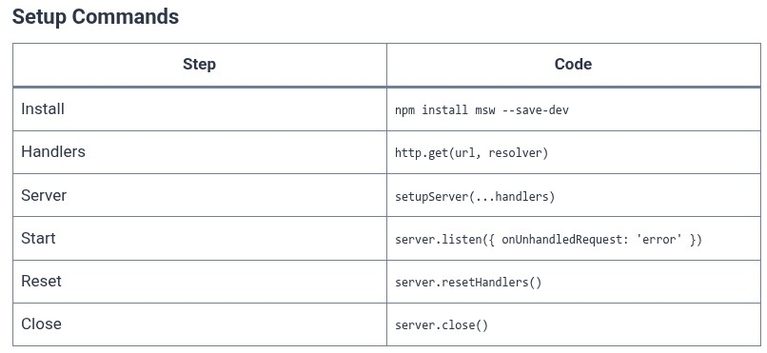
    Mocking an external API by stubbing fetch or axios is a trap. The stub intercepts the function call, not the network request. The application’s HTTP client—with its interceptors, retry logic, serialization, and status-code handling—never runs. The test passes, but it is testing a code path that does not exist in production. Mock Service Worker (MSW)…

    Read More Node.js 74 🟢 Mocking External APIs and Services with MSWContinue

  • Node.js 73 🟢 Integration and End-to-End API Testing with Supertest
    Programming | Languages & Runtimes | Node.js

    Node.js 73 🟢 Integration and End-to-End API Testing with Supertest

    ByKandZ October 17, 2026October 17, 2026

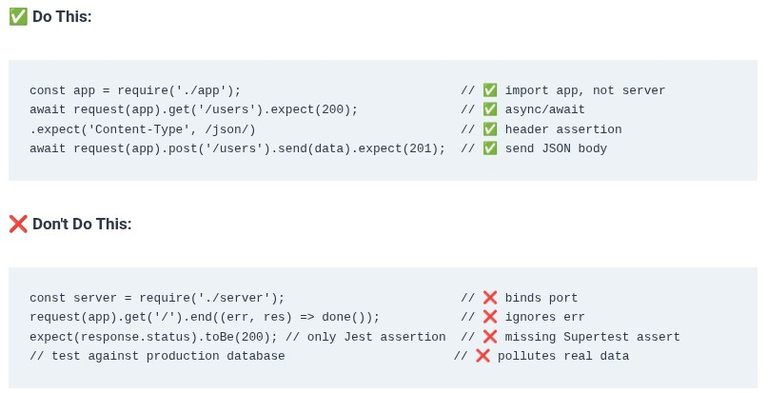
    Supertest is a library that lets you make HTTP requests against your Express application and assert on the response, without starting a server on a fixed port and without writing manual socket code. It extends SuperAgent, an HTTP client, and adds a chainable .expect() method that validates status codes, headers, and body content in a…

    Read More Node.js 73 🟢 Integration and End-to-End API Testing with SupertestContinue

  • Node.js 72 🟢 Unit Testing Node.js Applications with Jest and Vitest
    Programming | Languages & Runtimes | Node.js

    Node.js 72 🟢 Unit Testing Node.js Applications with Jest and Vitest

    ByKandZ October 17, 2026October 17, 2026

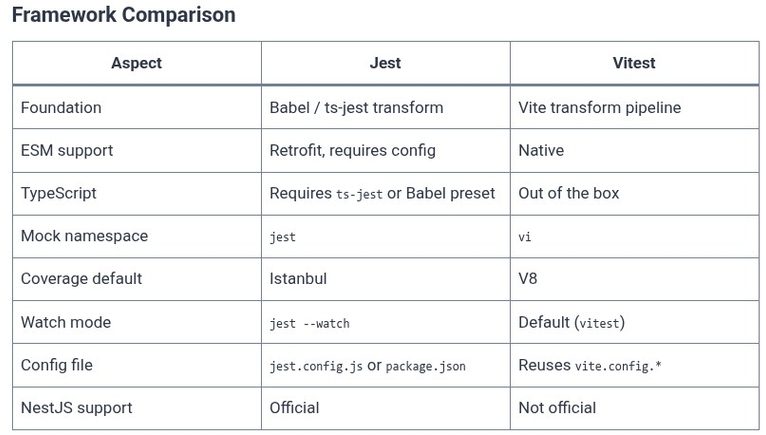
    Jest and Vitest both provide the same core testing vocabulary—describe, it, expect, mocks, snapshots, and coverage—but they are built on fundamentally different foundations. Jest was created in the CommonJS era and has spent years retrofitting support for ES modules and TypeScript through Babel transforms and experimental flags . Vitest was built from the start on…

    Read More Node.js 72 🟢 Unit Testing Node.js Applications with Jest and VitestContinue

  • Node.js 71 🟢 Mocking, Spying, and Timers in node:test
    Programming | Languages & Runtimes | Node.js

    Node.js 71 🟢 Mocking, Spying, and Timers in node:test

    ByKandZ October 17, 2026October 17, 2026

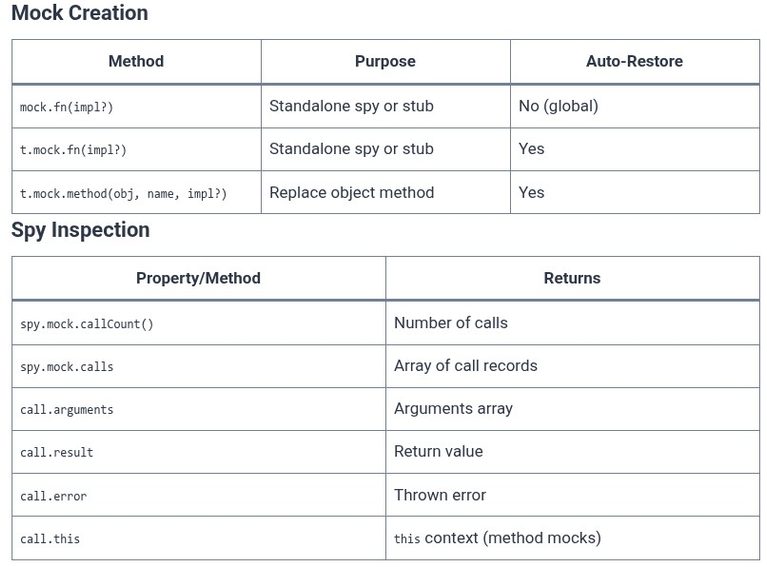
    The node:test module includes a mocking system built into the runtime. It provides spies, stubs, method replacement, and fake timers without requiring Sinon, Jest, or any other third-party library. The mocking API is exposed through the mock object and through the TestContext object that every test function receives. The distinction between these two entry points…

    Read More Node.js 71 🟢 Mocking, Spying, and Timers in node:testContinue

  • Node.js 70 🟢 Native Test Runner (node:test) and Assertion Library (node:assert)
    Programming | Languages & Runtimes | Node.js

    Node.js 70 🟢 Native Test Runner (node:test) and Assertion Library (node:assert)

    ByKandZ October 17, 2026October 17, 2026

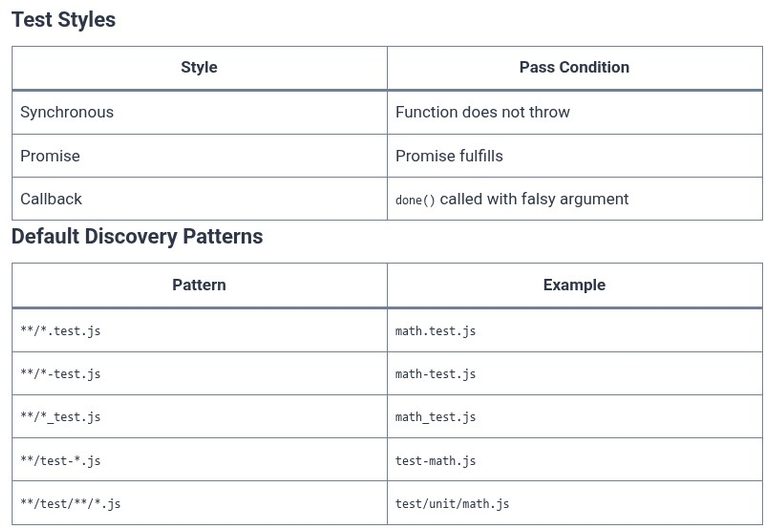
    The Node.js test runner is not a third-party package. It ships with the runtime, stabilized in Node.js 20, and requires no npm install for the core functionality . You write a test file, run node –test, and the runner discovers the file, executes it in a separate child process, and reports the result. The assertion…

    Read More Node.js 70 🟢 Native Test Runner (node:test) and Assertion Library (node:assert)Continue

  • Node.js 69 🟢 Application Performance Metrics Exporting with Prometheus
    Programming | Languages & Runtimes | Node.js

    Node.js 69 🟢 Application Performance Metrics Exporting with Prometheus

    ByKandZ October 17, 2026October 17, 2026

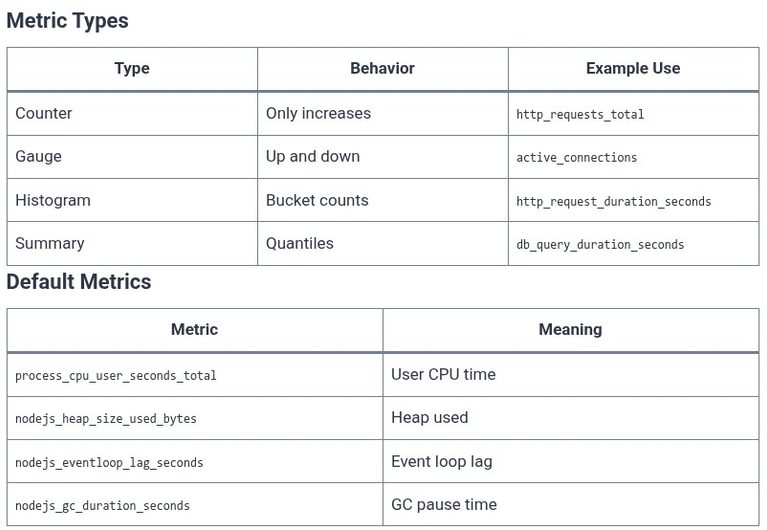
    Prometheus is a pull-based monitoring system. Unlike agents that push metrics to a central server, Prometheus periodically requests a /metrics endpoint on your application, parses the response, and stores the values as time-series data. This means your Node.js application’s job is not to send metrics anywhere—it is to expose them in a format Prometheus understands,…

    Read More Node.js 69 🟢 Application Performance Metrics Exporting with PrometheusContinue

Page navigation

Previous PagePrevious 1 … 71 72 73 74 75 … 261 Next PageNext
    Search