Skip to content

KandZ - Tuts

  • Operating Systems ▾
    • Linux ▾
      • Distros ▾
        • Fedora
        • Other Distros
        • Ubuntu
      • Gnome 48
      • KDE
      • LFCA - Linux Foundation Certified IT Associate
      • LFCS - Linux Foundation Certified Sysadmin
      • LFCE - Linux Foundation Certified Engineer (Sysadmin + Network Admin)
      • Linux CLI
      • Various
      • Bash Scripting
  • Paths ▾
    • Core Web Stack
    • React & Modern UI Stack
    • Linux Core
  • Programming ▾
    • Frontend (FED) ▾
      • React Ecosystem ▾
        • React
        • React Router
        • TanStack Router
        • TanStack Query (React Query)
        • Zustand
        • Redux Toolkit
      • Angular Ecosystem ▾
        • Angular
      • Vue Ecosystem ▾
        • Vue.js
      • Styling & UI Components ▾
        • Tailwind CSS
    • Languages & Runtimes ▾
      • CSS
      • Dart
      • HTML
      • JavaScript
      • Node.js
      • Rust
      • SQL
      • TypeScript
    • Tools & Build Systems ▾
      • Version Control ▾
        • GitHub
        • Git
        • GitLab
      • Package Managers ▾
        • npm
        • Bun
        • yarn
        • pnpm
      • DevOps & Containers ▾
        • Docker
  • Servers & Self-Hosting ▾
    • Internet ▾
      • Internet Backend - Coming Soon
      • Internet Beginner
      • Internet Frontend - Coming Soon
    • Networking & DNS ▾
      • REST API
  • Tools
  • Windows ▾
    • Windows 11
KandZ - Tuts
AngularBunCSSDartDockerGitGitHubGitLabHTMLJavaScriptNode.jsnpmpnpmReactReact RouterRedux ToolkitRustSQLTailwind CSSTanStack Query (React Query)TanStack RouterTypeScriptVue.jsyarnZustandBash ScriptingFedoraGnome 48KDELFCA - Linux Foundation Certified IT AssociateLFCE - Linux Foundation Certified Engineer (Sysadmin + Network Admin)LFCS - Linux Foundation Certified SysadminLinux CLIOther DistrosUbuntuVariousCore Web StackInternet Backend - Coming SoonInternet BeginnerInternet Frontend - Coming SoonLinux CoreReact & Modern UI StackREST APIToolsWindows 11
  • REST API 03 🌐 HTTP Methods (GET, POST, PUT, PATCH, DELETE)
    Servers & Self-Hosting | Networking & DNS | REST API

    REST API 03 🌐 HTTP Methods (GET, POST, PUT, PATCH, DELETE)

    ByKandZ October 18, 2026October 18, 2026

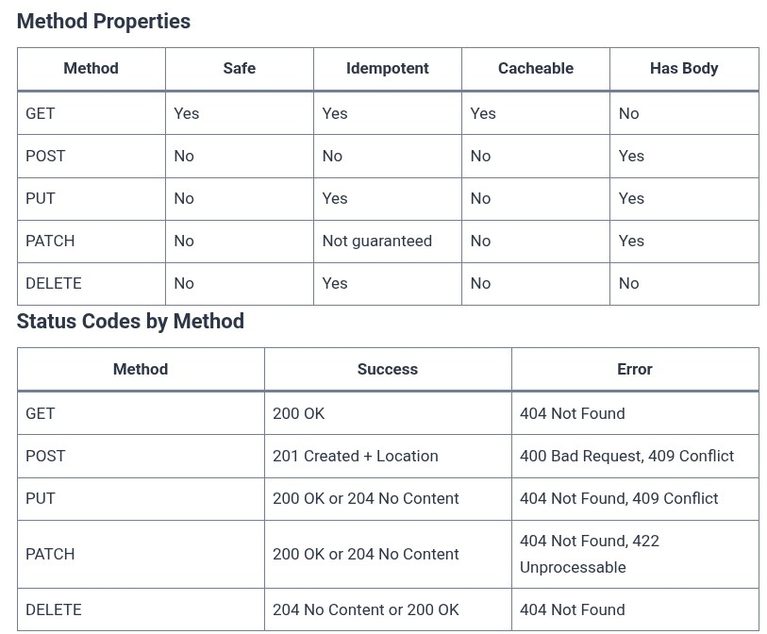
    HTTP methods are the verbs of a REST API. The URI identifies the resource; the method identifies what to do with it. This separation is the core of the uniform interface constraint: the same URI can support multiple operations, and the operation is expressed by the method rather than by a verb in the path…
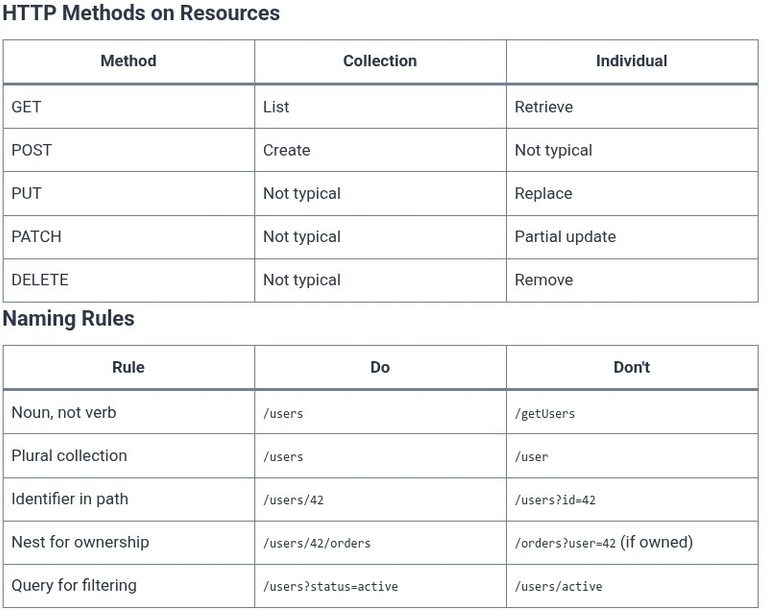
    Read More REST API 03 🌐 HTTP Methods (GET, POST, PUT, PATCH, DELETE)Continue

  • REST API 02 🌐 Resources, URIs, and Collection Naming Conventions
    Servers & Self-Hosting | Networking & DNS | REST API

    REST API 02 🌐 Resources, URIs, and Collection Naming Conventions

    ByKandZ October 18, 2026October 18, 2026

    A REST API’s URI structure is not cosmetic. It is the contract that clients navigate, the surface that documentation describes, and the layer where the difference between a well-designed API and an inconsistent one becomes visible. The uniform interface constraint from the previous chapter requires that every resource be identified by a URI, but it…

    Read More REST API 02 🌐 Resources, URIs, and Collection Naming ConventionsContinue

  • REST API 01 🌐 What is REST and Architectural Constraints
    Servers & Self-Hosting | Networking & DNS | REST API

    REST API 01 🌐 What is REST and Architectural Constraints

    ByKandZ October 18, 2026October 18, 2026

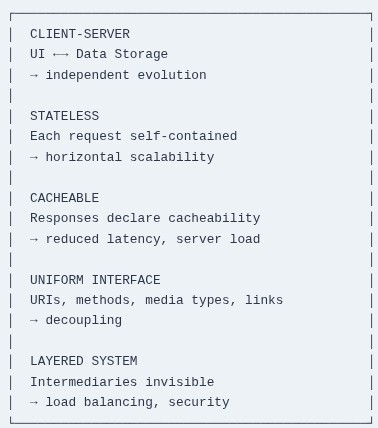
    REST is not a protocol, a library, or a standard. It is an architectural style—a set of design constraints that, when applied together, produce a system with specific desirable properties: scalability, loose coupling, independent deployability, and the ability to evolve without breaking clients . Roy Fielding defined it in his 2000 doctoral dissertation as an…

    Read More REST API 01 🌐 What is REST and Architectural ConstraintsContinue

  • LFCS 50 🐧 Package Management — DNF
    Linux | Operating Systems | LFCS - Linux Foundation Certified Sysadmin

    LFCS 50 🐧 Package Management — DNF

    ByKandZ October 18, 2026October 18, 2026

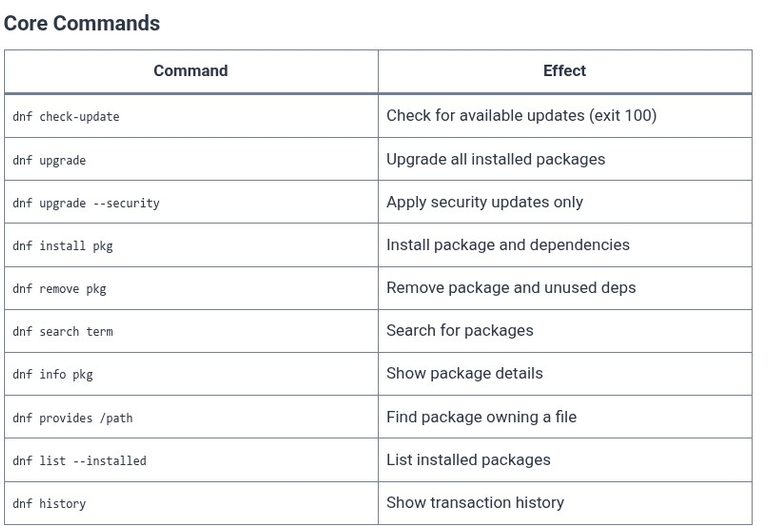
    DNF (Dandified YUM) is the package manager for RHEL, Fedora, Rocky Linux, AlmaLinux, and other RPM-based distributions. It replaced YUM as the default in Fedora 22 and became the standard in RHEL 8 and later . The relationship between the two commands is simpler than it appears: on RHEL 8 and 9, yum is an…

    Read More LFCS 50 🐧 Package Management — DNFContinue

  • LFCS 49 🐧 Package Management — APT
    Linux | Operating Systems | LFCS - Linux Foundation Certified Sysadmin

    LFCS 49 🐧 Package Management — APT

    ByKandZ October 18, 2026October 18, 2026

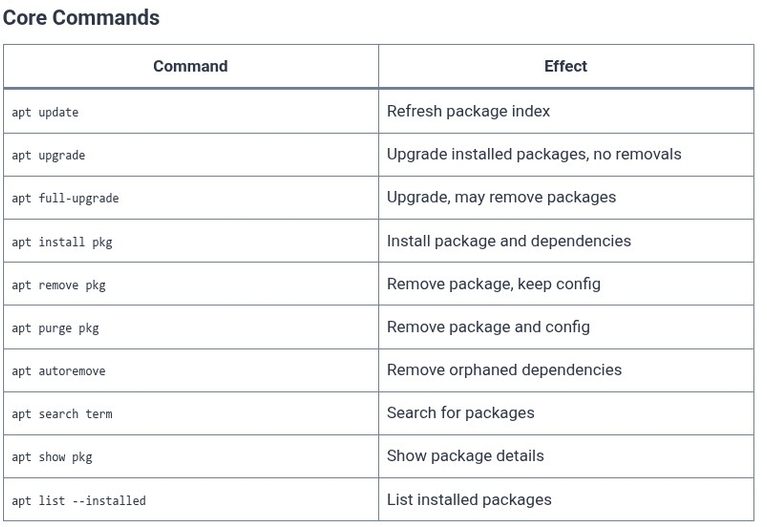
    APT (Advanced Package Tool) is the package management system used by Debian, Ubuntu, and their derivatives. It sits on top of dpkg, the low-level tool that installs and removes individual .deb files, and adds the repository logic, dependency resolution, and network retrieval that make installing software practical . For the LFCS exam, package management falls…

    Read More LFCS 49 🐧 Package Management — APTContinue

  • LFCS 48 🐧 Shell History — Configuration and Use
    Linux | Operating Systems | LFCS - Linux Foundation Certified Sysadmin

    LFCS 48 🐧 Shell History — Configuration and Use

    ByKandZ October 18, 2026October 18, 2026

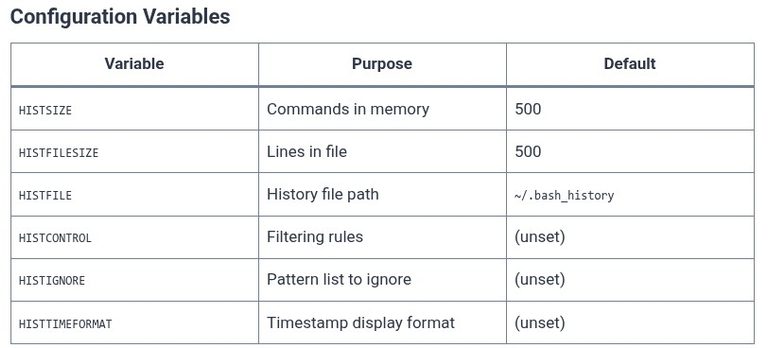
    Shell history is the mechanism that records every command you type, lets you recall and re-execute them, and persists them across sessions in a file. For the LFCS exam, this falls under the “Essential Commands” domain and the “User and Group Management” domain, specifically “Manage template user environment” and “Use shell/environment variables” . The history…

    Read More LFCS 48 🐧 Shell History — Configuration and UseContinue

  • LFCS 47 🐧 Shell Functions
    Linux | Operating Systems | LFCS - Linux Foundation Certified Sysadmin

    LFCS 47 🐧 Shell Functions

    ByKandZ October 18, 2026October 18, 2026

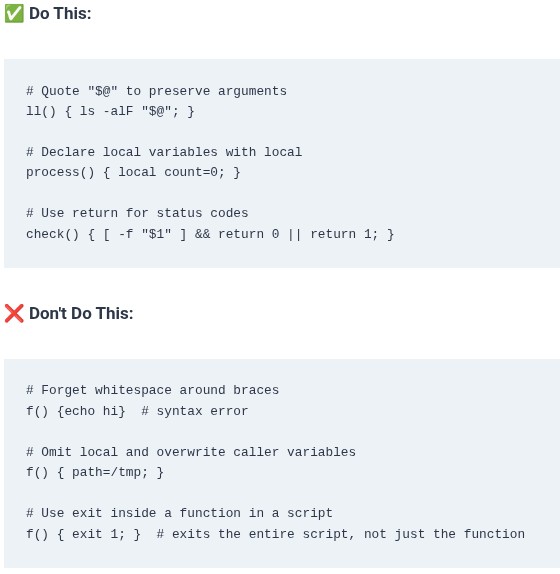
    A shell function is a named block of commands that the shell executes in the current process, as if you had typed each line yourself. Unlike a script, which runs in a new process with its own environment, a function shares the shell’s variables, its working directory, and its file descriptors . This is the…

    Read More LFCS 47 🐧 Shell FunctionsContinue

  • LFCS 46 🐧 Shell Aliases
    Linux | Operating Systems | LFCS - Linux Foundation Certified Sysadmin

    LFCS 46 🐧 Shell Aliases

    ByKandZ October 18, 2026October 18, 2026

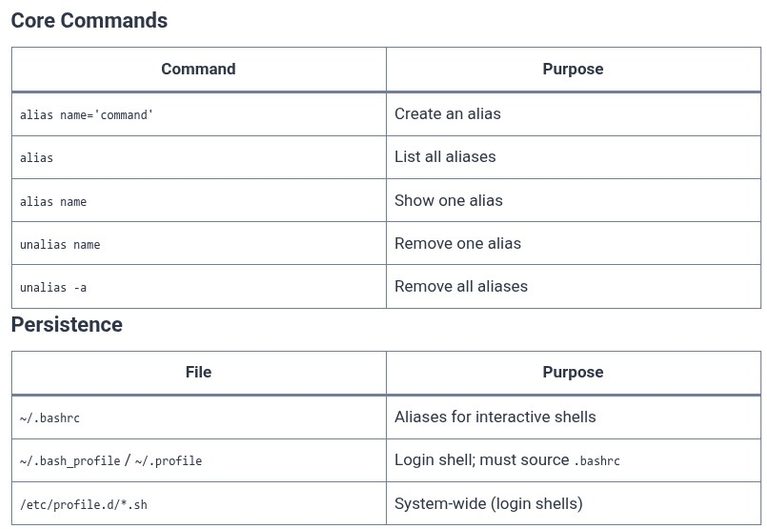
    A shell alias is a name that the shell substitutes for a command before executing it. When you type ll, the shell replaces it with ls -alF and runs the result. The mechanism is simple, but the rules around it are not: aliases are expanded only when the shell reads a line, only for interactive…

    Read More LFCS 46 🐧 Shell AliasesContinue

  • Vue.js 60 🟢 Typed Routing and Automated Data Fetching at Router Level
    Programming | Frontend (FED) | Vue.js

    Vue.js 60 🟢 Typed Routing and Automated Data Fetching at Router Level

    ByKandZ October 18, 2026October 18, 2026

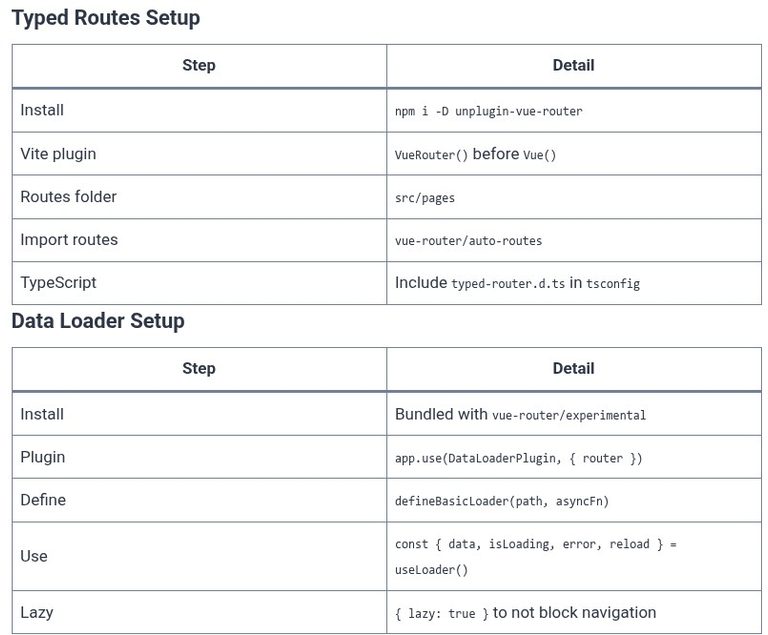
    A Vue Router configuration has two persistent weaknesses as an application grows. The first is that route names and parameters are strings. A typo in router.push({ name: ‘user-profile’ }) when the route is actually named ‘userProfile’ compiles without error and fails at runtime. The second is that data fetching lives inside the component’s onMounted hook,…

    Read More Vue.js 60 🟢 Typed Routing and Automated Data Fetching at Router LevelContinue

  • Vue.js 59 🟢 Route Meta Fields, Scrolling Behavior Customization, and View Transitions API Integration
    Programming | Frontend (FED) | Vue.js

    Vue.js 59 🟢 Route Meta Fields, Scrolling Behavior Customization, and View Transitions API Integration

    ByKandZ October 18, 2026October 18, 2026

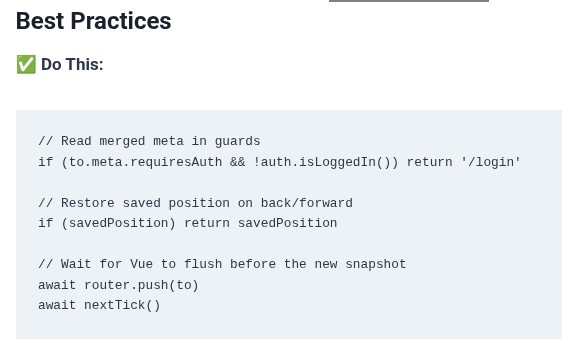
    A Vue Router configuration is not just a list of paths and components. It is a place to attach arbitrary data to each route—whether a page requires authentication, what transition animation it should use, or what title to set on the document. That data lives in the meta field, and it is accessible from the…

    Read More Vue.js 59 🟢 Route Meta Fields, Scrolling Behavior Customization, and View Transitions API IntegrationContinue

Page navigation

Previous PagePrevious 1 … 69 70 71 72 73 … 261 Next PageNext
    Search