Skip to content

KandZ - Tuts

  • Operating Systems â–¾
    • Linux â–¾
      • Distros â–¾
        • Fedora
        • Other Distros
        • Ubuntu
      • Gnome 48
      • KDE
      • LFCA - Linux Foundation Certified IT Associate
      • LFCS - Linux Foundation Certified Sysadmin
      • LFCE - Linux Foundation Certified Engineer (Sysadmin + Network Admin)
      • Linux CLI
      • Various
      • Bash Scripting
  • Paths â–¾
    • Core Web Stack
    • React & Modern UI Stack
    • Linux Core
  • Programming â–¾
    • Frontend (FED) â–¾
      • React Ecosystem â–¾
        • React
        • React Router
        • TanStack Router
        • TanStack Query (React Query)
        • Zustand
        • Redux Toolkit
      • Angular Ecosystem â–¾
        • Angular
      • Vue Ecosystem â–¾
        • Vue.js
      • Styling & UI Components â–¾
        • Tailwind CSS
    • Languages & Runtimes â–¾
      • CSS
      • Dart
      • HTML
      • JavaScript
      • Node.js
      • Rust
      • SQL
      • TypeScript
    • Tools & Build Systems â–¾
      • Version Control â–¾
        • GitHub
        • Git
        • GitLab
      • Package Managers â–¾
        • npm
        • Bun
        • yarn
        • pnpm
      • DevOps & Containers â–¾
        • Docker
  • Servers & Self-Hosting â–¾
    • Internet â–¾
      • Internet Backend - Coming Soon
      • Internet Beginner
      • Internet Frontend - Coming Soon
    • Networking & DNS â–¾
      • REST API
  • Tools
  • Windows â–¾
    • Windows 11
KandZ - Tuts
AngularBunCSSDartDockerGitGitHubGitLabHTMLJavaScriptNode.jsnpmpnpmReactReact RouterRedux ToolkitRustSQLTailwind CSSTanStack Query (React Query)TanStack RouterTypeScriptVue.jsyarnZustandBash ScriptingFedoraGnome 48KDELFCA - Linux Foundation Certified IT AssociateLFCE - Linux Foundation Certified Engineer (Sysadmin + Network Admin)LFCS - Linux Foundation Certified SysadminLinux CLIOther DistrosUbuntuVariousCore Web StackInternet Backend - Coming SoonInternet BeginnerInternet Frontend - Coming SoonLinux CoreReact & Modern UI StackREST APIToolsWindows 11
  • Vue.js 58 🟢 Navigation Guards (Global beforeEach, Per-Route beforeEnter, In-Component onBeforeRouteLeave)
    Programming | Frontend (FED) | Vue.js

    Vue.js 58 🟢 Navigation Guards (Global beforeEach, Per-Route beforeEnter, In-Component onBeforeRouteLeave)

    ByKandZ October 18, 2026October 18, 2026

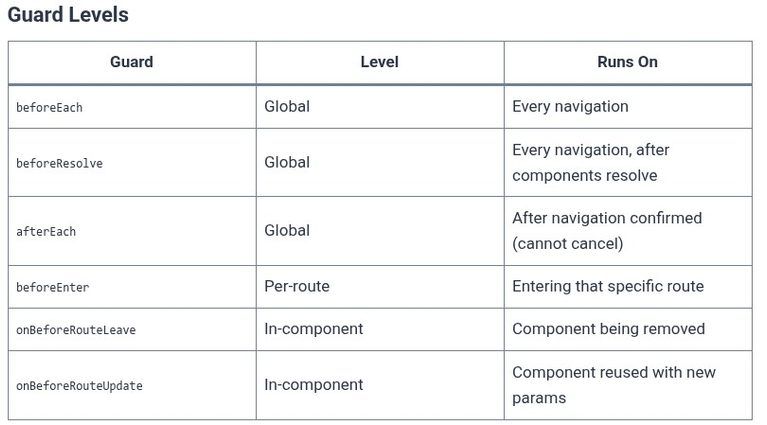
    Navigation guards are the control points where a Vue application decides whether a route transition should proceed, be cancelled, or be redirected. They exist because navigation is not always safe: a user might be navigating to a page they are not authenticated for, or leaving a form with unsaved changes, or entering a route that…
    Read More Vue.js 58 🟢 Navigation Guards (Global beforeEach, Per-Route beforeEnter, In-Component onBeforeRouteLeave)Continue

  • Vue.js 57 🟢 Nested Routes, Named Views, and Route Aliasing
    Programming | Frontend (FED) | Vue.js

    Vue.js 57 🟢 Nested Routes, Named Views, and Route Aliasing

    ByKandZ October 18, 2026October 18, 2026

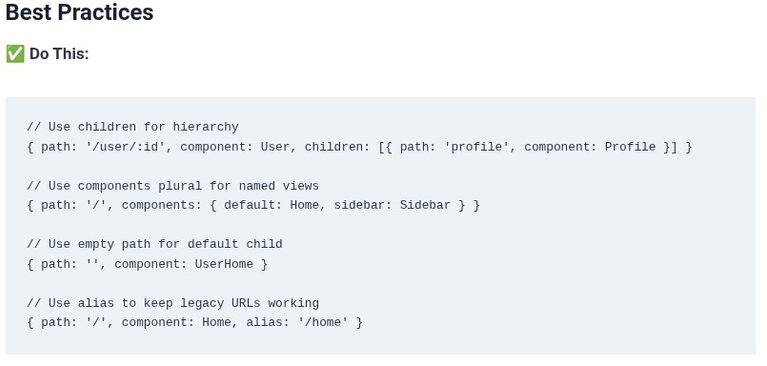
    A Vue application’s UI is rarely a single flat layer. A dashboard has a persistent sidebar and a main content area. A settings page has a navigation panel and a detail pane. A user profile has a header that stays while the tab content changes. Vue Router expresses these structures through three distinct mechanisms: nested…

    Read More Vue.js 57 🟢 Nested Routes, Named Views, and Route AliasingContinue

  • Vue.js 56 🟢 Dynamic Route Matching, Route Params, and Query Strings
    Programming | Frontend (FED) | Vue.js

    Vue.js 56 🟢 Dynamic Route Matching, Route Params, and Query Strings

    ByKandZ October 18, 2026October 18, 2026

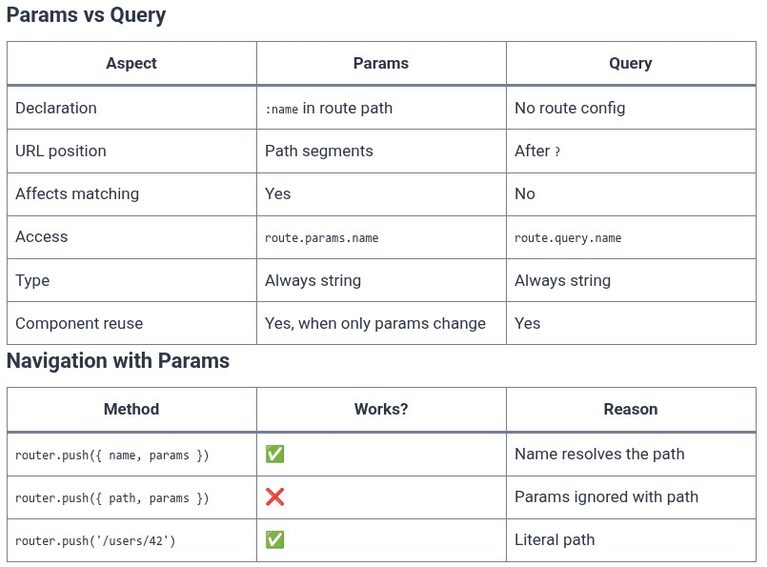
    A URL like /users/42 and a URL like /users/42?tab=posts are both requests for the same resource, but they carry different kinds of information. The 42 is part of the path—it identifies which user. The tab=posts is a query string—it describes how to display that user. Vue Router treats these two as distinct concepts with distinct…

    Read More Vue.js 56 🟢 Dynamic Route Matching, Route Params, and Query StringsContinue

  • Free JS Arrow Function Converter
    Tools

    Free JS Arrow Function Converter

    ByKandZ October 18, 2026October 18, 2026

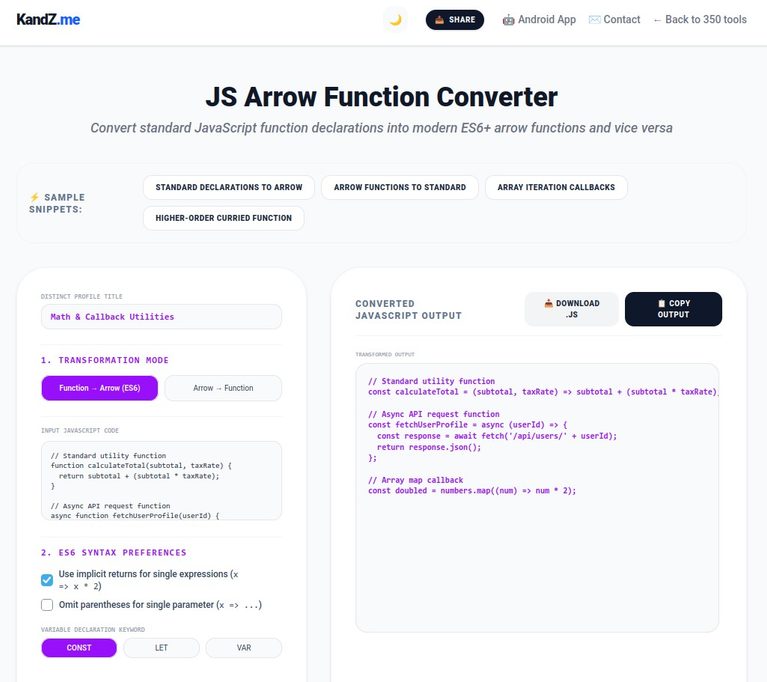
    Converting standard functions to arrow functions by hand is tedious. You miss a return. You forget to remove the curly braces. You mess up the this binding. I built a free tool that solves this. What it does: Use cases: Privacy:100% client-side. Nothing uploaded. Try it: tools.kandz.me/arrow-function-converter

    Read More Free JS Arrow Function ConverterContinue

  • Node.js 84 🟢 Native C++ Addons and High-Performance Native API (Node-API / N-API)
    Programming | Languages & Runtimes | Node.js

    Node.js 84 🟢 Native C++ Addons and High-Performance Native API (Node-API / N-API)

    ByKandZ October 18, 2026October 18, 2026

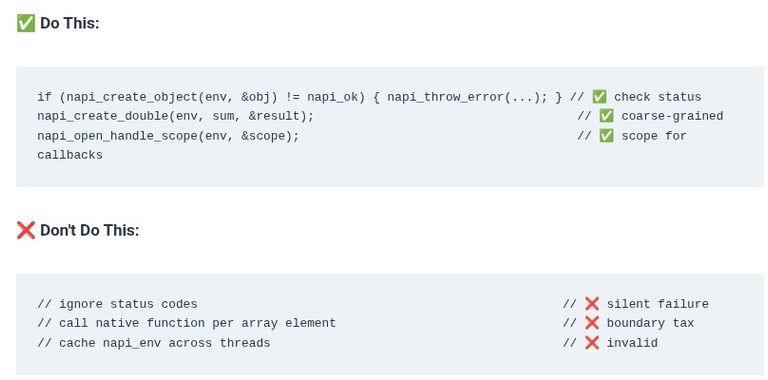
    A native addon is a compiled shared library—a .node file—that JavaScript can require() like any other module. It exists because some operations are either impossible or unacceptably slow in JavaScript: calling an operating system API that Node.js does not expose, wrapping an existing C or C++ library that would take years to port, or running…

    Read More Node.js 84 🟢 Native C++ Addons and High-Performance Native API (Node-API / N-API)Continue

  • Node.js 83 🟢 Building Custom Command-Line Tools (CLIs) in Node.js
    Programming | Languages & Runtimes | Node.js

    Node.js 83 🟢 Building Custom Command-Line Tools (CLIs) in Node.js

    ByKandZ October 18, 2026October 18, 2026

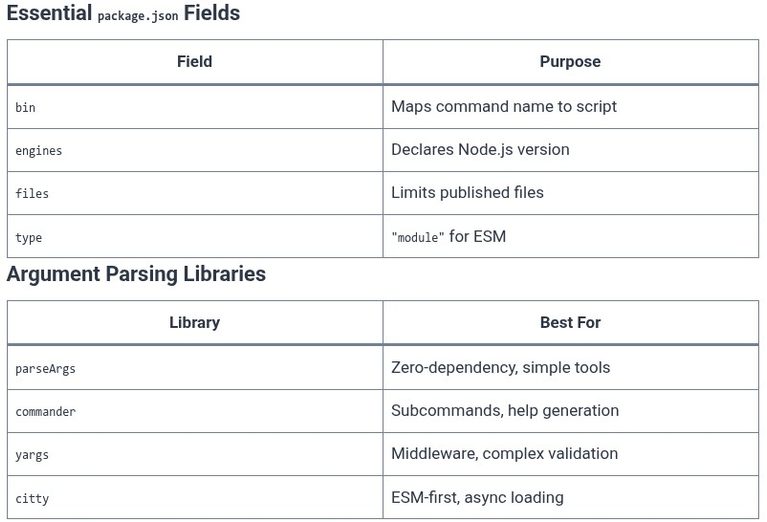
    A command-line tool is a program that a user invokes by name from a terminal, passes arguments and options to, and receives output from. Building one in Node.js is deceptively straightforward: create a JavaScript file with a shebang, map it to a command name in package.json, and install it globally. The difficulty is not in…

    Read More Node.js 83 🟢 Building Custom Command-Line Tools (CLIs) in Node.jsContinue

  • Node.js 82 🟢 Single Executable Applications (SEA) to Package Apps as Native Binaries
    Programming | Languages & Runtimes | Node.js

    Node.js 82 🟢 Single Executable Applications (SEA) to Package Apps as Native Binaries

    ByKandZ October 18, 2026October 18, 2026

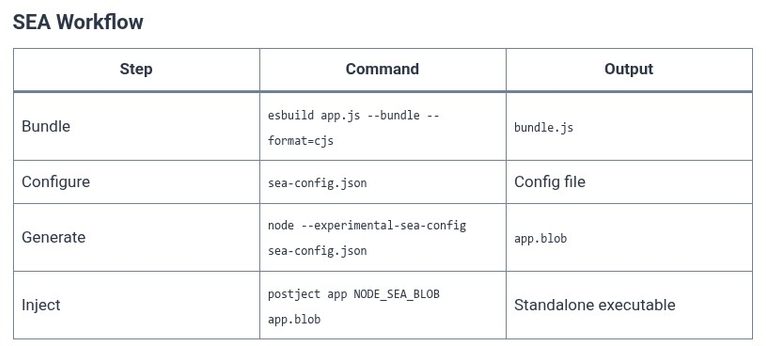
    Node.js Single Executable Applications (SEA) is the runtime’s native answer to a problem that third-party tools like pkg and nexe spent years addressing: how do you ship a Node.js application to a machine that does not have Node.js installed? The approach is deceptively simple. You bundle your application into a single JavaScript file, generate a…

    Read More Node.js 82 🟢 Single Executable Applications (SEA) to Package Apps as Native BinariesContinue

  • Node.js 81 🟢 CI/CD Automated Pipelines for Testing and Deploying Node.js Apps
    Programming | Languages & Runtimes | Node.js

    Node.js 81 🟢 CI/CD Automated Pipelines for Testing and Deploying Node.js Apps

    ByKandZ October 18, 2026October 18, 2026

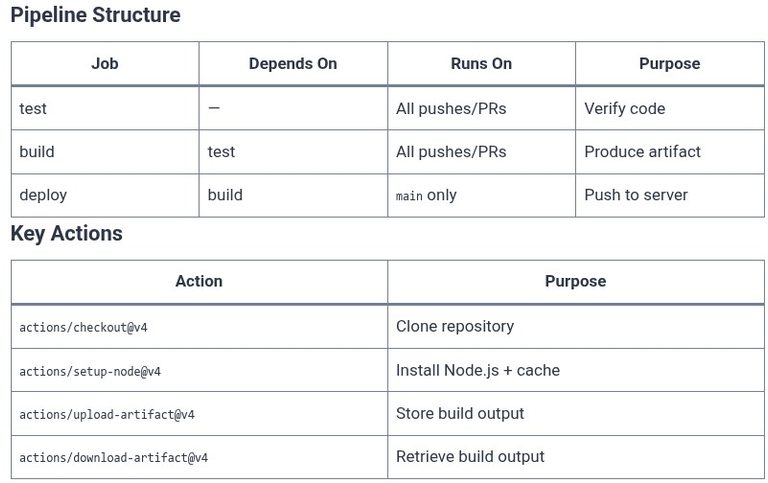
    A CI/CD pipeline is the mechanism that turns a git push into a tested, built, and deployed application without manual intervention. The pipeline has three stages that run in sequence: continuous integration verifies that the code compiles and the tests pass, continuous delivery builds the deployable artifact, and continuous deployment pushes that artifact to the…

    Read More Node.js 81 🟢 CI/CD Automated Pipelines for Testing and Deploying Node.js AppsContinue

  • Node.js 80 🟢 Signal Handling (SIGTERM, SIGINT) and Graceful Shutdown Patterns
    Programming | Languages & Runtimes | Node.js

    Node.js 80 🟢 Signal Handling (SIGTERM, SIGINT) and Graceful Shutdown Patterns

    ByKandZ October 18, 2026October 18, 2026

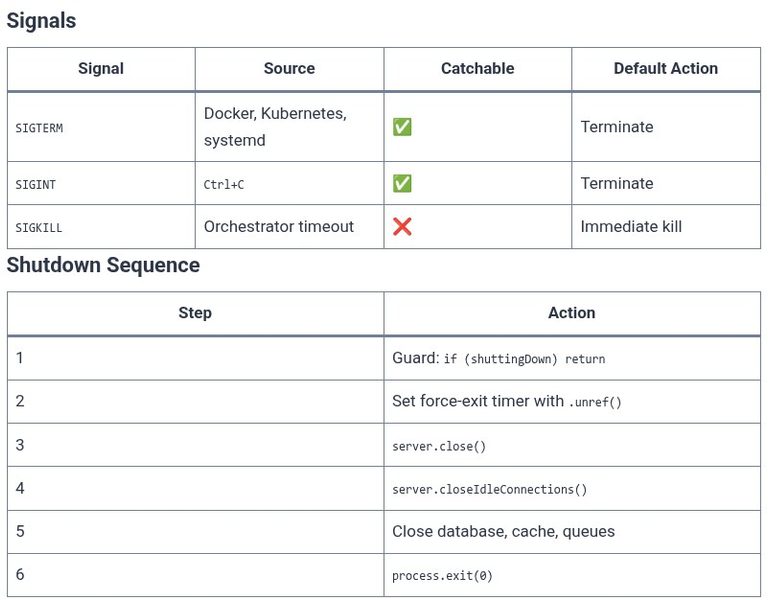
    A Node.js process that ignores SIGTERM is a process that Docker kills after ten seconds. An orchestrator sends the signal, waits for the configured grace period, and then sends SIGKILL—which cannot be caught, cannot be handled, and gives the application no opportunity to finish what it was doing. The difference between a clean shutdown and…

    Read More Node.js 80 🟢 Signal Handling (SIGTERM, SIGINT) and Graceful Shutdown PatternsContinue

  • Node.js 79 🟢 Multi-Stage Docker Builds, Image Minimization, and Non-Root Execution
    Programming | Languages & Runtimes | Node.js

    Node.js 79 🟢 Multi-Stage Docker Builds, Image Minimization, and Non-Root Execution

    ByKandZ October 18, 2026October 18, 2026

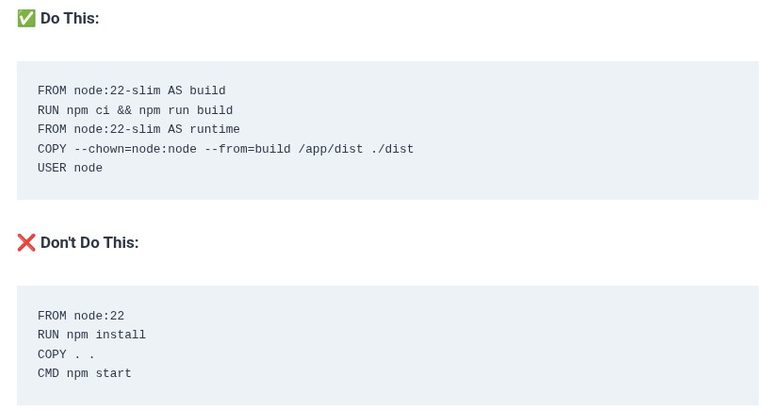
    The previous chapter covered the four decisions that shape a production Node.js image. This chapter goes deeper into the two that have the largest measurable impact: the multi-stage build structure that determines what ships, and the non-root execution model that determines what happens when something goes wrong. The size difference is not marginal. A single-stage…

    Read More Node.js 79 🟢 Multi-Stage Docker Builds, Image Minimization, and Non-Root ExecutionContinue

Page navigation

Previous PagePrevious 1 … 70 71 72 73 74 … 261 Next PageNext
    Search