Skip to content

KandZ - Tuts

  • Operating Systems ▾
    • Linux ▾
      • Distros ▾
        • Fedora
        • Other Distros
        • Ubuntu
      • Gnome 48
      • KDE
      • LFCA - Linux Foundation Certified IT Associate
      • LFCS - Linux Foundation Certified Sysadmin
      • LFCE - Linux Foundation Certified Engineer (Sysadmin + Network Admin)
      • Linux CLI
      • Various
      • Bash Scripting
  • Paths ▾
    • Core Web Stack
    • React & Modern UI Stack
    • Linux Core
  • Programming ▾
    • Frontend (FED) ▾
      • React Ecosystem ▾
        • React
        • React Router
        • TanStack Router
        • TanStack Query (React Query)
        • Zustand
        • Redux Toolkit
      • Angular Ecosystem ▾
        • Angular
      • Vue Ecosystem ▾
        • Vue.js
      • Styling & UI Components ▾
        • Tailwind CSS
    • Languages & Runtimes ▾
      • CSS
      • Dart
      • HTML
      • JavaScript
      • Node.js
      • Rust
      • SQL
      • TypeScript
    • Tools & Build Systems ▾
      • Version Control ▾
        • GitHub
        • Git
        • GitLab
      • Package Managers ▾
        • npm
        • Bun
        • yarn
        • pnpm
      • DevOps & Containers ▾
        • Docker
  • Servers & Self-Hosting ▾
    • Internet ▾
      • Internet Backend - Coming Soon
      • Internet Beginner
      • Internet Frontend - Coming Soon
    • Networking & DNS ▾
      • REST API
  • Tools
  • Windows ▾
    • Windows 11
KandZ - Tuts
AngularBunCSSDartDockerGitGitHubGitLabHTMLJavaScriptNode.jsnpmpnpmReactReact RouterRedux ToolkitRustSQLTailwind CSSTanStack Query (React Query)TanStack RouterTypeScriptVue.jsyarnZustandBash ScriptingFedoraGnome 48KDELFCA - Linux Foundation Certified IT AssociateLFCE - Linux Foundation Certified Engineer (Sysadmin + Network Admin)LFCS - Linux Foundation Certified SysadminLinux CLIOther DistrosUbuntuVariousCore Web StackInternet Backend - Coming SoonInternet BeginnerInternet Frontend - Coming SoonLinux CoreReact & Modern UI StackREST APIToolsWindows 11
  • REST API 16 🌐 API Rate Limiting and Throttling (Headers & Algorithms)
    Servers & Self-Hosting | Networking & DNS | REST API

    REST API 16 🌐 API Rate Limiting and Throttling (Headers & Algorithms)

    ByKandZ October 19, 2026October 19, 2026

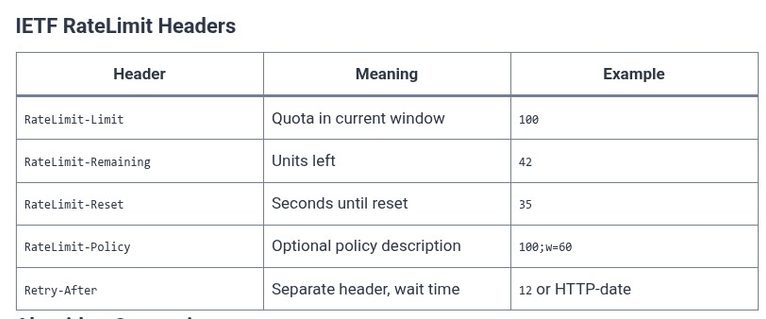
    Rate limiting and throttling are often used interchangeably, but they solve different problems. Rate limiting rejects requests that exceed a defined quota, returning HTTP 429 and forcing the client to wait or back off. Throttling slows requests down or queues them, allowing the work to complete at a controlled pace rather than failing outright ….
    Read More REST API 16 🌐 API Rate Limiting and Throttling (Headers & Algorithms)Continue

  • LFCS 65 🐧 Traditional Cron Jobs
    Linux | Operating Systems | LFCS - Linux Foundation Certified Sysadmin

    LFCS 65 🐧 Traditional Cron Jobs

    ByKandZ October 19, 2026October 19, 2026

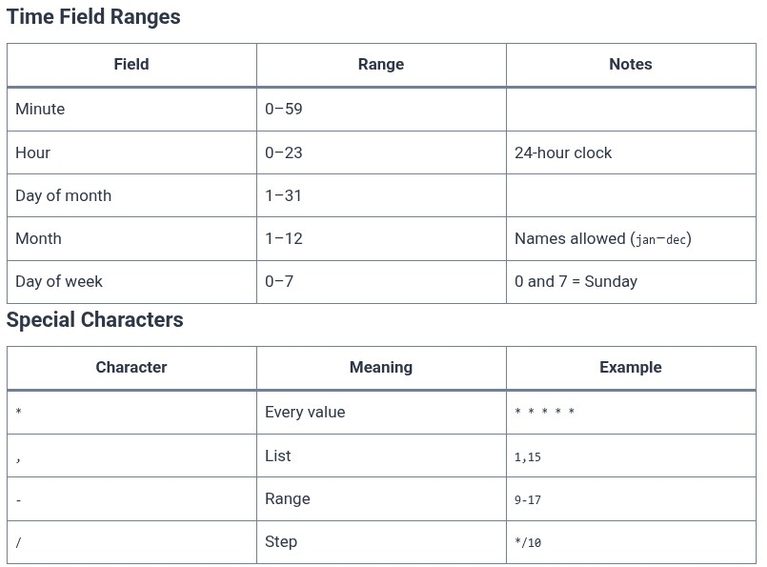
    Cron is the oldest task scheduler still in daily use on Linux systems, and the LFCS exam tests it alongside systemd timers as a distinct scheduling mechanism. The exam objective is explicit: “Schedule tasks to run at a set date and time” and “Verify completion of scheduled jobs” . Cron’s model is simpler than systemd…

    Read More LFCS 65 🐧 Traditional Cron JobsContinue

  • LFCS 64 🐧 systemd Timers
    Linux | Operating Systems | LFCS - Linux Foundation Certified Sysadmin

    LFCS 64 🐧 systemd Timers

    ByKandZ October 19, 2026October 19, 2026

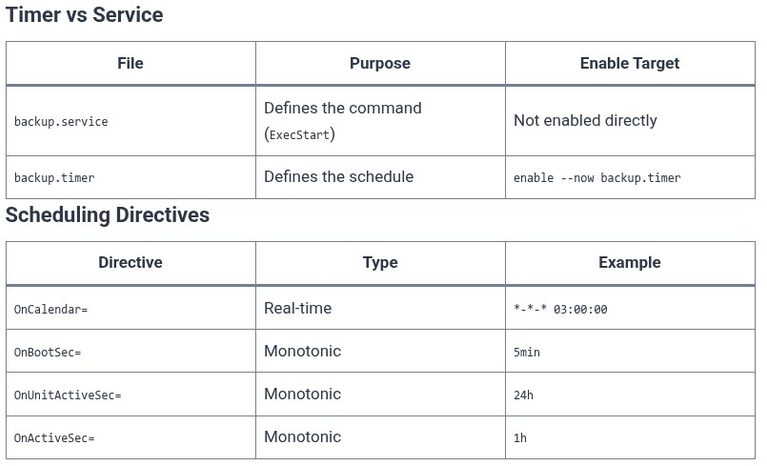
    systemd timers schedule work without cron. The timer unit defines when a job runs, and a paired service unit defines what runs. The two files share a base name: backup.timer triggers backup.service. The exam tests this pairing, the OnCalendar= syntax that replaces cron expressions, the Persistent=true directive that catches missed runs after downtime, and the…

    Read More LFCS 64 🐧 systemd TimersContinue

  • LFCS 63 🐧 Creating Custom systemd Units
    Linux | Operating Systems | LFCS - Linux Foundation Certified Sysadmin

    LFCS 63 🐧 Creating Custom systemd Units

    ByKandZ October 19, 2026October 19, 2026

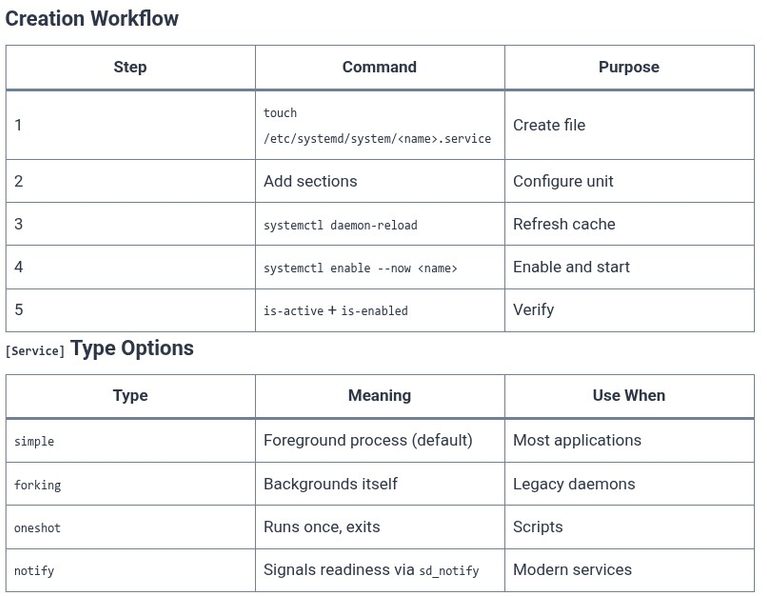
    Creating a custom systemd unit is the operational bridge between “I have an executable” and “systemd manages this process, restarts it when it crashes, and starts it at boot.” The LFCS exam tests this as a sequence of file creation, section configuration, cache refresh, and enablement—not as a single command. The most common failure is…

    Read More LFCS 63 🐧 Creating Custom systemd UnitsContinue

  • LFCS 62 🐧 systemd — Unit Files
    Linux | Operating Systems | LFCS - Linux Foundation Certified Sysadmin

    LFCS 62 🐧 systemd — Unit Files

    ByKandZ October 19, 2026October 19, 2026

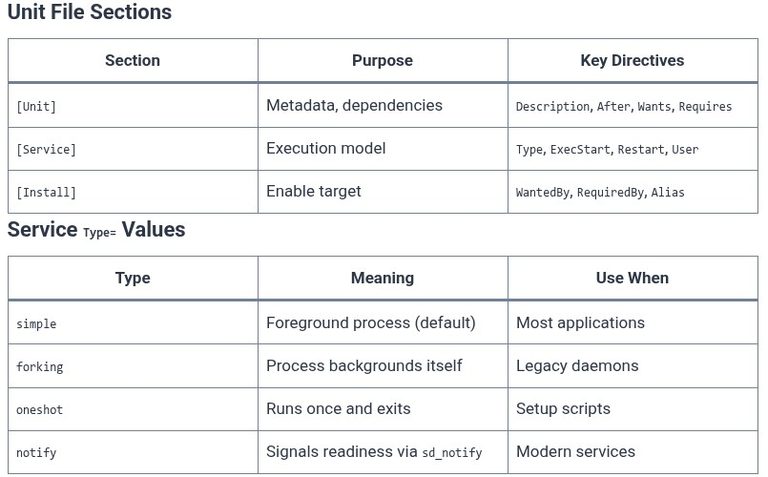
    A systemd unit file is not a shell script with a shebang. It is an INI-format configuration file that declares a resource’s metadata, dependencies, execution model, and installation target. The LFCS exam tests this distinction through scenarios that require creating a service from scratch, overriding a package-provided unit without editing the package’s file, and understanding…

    Read More LFCS 62 🐧 systemd — Unit FilesContinue

  • LFCS 61 🐧 systemd — Managing Services
    Linux | Operating Systems | LFCS - Linux Foundation Certified Sysadmin

    LFCS 61 🐧 systemd — Managing Services

    ByKandZ October 19, 2026October 19, 2026

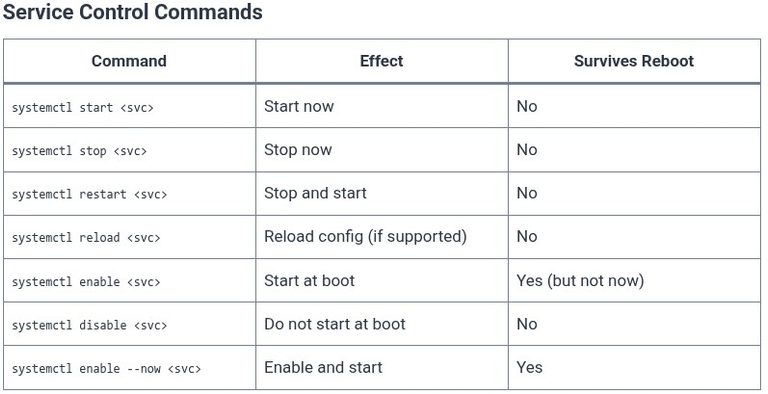
    The LFCS exam tests systemd at the operational level: can you start a service, make it persist across reboots, verify its status, and read its logs? The commands are not complicated individually, but the exam is performance-based on a live system, and the most common failure is not a wrong command—it is a command that…

    Read More LFCS 61 🐧 systemd — Managing ServicesContinue

  • Vue.js 75 🟢 SSR Hydration Mechanics, Mismatch Debugging, and Streaming Responses
    Programming | Frontend (FED) | Vue.js

    Vue.js 75 🟢 SSR Hydration Mechanics, Mismatch Debugging, and Streaming Responses

    ByKandZ October 19, 2026October 19, 2026

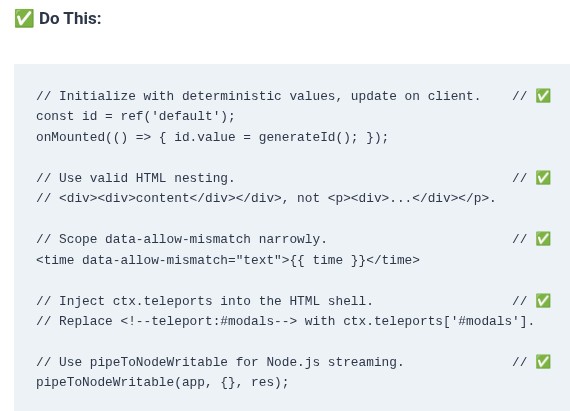
    Hydration is the moment of truth for server-side rendering. The server sends HTML that the browser parses and displays, and then Vue’s client-side runtime walks that existing DOM, comparing it against the virtual DOM it would have produced from the same component tree. When the two match, Vue attaches event listeners and the page becomes…

    Read More Vue.js 75 🟢 SSR Hydration Mechanics, Mismatch Debugging, and Streaming ResponsesContinue

  • Vue.js 74 🟢 Server-Side Rendering (SSR) Architecture with Vue (@vue/server-renderer)
    Programming | Frontend (FED) | Vue.js

    Vue.js 74 🟢 Server-Side Rendering (SSR) Architecture with Vue (@vue/server-renderer)

    ByKandZ October 19, 2026October 19, 2026

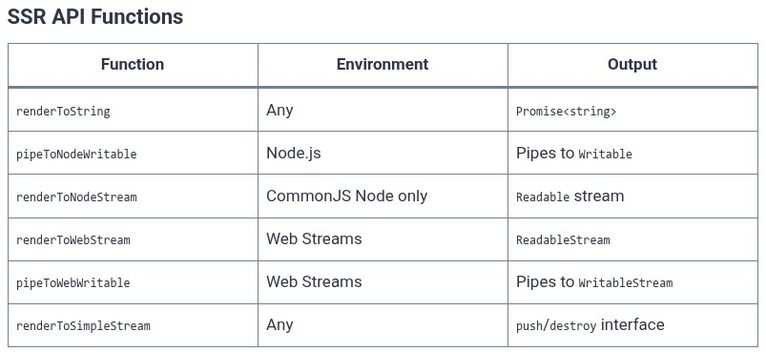
    Server-side rendering in Vue is not a framework feature that you enable with a flag. It is an architectural pattern that requires two coordinated entry points—one for the server and one for the client—and a renderer that converts a Vue application instance into an HTML string. The @vue/server-renderer package provides that renderer, and its API…

    Read More Vue.js 74 🟢 Server-Side Rendering (SSR) Architecture with Vue (@vue/server-renderer)Continue

  • Vue.js 73 🟢 Static Site Generation (SSG) with VitePress or Nuxt
    Programming | Frontend (FED) | Vue.js

    Vue.js 73 🟢 Static Site Generation (SSG) with VitePress or Nuxt

    ByKandZ October 19, 2026October 19, 2026

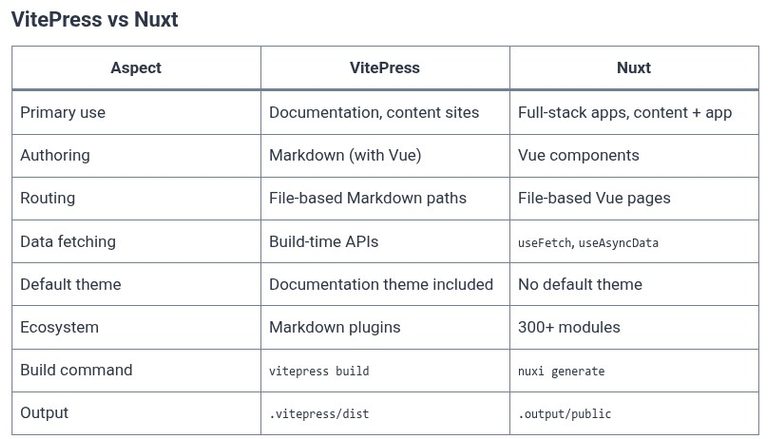
    VitePress and Nuxt both generate static HTML from Vue code, but they target different problems. VitePress is a documentation-first static site generator: Markdown files become pages, a default theme handles navigation and search, and the output is a content-centric site that ships almost no JavaScript beyond hydration . Nuxt is a full-stack Vue framework where…

    Read More Vue.js 73 🟢 Static Site Generation (SSG) with VitePress or NuxtContinue

  • Vue.js 72 🟢 Component Storybook Integration and Visual Regression Testing
    Programming | Frontend (FED) | Vue.js

    Vue.js 72 🟢 Component Storybook Integration and Visual Regression Testing

    ByKandZ October 19, 2026October 19, 2026

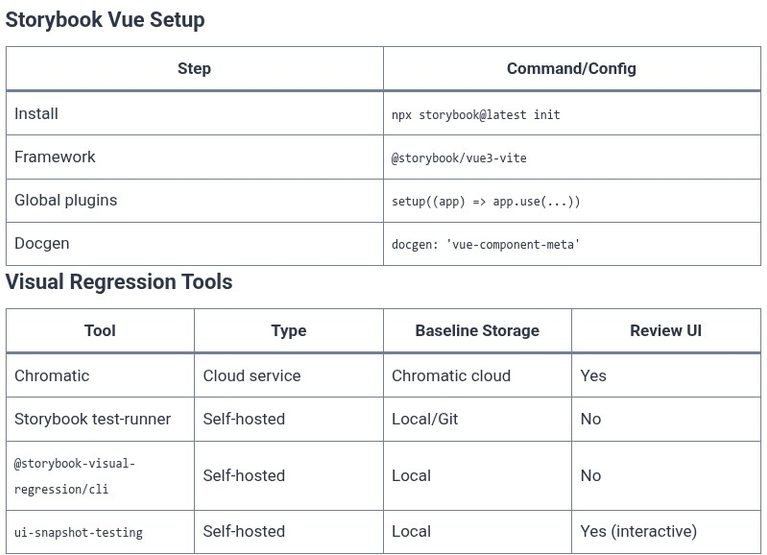
    Storybook is a workshop for Vue components: each .stories.js file declares the discrete states a component can be in, and Storybook renders each state in isolation, outside the application. Visual regression testing exploits this structure. Every story is already a specification of what the component should look like in a given state. Capturing a screenshot…

    Read More Vue.js 72 🟢 Component Storybook Integration and Visual Regression TestingContinue

Page navigation

Previous PagePrevious 1 … 55 56 57 58 59 … 260 Next PageNext
    Search