Skip to content

KandZ - Tuts

  • Operating Systems ▾
    • Linux ▾
      • Distros ▾
        • Fedora
        • Other Distros
        • Ubuntu
      • Gnome 48
      • KDE
      • LFCA - Linux Foundation Certified IT Associate
      • LFCS - Linux Foundation Certified Sysadmin
      • LFCE - Linux Foundation Certified Engineer (Sysadmin + Network Admin)
      • Linux CLI
      • Various
      • Bash Scripting
  • Paths ▾
    • Core Web Stack
    • React & Modern UI Stack
    • Linux Core
  • Programming ▾
    • Frontend (FED) ▾
      • React Ecosystem ▾
        • React
        • React Router
        • TanStack Router
        • TanStack Query (React Query)
        • Zustand
        • Redux Toolkit
      • Angular Ecosystem ▾
        • Angular
      • Vue Ecosystem ▾
        • Vue.js
      • Styling & UI Components ▾
        • Tailwind CSS
    • Languages & Runtimes ▾
      • CSS
      • Dart
      • HTML
      • JavaScript
      • Node.js
      • Rust
      • SQL
      • TypeScript
    • Tools & Build Systems ▾
      • Version Control ▾
        • GitHub
        • Git
        • GitLab
      • Package Managers ▾
        • npm
        • Bun
        • yarn
        • pnpm
      • DevOps & Containers ▾
        • Docker
  • Servers & Self-Hosting ▾
    • Internet ▾
      • Internet Backend - Coming Soon
      • Internet Beginner
      • Internet Frontend - Coming Soon
    • Networking & DNS ▾
      • REST API
  • Tools
  • Windows ▾
    • Windows 11
KandZ - Tuts
AngularBunCSSDartDockerGitGitHubGitLabHTMLJavaScriptNode.jsnpmpnpmReactReact RouterRedux ToolkitRustSQLTailwind CSSTanStack Query (React Query)TanStack RouterTypeScriptVue.jsyarnZustandBash ScriptingFedoraGnome 48KDELFCA - Linux Foundation Certified IT AssociateLFCE - Linux Foundation Certified Engineer (Sysadmin + Network Admin)LFCS - Linux Foundation Certified SysadminLinux CLIOther DistrosUbuntuVariousCore Web StackInternet Backend - Coming SoonInternet BeginnerInternet Frontend - Coming SoonLinux CoreReact & Modern UI StackREST APIToolsWindows 11
  • Vue.js 63 🟢 Form Validation with VeeValidate or Zod
    Programming | Frontend (FED) | Vue.js

    Vue.js 63 🟢 Form Validation with VeeValidate or Zod

    ByKandZ October 18, 2026October 18, 2026

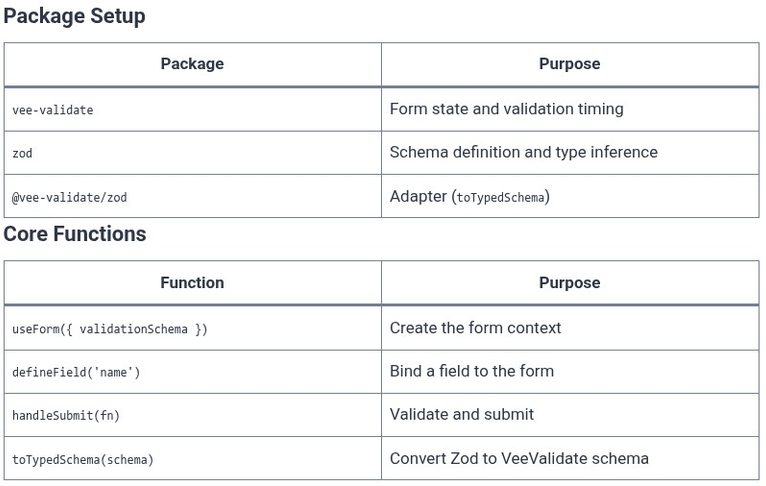
    Form validation in Vue 3 is not a built-in feature. The framework gives you reactivity and v-model, but the rules, the error state, the submission gating, and the async validation are left to the application. VeeValidate is the library that fills this gap. It is not a schema validator itself—it is the form state manager…
    Read More Vue.js 63 🟢 Form Validation with VeeValidate or ZodContinue

  • Vue.js 62 🟢 Writing Custom Directives (Lifecycle Hooks: created, beforeMount, mounted, updated)
    Programming | Frontend (FED) | Vue.js

    Vue.js 62 🟢 Writing Custom Directives (Lifecycle Hooks: created, beforeMount, mounted, updated)

    ByKandZ October 18, 2026October 18, 2026

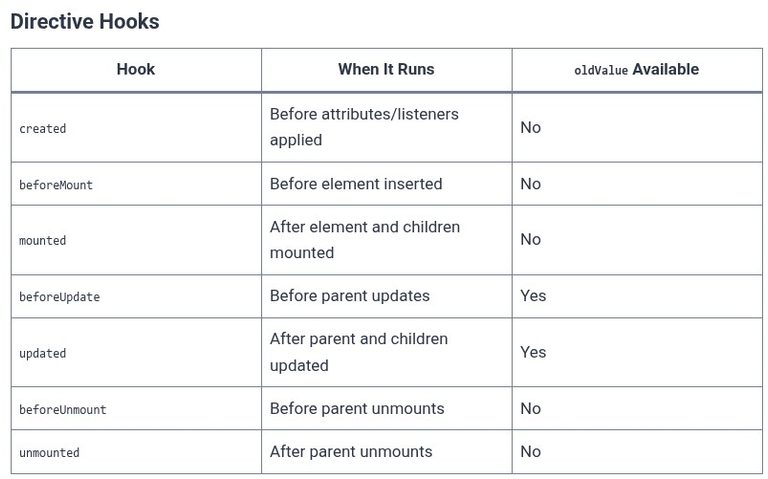
    Custom directives are Vue’s escape hatch for low-level DOM manipulation. They exist for the cases that components and composables cannot cover: focusing an input when it appears, integrating a third-party DOM library that expects a raw element, or attaching an event listener that must be cleaned up on unmount. The directive is defined as an…

    Read More Vue.js 62 🟢 Writing Custom Directives (Lifecycle Hooks: created, beforeMount, mounted, updated)Continue

  • Vue.js 61 🟢 Form Input Directives Customization and v-model Modifiers Deep Dive
    Frontend (FED) | Programming | Vue.js

    Vue.js 61 🟢 Form Input Directives Customization and v-model Modifiers Deep Dive

    ByKandZ October 18, 2026October 18, 2026

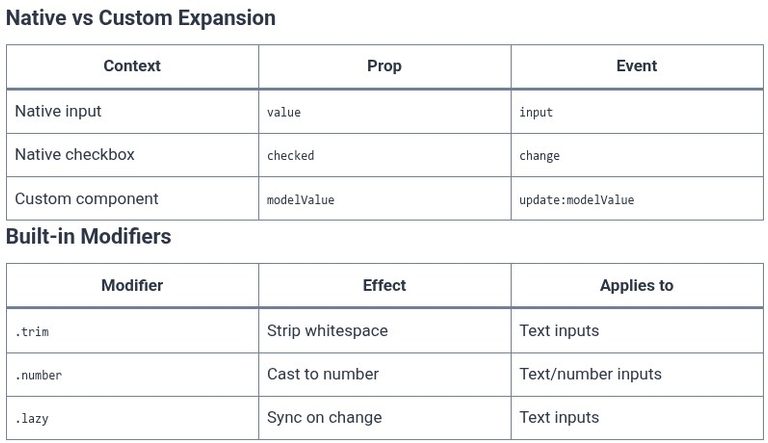
    v-model is Vue’s two-way binding directive, and on the surface it looks like magic: a single attribute synchronizes a form input with a reactive variable. Under the hood, it is a compile-time transformation that expands into a prop binding and an event listener. On a native <input>, v-model=”text” becomes :value=”text” plus @input=”text = $event.target.value”. On…

    Read More Vue.js 61 🟢 Form Input Directives Customization and v-model Modifiers Deep DiveContinue

  • Docker 75 🐳 Docker API: Interacting with Docker Engine Daemon REST API via HTTP / Unix Socket
    Programming | Docker | Tools & Build Systems

    Docker 75 🐳 Docker API: Interacting with Docker Engine Daemon REST API via HTTP / Unix Socket

    ByKandZ October 18, 2026October 18, 2026

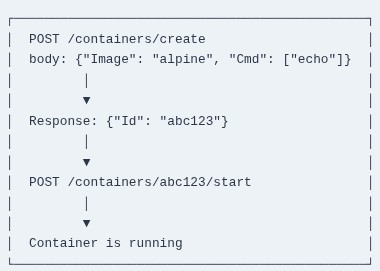
    The Docker CLI is a client. When you run docker ps or docker run, the CLI does not execute the operation itself. It sends an HTTP request to the Docker daemon (dockerd) over a socket, receives the response, and formats it for the terminal. The API that the CLI uses is the Docker Engine API,…

    Read More Docker 75 🐳 Docker API: Interacting with Docker Engine Daemon REST API via HTTP / Unix SocketContinue

  • Docker 74 🐳 Sandboxed & Secure Runtimes: gVisor (runsc) and Kata Containers (MicroVM Isolation)
    Programming | Docker | Tools & Build Systems

    Docker 74 🐳 Sandboxed & Secure Runtimes: gVisor (runsc) and Kata Containers (MicroVM Isolation)

    ByKandZ October 18, 2026October 18, 2026

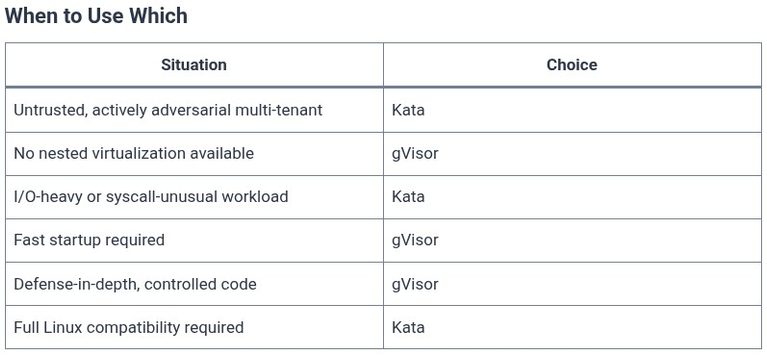
    Standard containers share the host kernel. A kernel vulnerability, a misconfigured capability, or an escape exploit in one container can compromise the entire host. Seccomp, AppArmor, and SELinux reduce the attack surface, but they are policies layered on top of the same kernel—they do not change the fundamental architecture. gVisor and Kata Containers take two…

    Read More Docker 74 🐳 Sandboxed & Secure Runtimes: gVisor (runsc) and Kata Containers (MicroVM Isolation)Continue

  • Docker 73 🐳 Podman Desktop, Rootless Pods, and Generating Kubernetes Manifests from Pods
    Programming | Docker | Tools & Build Systems

    Docker 73 🐳 Podman Desktop, Rootless Pods, and Generating Kubernetes Manifests from Pods

    ByKandZ October 18, 2026October 18, 2026

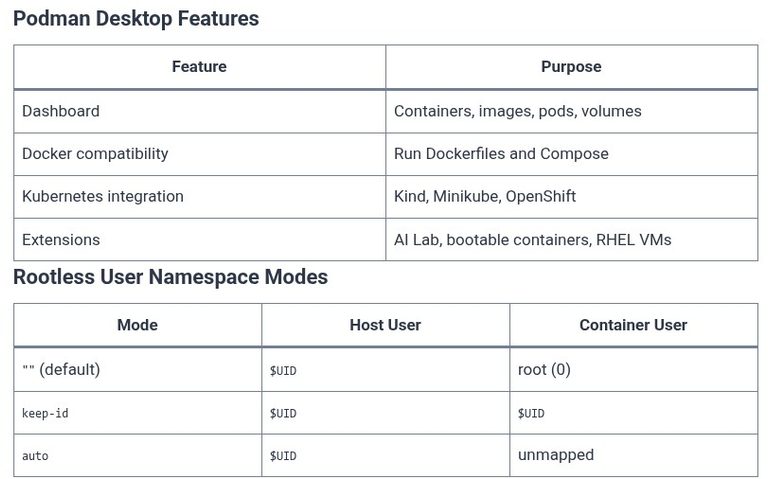
    Podman Desktop is the graphical interface that turns Podman from a command-line tool into a complete development environment. It installs and configures Podman, provides a dashboard for containers, images, pods, and volumes, and integrates with Kubernetes through Kind, Minikube, and OpenShift . The tool is available on Linux, macOS, and Windows, and it joined the…

    Read More Docker 73 🐳 Podman Desktop, Rootless Pods, and Generating Kubernetes Manifests from PodsContinue

  • Docker 72 🐳 Alternative Container Runtimes: CRI-O, Podman (Podman vs Docker Differences)
    Programming | Docker | Tools & Build Systems

    Docker 72 🐳 Alternative Container Runtimes: CRI-O, Podman (Podman vs Docker Differences)

    ByKandZ October 18, 2026October 18, 2026

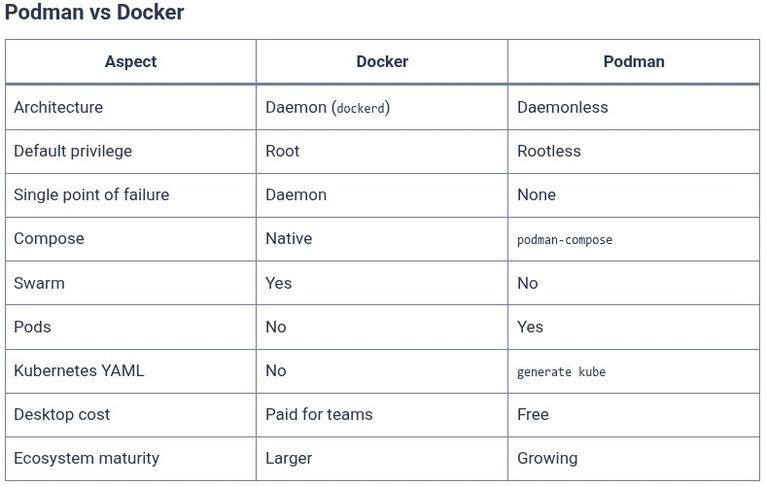
    The container runtime landscape is not a single tool but a layered ecosystem, and understanding the alternatives requires understanding what problem each one solves. CRI-O and Podman are both Red Hat-originated projects that emerged from the same architectural insight: Docker’s monolithic daemon was too much for most use cases, and the OCI specifications made it…

    Read More Docker 72 🐳 Alternative Container Runtimes: CRI-O, Podman (Podman vs Docker Differences)Continue

  • Docker 71 🐳 Open Container Initiative (OCI) Specifications: Image Spec, Runtime Spec, and Distribution Spec
    Programming | Docker | Tools & Build Systems

    Docker 71 🐳 Open Container Initiative (OCI) Specifications: Image Spec, Runtime Spec, and Distribution Spec

    ByKandZ October 18, 2026October 18, 2026

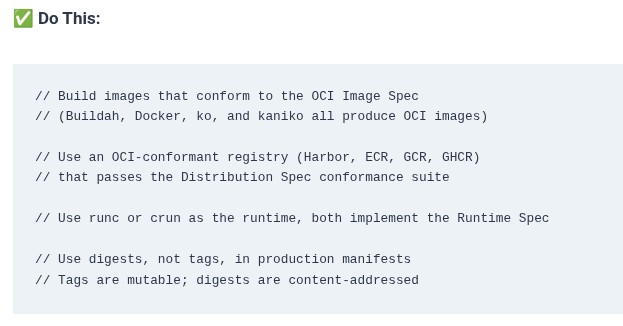
    The Open Container Initiative (OCI) is the governance body that turned containers from a Docker-specific technology into an open industry standard. Before OCI, the container ecosystem was locked into Docker’s proprietary formats: an image built by Docker ran on Docker, a registry built by Docker served Docker, and an alternative runtime had to reverse-engineer the…

    Read More Docker 71 🐳 Open Container Initiative (OCI) Specifications: Image Spec, Runtime Spec, and Distribution SpecContinue

  • Rust 75 🦀 Declarative Macros (macro_rules!) Syntax
    Programming | Languages & Runtimes | Rust

    Rust 75 🦀 Declarative Macros (macro_rules!) Syntax

    ByKandZ October 18, 2026October 18, 2026

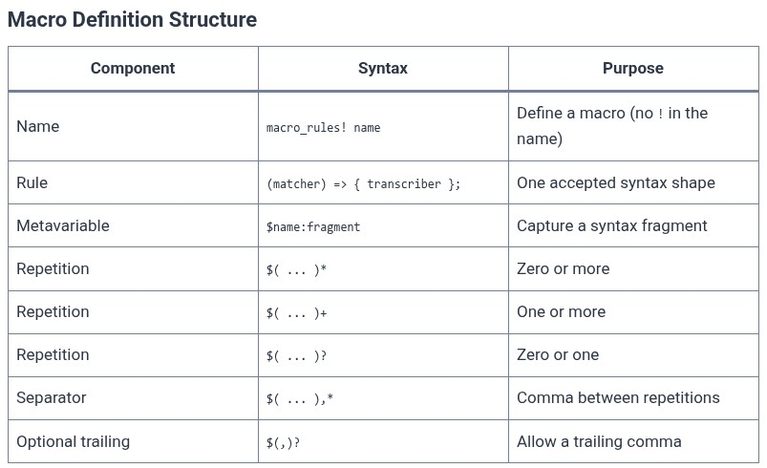
    Declarative macros are Rust’s pattern-matching system for generating code at compile time. A macro_rules! definition is a named list of rules, each with a matcher on the left and a transcriber on the right. At the invocation site, the macro expander tries each rule in order, and the first matcher that succeeds produces the output…

    Read More Rust 75 🦀 Declarative Macros (macro_rules!) SyntaxContinue

  • Rust 74 🦀 Function Pointers (fn) vs Closure Types
    Programming | Languages & Runtimes | Rust

    Rust 74 🦀 Function Pointers (fn) vs Closure Types

    ByKandZ October 18, 2026October 18, 2026

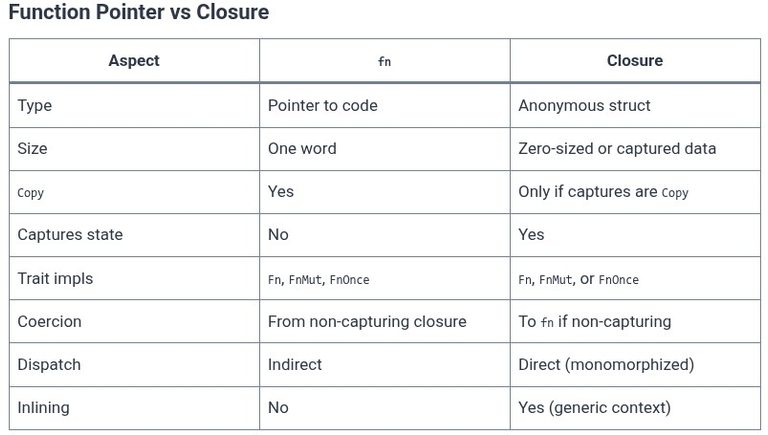
    Rust has two distinct mechanisms for representing callable code: function pointers (fn) and closures. They look similar at the call site—both can be invoked with parentheses—but they are fundamentally different types with different capabilities, memory representations, and trait implementations. A function pointer is a pointer to a function’s machine code. It is Copy, has a…

    Read More Rust 74 🦀 Function Pointers (fn) vs Closure TypesContinue

Page navigation

Previous PagePrevious 1 … 66 67 68 69 70 … 261 Next PageNext
    Search